
Global Oil Prices Rise, Finance Minister Prepares Measures to Protect 2027 State Budget
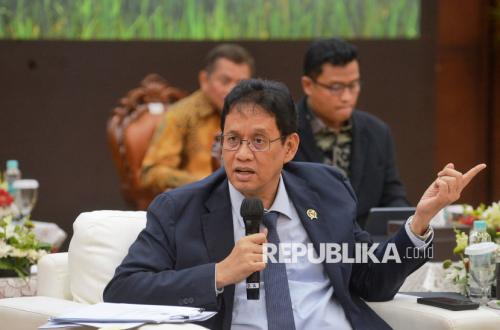
The Minister of Finance, Purbaya Yudhi Sadewa, stated that the government will take steps to maintain budget sustainability should global oil prices increase in 2027 amidst global geopolitical uncertainty.
He made these remarks when asked about government anticipation if geopolitical escalation continues into next year and triggers a surge in oil prices. “We will certainly take steps to ensure our budget remains sustainable, just as it is this year,” Purbaya said at the Ministry of Finance, Jakarta, on Wednesday (9/9/2026).
According to him, the government has experience dealing with pressures caused by changes in oil prices, so similar volatility is not an entirely new condition. “So, it is not a new experience; we will not be too shocked,” he added.
However, during the session, Purbaya did not detail the specific fiscal policies that would be implemented should global oil prices in 2027 rise beyond the government’s assumptions.
In the 2027 Draft State Revenue and Expenditure Budget (RAPBN), the government is using an assumed Indonesian Crude Price (ICP) of 75 US dollars per barrel and a rupiah exchange rate of Rp 17,500 per US dollar. Under this exchange rate assumption, the ICP is equivalent to approximately Rp 1.31 million per barrel.
This ICP assumption is higher than the 2026 State Budget, which set the Indonesian crude oil price at 70 US dollars per barrel with an exchange rate assumption of Rp 16,500 per US dollar, or approximately Rp 1.16 million per barrel based on the 2026 budget assumptions.
In the 2027 RAPBN, the government plans for energy subsidies of Rp 272.95 trillion, which is higher than the 2026 outlook of Rp 227.3 trillion.
The Ministry of Energy and Mineral Resources (ESDM) previously explained that the amount of energy subsidies is influenced by several variables, including international oil prices, ICP, the rupiah exchange rate, and the quota for subsidised energy.
The Secretary-General of the Ministry of ESDM, Ahmad Erani Yustika, stated that changes in ICP and exchange rate assumptions could affect the scale of energy subsidy requirements. The Finance Minister previously also noted that the control of fuel (BBM) subsidies is being carried out gradually to ensure that subsidies reach the entitled members of the public.