
Global Oil Prices Rise 16% in a Week, Awaiting the Fate of the Strait of Hormuz
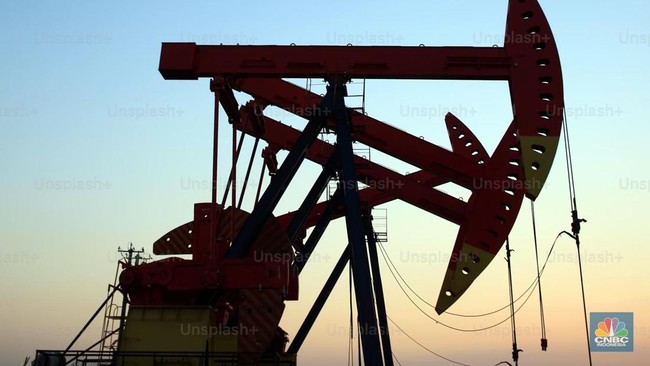
Global oil prices have fluctuated wildly over the past week. The market is still confronted with two major competing sentiments: the risk of supply disruptions from the Middle East and the possibility of resuming peace talks between the United States (US) and Iran. According to Refinitiv data, Brent crude closed at US$105.33 per barrel on Friday’s trading (24/4/2026). That price rose by US$0.26, or about 0.3%. Meanwhile, West Texas Intermediate (WTI) crude closed at US$94.40 per barrel. The WTI price fell by US$1.45, or about 1.5%. Although they moved differently on Friday’s trading, oil prices still recorded a sharp weekly increase. Over the week, Brent soared around 16%, while WTI rose nearly 13%. Oil prices initially rose at the start of trading as the market grew concerned again about military escalation in the Middle East. This concern arose after Iran released footage of commando forces boarding a cargo ship in the Strait of Hormuz. The Strait of Hormuz remains the most sensitive point for the global energy market. Before the war, this route handled about one-fifth of the world’s oil production. However, navigation through the Strait of Hormuz continues to be disrupted and has not practically returned to normal. Shipping data shows only five ships, including one Iranian oil products tanker, moving through the Strait of Hormuz in the last 24 hours. This situation reinforces fears that global oil supplies remain vulnerable to disruption. However, the rise in oil prices was later curbed after news emerged that Iranian Foreign Minister Abbas Araqchi is expected to arrive in Islamabad on Friday evening to discuss proposals for resuming peace talks with the US. Pressure on oil prices intensified after US President Donald Trump reportedly sent special envoy Steve Witkoff and Jared Kushner to Pakistan to meet with the Iranian Foreign Minister. Trump then stated that Iran plans to submit an offer to meet US demands. This statement led the market to assess that there is still a chance for diplomacy, although the situation on the ground remains very fragile. Market players thus chose to be cautious heading into the weekend. Some investors offloaded buy positions because developments in the US-Iran conflict remain difficult to predict. The direction of oil prices at the start of next week will depend heavily on the latest news from the diplomatic channel and conditions in the Strait of Hormuz. Previously, Trump said Iran may have increased its armament during the two-week ceasefire period. However, he also stated that the US military could destroy it in one day. On the other hand, Trump once expressed willingness to extend the ceasefire indefinitely to allow peace talks to continue. This situation has left the oil market in a complicated position. If US-Iran diplomacy resumes, oil prices could stabilise as supply disruption risks diminish. But if talks fail and conflict heats up again, oil prices risk surging once more. Several market players believe Brent and diesel are the instruments most sensitive to the continuation of the war. If peace talks show no progress by the end of April and fighting intensifies again, oil prices could potentially hit new highs for the year.
Source: jawawa.id (https://jawawa.id/newsitem/global-oil-prices-rise-16-in-a-week-awaiting-the-fate-of-the-strait-of-hormuz-1777078251)
Originally published by CNBC Indonesia (https://www.cnbcindonesia.com/research/20260425063402-128-729753/harga-minyak-dunia-naik-16-sepekan-menanti-arah-nasib-selat-hormuz), translated from Indonesian