
Global MSP 2026 Opens as Indonesia Promotes Sustainable Blue Investment
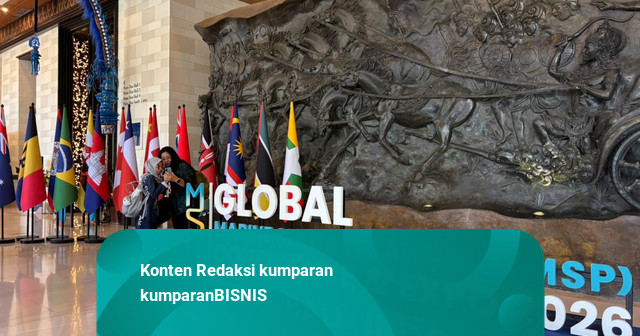
Indonesia is promoting stronger sustainable blue investment through integrated marine spatial planning. The agenda was in the spotlight at the Global Marine Spatial Planning (MSP) Conference & Expo 2026, which officially opened in Bali on Wednesday (25 November 2026).
Held under the theme “Unlocking, Securing, Transforming: From Ocean Planning to Sustainable Blue Investment”, the conference runs until 27 November and is organised by the Ministry of Marine Affairs and Fisheries (KKP).
The forum brings together governments, international organisations, scientists, financial institutions, investors, businesses and coastal communities to help turn marine spatial planning into investment.
Coordinating Minister for Food Zulkifli Hasan highlighted the importance of marine spatial planning in safeguarding national food security. He said integrated management of marine resources was needed to ensure sustainable capture fisheries and aquaculture while strengthening fisheries supply chains.
With more than 17,000 islands, 10 per cent of the world’s coral reefs and 30 per cent of its mangrove area, Indonesia has marine ecosystems that support capture fisheries and aquaculture. These ecosystems also help protect coastal areas and agricultural land from erosion and salinisation.
“One challenge we need to address is the inefficiency of fisheries supply chains and the high level of post-harvest losses. Marine spatial planning must integrate fishing grounds, aquaculture centres, ports and cold-chain facilities,” Zulkifli said in his opening remarks at the Bali Nusa Dua Convention Centre on Wednesday (25 November).
He added that in 2026 the government was expanding the Kampung Nelayan Merah Putih programme to 1,299 locations. It is also increasing the capacity of Pengambengan Fishing Port in Bali from 61,300 tonnes to 124,000 tonnes a year to strengthen aquatic food logistics.
Marine spatial planning and six blue-economy priorities
In line with efforts to strengthen food security through marine resource management, Minister of Marine Affairs and Fisheries Sakti Wahyu Trenggono stressed that healthy oceans and economic growth must develop together.
As competition intensifies for marine space for food, energy, transport, tourism and conservation, marine spatial planning (MSP) serves not only to organise zoning. It is also a tool for creating legal certainty, protecting ecosystems and giving investors confidence.
“Investment follows confidence, and confidence depends on clear regulations, certainty over spatial allocation, measurable priorities and consistent long-term policies. In this respect, marine spatial planning turns ocean space into investable ocean space,” Trenggono said at the conference’s official opening.
In line with President Prabowo Subianto’s Asta Cita agenda, Trenggono outlined Indonesia’s commitment to expanding marine conservation areas to 30 per cent of the country’s waters by 2045.
The agenda is being pursued through six national priority programmes for 2025–2029 that offer opportunities for blue investment. They include developing 5,000 Kampung Nelayan Merah Putih villages, supporting around 40,000 hectares of aquaculture ponds on Java’s northern coast, and developing 2,000 hectares of fish farming in Sumba.
The government also aims to develop aquaculture in 40,000 villages to improve access to local fish, procure 4,582 fishing and transport vessels, and strengthen national logistics and maritime industries.
Legislative support and recognition from global partners
From parliament, Siti Hediati Soeharto (Titiek Soeharto), chair of Commission IV of the House of Representatives (DPR), expressed support for integrated and sustainable marine spatial management.
Through its legislative, budgetary and oversight functions, Commission IV is promoting a strong regulatory framework, funding for fisheries infrastructure and accountable programme implementation to deliver tangible benefits for fishers and coastal communities.
“Marine spatial planning plays a very important role, not only as a tool to regulate the use of marine space, but also as a basis for balancing economic development, environmental protection and community welfare,” Titiek Soeharto said.
International partners also praised Indonesia’s progress. Dr Wenxi Zhu, head of programme specialist at the IOC Sub-Commission for the Western Pacific (IOC-WESTPAC), said Indonesia had advanced marine spatial planning over roughly three decades, moving from coastal zoning towards integrated planning linked to marine-space use and investment approvals.
“MSP is more than drawing lines on a map. It is about making informed choices, balancing competing interests and shaping a sustainable future for our oceans,” Dr Wenxi Zhu said.
Peter Thomson, the United Nations Secretary-General’s Special Envoy for the Ocean, who joined virtually, stressed the importance of bridging the gap between marine spatial planning and sustainable financing on the ground. This effort is also needed to support the UN High Seas Treaty (BBNJ Agreement) and achievement of Sustainable Development Goal 14.
Concrete outcomes targeted in Bali
Building on the International MSP Forum held in Bali in 2024, the conference also draws on Indonesia’s experience in developing national and regional marine spatial planning regulations, including 18 zoning plans for National Strategic Areas for Blue Carbon and 111 zoning plans for Outermost Small Islands.
The forum aims to deliver three concrete outcomes:
The Bali Framework for Investable Ocean Space: a shared framework linking certainty over marine space, social and environmental safeguards, financing, implementation and impact measurement.
The Indonesia Ocean Investment Pipeline 2027–2035: a portfolio of national blue-economy projects ready to be developed for sustainable investment.
International sectoral partnerships: the development of nine partnerships with countries and partner institutions, reflecting their respective strengths.
The outcomes of the Bali conference will be followed by the preparation of a roadmap towards an Ocean Impact Summit, with a measurable monitoring mechanism.
The initiative is intended to safeguard marine ecosystems, encourage responsible investment and improve the welfare of coastal communities.
In addition, KKP’s Directorate General of Marine Spatial Planning signed 11 strategic agreements with partners during Global MSP 2026.
The partners are PT Pelabuhan Kepri (Perseroda), Pertamina Foundation, the Indonesian Coastal Conservation Foundation (YAKOPI), the Nature Conservation Foundation of the Archipelago (YKAN), the Lestari Coastal Foundation (YPL), MIND ID, PT Surabaya Industrial Estate Rungkut (SIER), PT Kawasan Industri Makassar (KIMA), PT Gobel International, PT ArbonEarth Indonesia and the Sahari-Maluku Foundation.
The agreements cover marine-space use, blue-carbon ecosystem development, blue-economy investment and the empowerment of coastal communities.
Source: jawawa.id (https://jawawa.id/newsitem/global-msp-2026-opens-as-indonesia-promotes-sustainable-blue-investment-1795600221)
Originally published by kumparan.com (https://kumparan.com/kumparanbisnis/global-msp-2026-resmi-dibuka-indonesia-dorong-investasi-biru-berkelanjutan-28dmIOUjiTa), translated from Indonesian