
Global Investors Sound 'Sell Indonesia' Call: What Is the Impact?
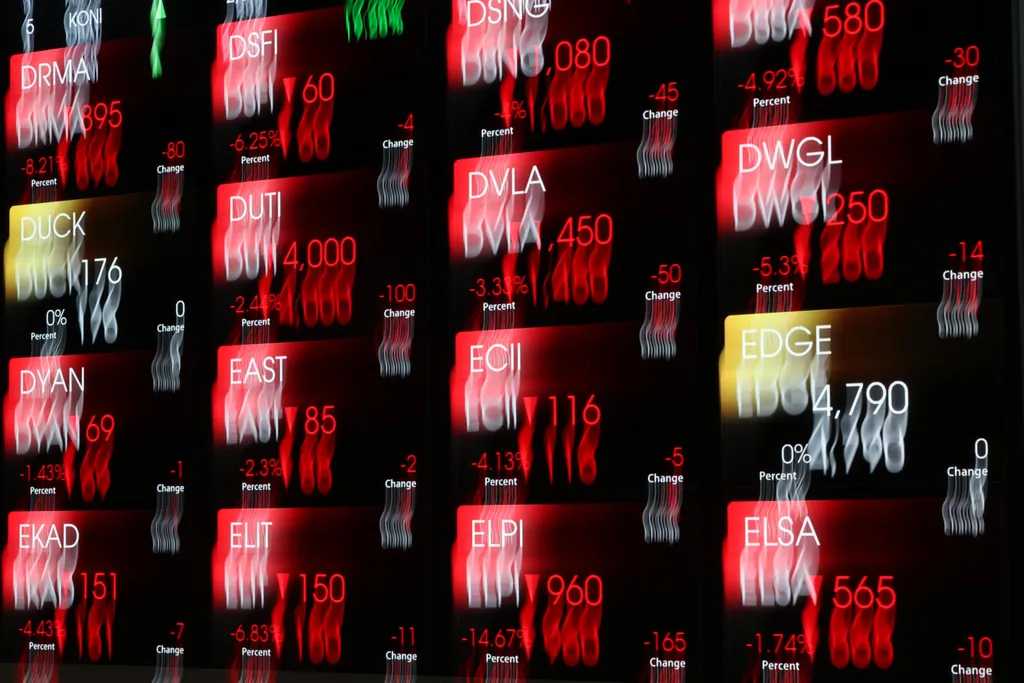
The ‘Sell Indonesia’ sentiment has recently strengthened, drawing attention to Indonesia’s financial markets following calls from some global investors. This sentiment has emerged amidst a weakening rupiah, pressure on the Jakarta Composite Index (IHSG), and growing investor concerns about Indonesia’s economic prospects. Simply put, ‘Sell Indonesia’ is a term describing the tendency of investors to reduce their holdings of Indonesian assets, whether shares, bonds, or the rupiah. This sentiment arises when investors perceive increased investment risk or consider the economic outlook less attractive compared to other countries. The situation has raised concerns among some market participants about the prospects for Indonesian financial assets, especially amid heightened global economic uncertainty and shifting international investment flows. The phenomenon has even become a focus for several international media outlets and market analysts who assess that Indonesia is facing a major challenge in maintaining investor confidence. Over the past five months, the Indonesian stock market has experienced significant pressure. On a calendar year basis, the IHSG has plunged approximately 37 percent, making it one of the worst-performing in the world. In the last trading session on Monday (8/6/2026), the IHSG closed down 252.63 points (4.52 percent) at 5,342. Like the stock market, Indonesia’s financial markets have also been turbulent. The rupiah has weakened by more than 7 percent this year and briefly breached the level of Rp 18,000 per US dollar on 4 June. Most recently on Monday (8/6/2026), the rupiah closed weaker at Rp 18,171 per US dollar. Pressure has also occurred in the bond market, with foreign investors recorded as having withdrawn around Rp 86 trillion from government debt securities since August last year. The emergence of the ‘Sell Indonesia’ sentiment appears inseparable from investor scrutiny of several government policies perceived to be increasing the state’s role in the economy. One focal point is the plan to centralise exports of strategic commodities such as coal and palm oil through state-supervised entities. This policy has sparked questions regarding transparency, regulatory certainty, and the long-term investment climate. Additionally, concerns have arisen regarding the independence of economic policy, the government’s fiscal direction, and increasing state intervention in various strategic sectors. Some rating agencies and market players assess policy uncertainty as the main factor depressing investor confidence. Minister of Finance Purbaya Yudhi Sadewa has responded to the ‘Sell Indonesia’ commentary that triggered negative sentiment in the financial markets. According to him, the released analysis is inaccurate because it does not understand Indonesia’s actual fundamental economic conditions and fiscal health. He stated that a number of fundamental indicators still show relatively good economic resilience, from the stability of the financial sector and well-maintained banking conditions to ongoing domestic economic activity. Purbaya also stressed that assessments of Indonesia need to be conducted comprehensively and not solely focus on short-term movements in the financial markets. The ‘Sell Indonesia’ sentiment could create a domino effect for investors, business actors, and the general public. For investors, they will receive the impact in the form of a significant decline in the value of their investment portfolios amid widespread economic turmoil. Capital flight by foreign investors has caused the IHSG to be sharply corrected and the rupiah exchange rate to weaken to its lowest level. For local investors holding shares, mutual funds, or bonds, this condition can reduce the value of portfolio assets in the short term. The Directorate General of Financing and Risk Management at the Ministry of Finance recorded that foreign investors in the government securities market posted a net sell of Rp 15.43 trillion from the end of 2025 to May 2026. This is a reversal from the same period last year, which recorded a net buy of Rp 49.62 trillion. Meanwhile, the Indonesia Stock Exchange recorded capital outflows by foreign investors in the stock market amounting to Rp 53.97 trillion on a calendar year basis up to the end of May 2026. This figure is larger than the Rp 45.34 trillion recorded in the same period last year. To stem the rupiah’s weakening and prevent further capital outflows, Bank Indonesia typically responds by raising its benchmark interest rate, the BI Rate. Most recently, the BI Rate was raised by 50 basis points to 5.25 percent during the Board of Governors’ Meeting for the period of 19-20 May 2026. Although various measures have been taken by BI, including raising the BI Rate, the rupiah exchange rate continues to be pressured amid the economic turmoil. For domestic investors and business actors, this condition could lead to more expensive credit and loan costs. A further impact is pressure on exporter shares. The government intervention policies and export controls that are one of the main triggers for the global sentiment often negatively affect the shares of commodity sector companies. This is because many domestic investors whose portfolios are concentrated in this sector are directly impacted. Nevertheless, for domestic investors with greater liquidity and a long-term orientation, the extreme market correction can be used to buy fundamentally strong shares at discounted prices.