
Global Inflation and Its Impact on Indonesia's Economy
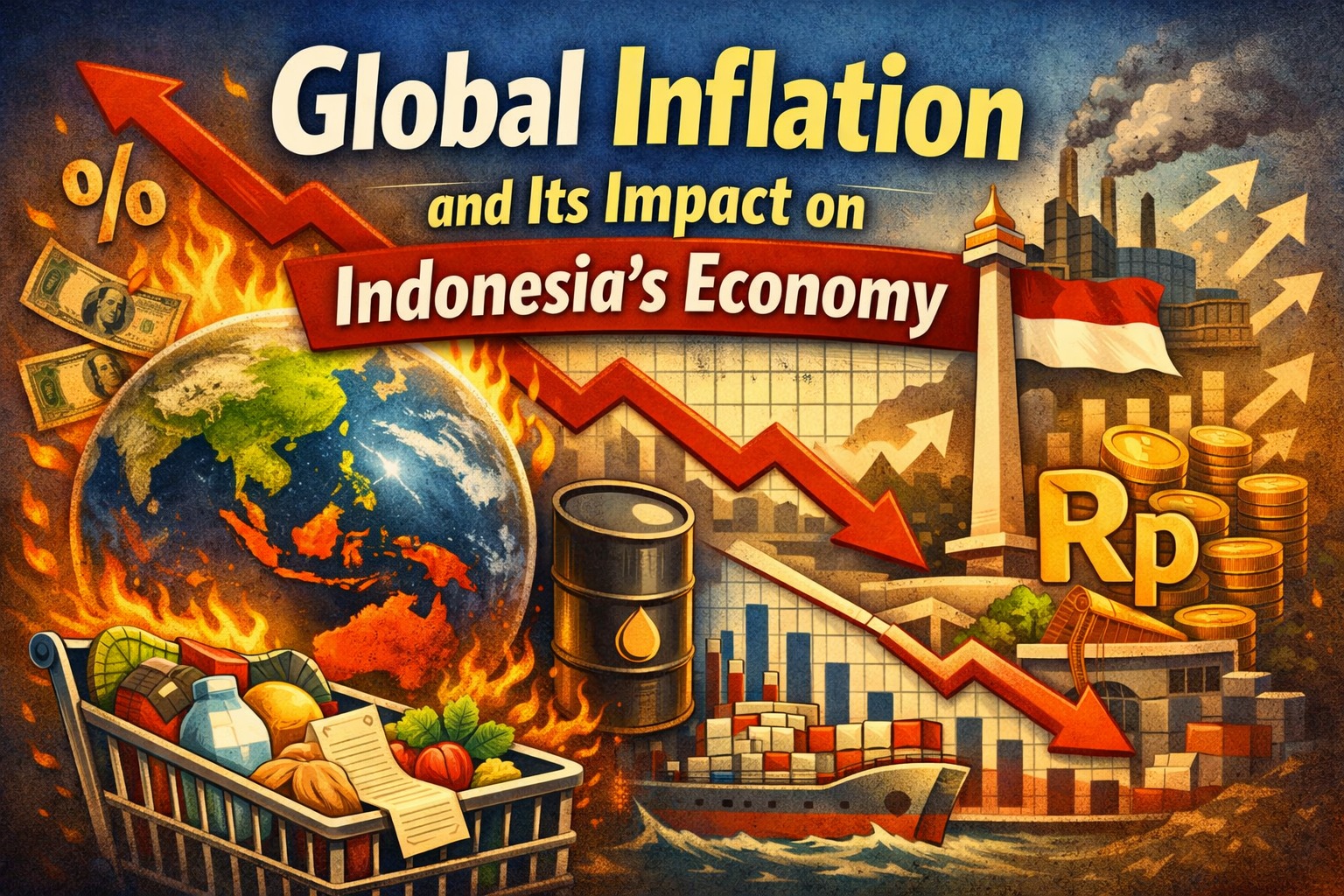
Global Inflation and Its Impact on Indonesia’s Economy
Gusti Ayu Tita P
20 Agustus 2026
Global inflation has become one of the most discussed economic issues in recent years. Rising prices across countries affect purchasing power, investment decisions, and economic stability. As an emerging economy deeply connected to global trade, Indonesia experiences both challenges and opportunities from global inflation trends. Understanding how inflation shapes Indonesia’s economy is essential for individuals, businesses, and policymakers alike.
WHAT IS GLOBAL INFLATION?
Global inflation refers to the overall increase in prices of goods and services worldwide. It is driven by several factors such as supply chain disruptions, rising energy prices, geopolitical conflicts, and increased consumer demand after economic recovery periods.
When inflation rises globally, the cost of imports increases, currency values fluctuate, and interest rates often climb. These changes ripple across economies, especially those dependent on international trade like Indonesia.
KEY CAUSES OF RECENT GLOBAL INFLATION
Several major factors have contributed to the recent surge in global inflation:
1.Supply Chain Disruptions
The pandemic caused factory shutdowns, shipping delays, and limited production capacity. This imbalance between supply and demand pushed prices upward worldwide.
2.Energy and Commodity Prices
Oil, gas, and food prices increased sharply due to geopolitical tensions and production limits. Since many countries rely on imported energy, rising costs spread quickly across markets.
3.Monetary Stimulus Policies
During economic crises, governments and central banks injected large amounts of money into economies. While this helped recovery, it also increased demand and accelerated inflation.
4.Currency Fluctuations
When major currencies strengthen, developing countries may face higher import costs and inflationary pressure.
HOW GLOBAL INFLATION AFFECTS INDONESIA
Indonesia’s economy is closely linked to global markets through trade, investment, and commodity exports. As a result, global inflation directly influences several sectors.
1.IMPORT COSTS AND CONSUMER PRICES
Indonesia imports fuel, raw materials, and industrial goods. When global prices rise, domestic production costs increase, causing higher prices for consumers. Everyday essentials such as food, transportation, and electricity may become more expensive.
2.EXCHANGE RATE PRESSURE
Global inflation often strengthens the US dollar. A stronger dollar can weaken the Indonesian rupiah, making imports more costly and increasing inflation domestically.
3.INTEREST RATE ADJUSTMENTS
To control inflation, central banks usually raise interest rates. Higher interest rates in developed countries can reduce foreign investment in emerging markets, including Indonesia. This may slow economic growth and increase borrowing costs.
4.IMPACT ON BUSINESSES
Businesses face higher production costs, reduced consumer purchasing power, and tighter financing conditions. Small and medium enterprises are often the most vulnerable to inflation shocks.
POSITIVE OPPORTUNITIES FOR INDONESIA
Although inflation creates challenges, Indonesia can also benefit in certain ways.
1.Commodity Export Gains
Indonesia is rich in natural resources such as palm oil, coal, and nickel. Rising global prices for commodities can increase export revenue and strengthen the national economy.
2.Encouragement for Local Production
Higher import costs may encourage domestic manufacturing and reduce dependence on foreign products.
3.Digital and Financial Innovation
Inflation pushes businesses to become more efficient, adopt digital technologies, and improve productivity.
STRATEGIES TO MITIGATE INFLATION IMPACT
To maintain economic stability, several strategies can be implemented:
1.Strengthening Domestic Supply Chains
Improving infrastructure and local production reduces reliance on imports.
2.Promoting Financial Literacy
Educating citizens about budgeting, saving, and investing helps households cope with rising prices.
3.Supporting Small Businesses
Government programs and digital transformation initiatives can help businesses adapt to inflation challenges.
4.Balanced Monetary Policy
Careful interest rate management helps control inflation without harming economic growth.
FUTURE OUTLOOK
Global inflation may remain a recurring challenge due to geopolitical uncertainty, climate change, and evolving supply chains. However, Indonesia’s strong domestic market, growing digital economy, and abundant natural resources provide a solid foundation for resilience.
With strategic policies and adaptive businesses, Indonesia can turn inflationary pressure into an opportunity for sustainable economic growth.
CONCLUSION
Global inflation significantly affects Indonesia’s economy through rising import costs, currency pressure, and interest rate changes. Despite these challenges, opportunities in commodity exports, local production, and digital innovation offer a path forward. By strengthening domestic resilience and promoting financial awareness, Indonesia can navigate global inflation and maintain economic stability.
About the Author
Gusti Ayu Tita P
Author — STEKOM University
An active author focused on academic issues, educational technology, and human resource development in the campus environment.