
Global Halal Market Still Dominated by Non-Muslim Nations, D-8 Crafts New Strategy
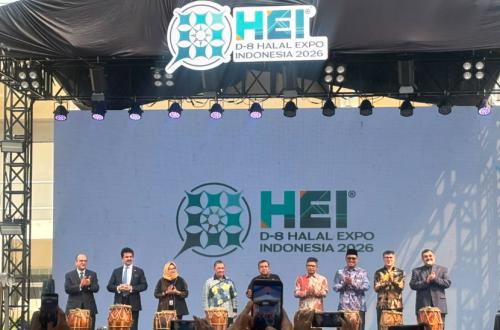
The global halal product market is still dominated by non-Muslim countries, prompting the Developing-8 (D-8) organisation to strengthen economic cooperation among its members to improve competitiveness in the global halal value chain.
Head of the Halal Product Assurance Organising Agency (BPJPH), Ahmad Haikal Hasan, stated that the world’s largest halal product producers are currently not from D-8 member states or Muslim-majority countries. “Unfortunately, the world’s number one halal product producer is still China. Number two is Brazil, number three is America. Not one from the D-8,” Haikal said at the opening of the D-8 Halal Expo Indonesia in Tennis Indoor Senayan, Jakarta, on Wednesday (8/7/2026).
According to Haikal, this situation demonstrates that halal has evolved into an economic force and is no longer viewed solely from a religious perspective. “Halal is now an economic function,” he remarked. He added that the concept of halal is now synonymous with health, cleanliness, transparency, traceability, and trust, making the strengthening of the halal industry a potential driver of economic growth.
D-8 Secretary-General Sohail Mahmood noted that global demand for halal products continues to rise. Muslim consumer spending reached approximately 2.4 trillion US dollars in 2023 and is projected to surpass 3.3 trillion US dollars in the coming years. However, he observed that Muslim-majority countries still control a relatively small portion of the global halal value chain and are not yet the primary exporters. “This condition shows that the challenge we face is not the size of the market, but the ability to create added value,” Sohail said.
To enhance competitiveness, the D-8 is encouraging the establishment of a more integrated halal trade corridor through the harmonisation of standards and halal certification, the development of halal logistics, and the utilisation of digital technology and artificial intelligence.
Executive Director of the National Committee for Sharia Economy and Finance (KNEKS), Sholahudin Al Aiyub, stated that the economic potential of D-8 countries will not become a real force unless they are connected within the global halal value chain. “This potential will not become a real economic force as long as we face limitations in regulatory harmonisation and fragmented interests. We must transform the strength we possess into an integrated global halal value chain,” Sholahudin said. He expressed hope that the D-8 Halal Expo would yield concrete business cooperation and trade transactions among business actors from member states.