
Global Halal Economy Projected to Surpass US$3 Trillion, Indonesia Aims for Leading Position in Asia Pacific
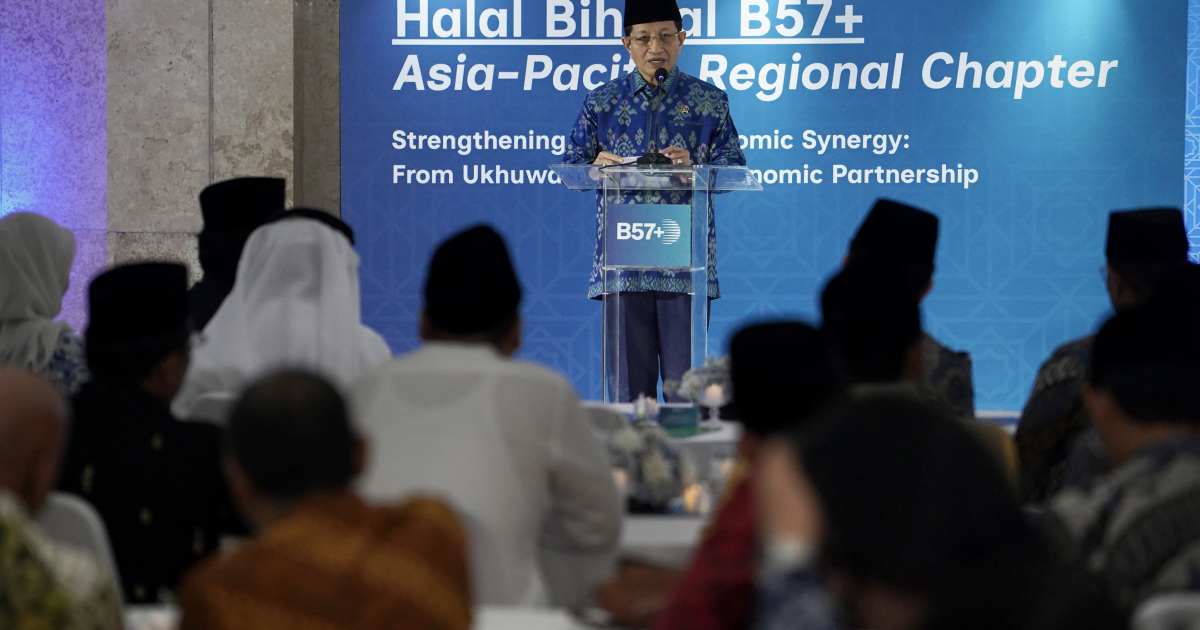
JAKARTA - The potential of the global halal economy is projected to surpass more than US$3 trillion by 2026. The government views this as a strategic momentum to strengthen Indonesia’s position in the global sharia economy arena.
Religious Affairs Minister Nasaruddin Umar emphasised that the halal economy has now developed into a major cross-sector industry. “We can no longer view the halal economy merely from a worship perspective. This is a giant industry,” he stated at the Halal Bihalal Forum B57+ in Jakarta on Wednesday (22/4/2026).
He mentioned that the halal sector encompasses food, Islamic finance, cosmetics, to lifestyle. Indonesia itself is still in the global top three position and has the potential to rise to the top.
“This proves that spiritual values correlate positively with economic credibility,” said Nasaruddin. He stressed the importance of trust as the main foundation of sustainable economy.
On the other hand, B57+ Asia Pacific Chair Arsjad Rasjid added that the potential of the global halal economy could even reach US$9.5 trillion by 2030. However, he warned that the main challenge lies in inter-country connectivity.
“Such great potential will only be meaningful if we are able to build organised, trusted, and connected collaboration,” he explained.
Meanwhile, the presence of the B57+ forum is driven to become a bridge of cooperation for 57 OIC member countries with global partners. Its focus includes trade, investment, and concrete business connectivity.
The government assesses that synergy between regulators, religious institutions, and the private sector is key. Indonesia is targeted to become the anchor of the sharia economy in the Asia Pacific.
Although the potential is large, implementation challenges remain a primary concern. “B57+ must move concretely, measurably, and impactfully,” Arsjad concluded.