
Global Government AI CITY Innovation Summit Held Successfully
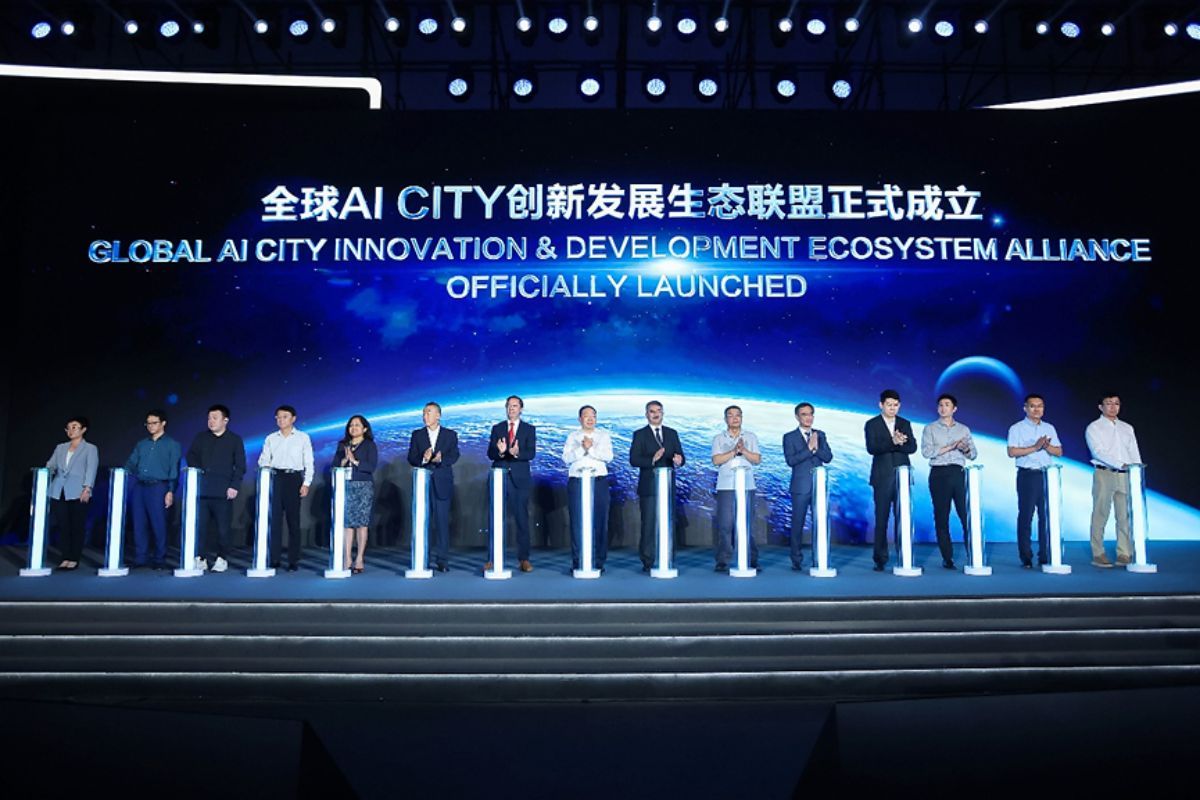
Huawei and 14 partners launched the Global AI CITY Innovation & Development Ecosystem Alliance at the Global Government AI CITY Innovation Summit, held as part of HUAWEI CONNECT 2026. Under the theme “Digitalise and Innovate Cities, AI Delivers Value to All Nations”, the event drew more than 500 participants, including global industry experts, government representatives and ecosystem partners. They discussed using artificial intelligence (AI) and data to drive industrial development, improve government services and strengthen urban governance. The alliance aims to build an open, collaborative ecosystem to support innovation and the development of digital and smart cities.
At the event, Huawei invited representatives from Angola, Saudi Arabia and Ethiopia, as well as Guangzhou and Shanghai in China, to share their experiences of building “AI CITY”. Tao Jingwen, Deputy Chairman of Huawei’s Supervisory Board, delivered remarks, while Yang Ruikai, CEO of Huawei’s Government Public Services Digitalization Business Unit, also attended.
Tao said AI was becoming increasingly integrated into various aspects of urban development, from improving the quality of government services to modernising urban governance. Computing and data, he said, were now driving high-quality urban development. Huawei was committed to openness, inclusivity and mutually beneficial cooperation. By strengthening computing infrastructure, building AI-ready data infrastructure and providing an improved service experience, Huawei would work with ecosystem partners and governments in various countries to explore innovative approaches to the digital and intelligent transformation of government and city services.
AI is now being applied across urban sectors, from city governance and government services to industrial development. In a presentation, Simon Zou, Vice President of Huawei’s Government Public Services Digitalization Business Unit and President of Marketing & Solution Sales, outlined several AI applications in Longgang District, Shenzhen, and the city of Shantou. The examples demonstrated AI’s potential to make cities safer, more efficient and more harmonious.
AI agents for urban governance have helped improve public safety monitoring, reduce labour costs through the use of computing and increase the efficiency of city management. Meanwhile, government-service agents featuring “Chat-to-Process” are replacing conventional services—in which residents queue at service counters and must find out for themselves which policies apply—with proactive, user-centred services that deliver benefits to eligible residents.
The cross-regional Token Factory model relies on local computing power to keep data within national borders while exporting AI services to global markets. The approach supports the development of local AI industries while promoting cross-border cooperation. Drawing on its information and communications technology (ICT) capabilities and experience, Huawei is working with innovative cities and partners to develop a technical reference architecture for “AI CITY”. It uses OpenHarmony as a unified foundation for urban terminal devices and Ascend AI computing to support intelligent collaboration between devices, edge computing and cloud computing. This approach provides a basis for developing AI CITY solutions for a wide range of urban service applications.
At the event, Huawei and China’s State Information Center launched the “AI CITY Development Research Report 2026” as a guide to accelerating cities’ comprehensive digital and intelligent transformation. The report defines the “AI CITY” paradigm and says cities are moving from a “data-driven” era towards one of “city super agents”. It also says AI CITY relies on intelligent computing and urban public cloud as foundations for high-value intelligent applications, shifting the focus from building capabilities to creating value. The report includes case studies from Shenzhen, Wuhan and Karamay as references for other cities seeking to develop intelligent technology applications.
With the establishment of the World Data Organization and the World Artificial Intelligence Cooperation Organization (WAICO), global cooperation in AI and data is expected to expand rapidly. Developing AI CITY requires an exchange of ideas and close collaboration among partners worldwide. At the end of the conference, Huawei and 14 global partners, including TIS, Egabi Solution, HMN Tech, Epoint and the United Nations Industrial Development Organization (UNIDO), launched the Global AI CITY Innovation & Development Ecosystem Alliance. The alliance will focus on collaboration in computing, data circulation and AI application innovation, bringing together industry players to build an open, collaborative ecosystem for digital and smart cities.
Under the theme “Smart-Digital Innovative Cities, AI for Global Inclusion”, Huawei said it hoped to work with more customers and partners to build, share experiences and embrace the “AI CITY” era.