
Global Gold Prices Plummet 1.5% Amid Strengthening US Dollar
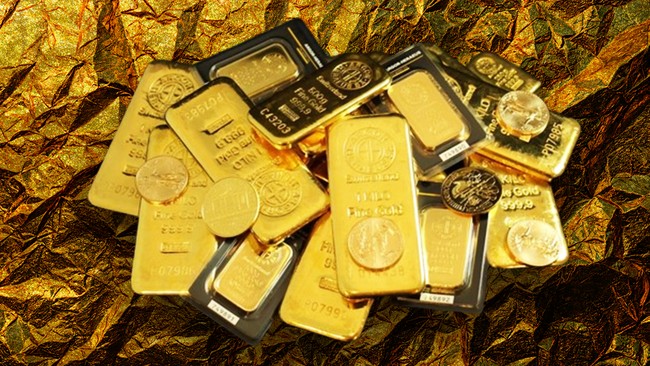
Global gold prices tumbled during Friday’s trading session following a resurgence of the US Dollar. Nevertheless, gold successfully ended a monthly downward trend that had lasted for four consecutive months. According to Refinitiv, global gold prices closed at US$4,040.94 per troy ounce on Friday (31/7/2026), representing a depreciation of 1.50%.
This decline trimmed July’s gains to 0.84%. However, this result still marks the first monthly increase since February 2026, after gold had consistently ended in the red for four straight months. Pressure on gold on Friday emerged after the US Dollar rose from its lowest level in over a month. A day earlier, the dollar index plunged approximately 2.4%, marking its largest single-day decline since January 2023.
A stronger dollar makes gold more expensive for holders of other currencies, which tends to reduce demand. Despite the weakness, gold prices managed to remain above the psychological level of US$4,000 per troy ounce. Lower US inflation data also helped protect gold prices from deeper pressure. Data released on Thursday showed the US Personal Consumption Expenditures (PCE) price index fell by 0.1% month-on-month in June. This slowdown in inflation led market participants to reduce bets on further interest rate hikes by the US Federal Reserve.
Bybit market analyst Han Tan noted that gold is still struggling to move significantly above the US$4,000 psychological level, even as it stands on the verge of ending a four-month decline. According to Tan, gold prices are still supported by expectations that Fed Chair Kevin Warsh may expand the central bank’s focus beyond inflation indicators and interest rate hikes. While Warsh reaffirmed his commitment to reducing inflation this week, he has not yet provided a clear signal that the Fed is prepared to raise interest rates again. According to the CME Group FedWatch tool, market participants estimate a 65% chance of a rate hike at the September meeting, down from over 80% the previous week. A reduced probability of rate hikes serves as a positive sentiment for gold, as high interest rates typically dampen the appeal of precious metals which yield no interest.
Central Banks Resume Gold Buying in Q2-2026
The World Gold Council (WGC) reported that net gold demand from central banks reached 289 tonnes in the second quarter of 2026. This figure represents a fivefold increase compared to the revised 57 tonnes in Q1-2026 and marks a record high for a second-quarter period. Compared to the 177.9 tonnes recorded in the same period last year, net purchases increased by approximately 62%. The WGC attributes this surge to geopolitical tensions, falling gold prices, and the need for reserve diversification.
Poland was the largest buyer, adding 51 tonnes during Q2, bringing its reserves to 632 tonnes by the end of June. The Chinese central bank added 33 tonnes in Q2, its largest quarterly purchase since late 2023, bringing its total reserves to 2,346 tonnes. Purchases were also made by Uzbekistan (16 tonnes), Kazakhstan (15 tonnes), Jordan, and the Czech Republic (6 tonnes each). Conversely, Russia was the largest seller, offloading 22 tonnes of gold.
Despite the surge in Q2 purchases, net central bank demand for the first half of 2026 reached only 345 tonnes, the lowest for a first-half period since 2022. This was due to significant sales by Turkey, Russia, and Azerbaijan in the first quarter. The WGC expects central bank demand to remain above long-term averages. The organisation’s survey shows that 89% of foreign exchange reserve managers expect global central bank gold holdings to increase over the next 12 months, with 45% of respondents planning to increase their own institutional gold reserves.