
Global Geopolitical Tensions Persist as Indonesia Secures Fuel Supplies Through Palm Oil
Jakarta, CNBC Indonesia – Coordinating Minister for Downstreaming and Energy Transition and Energy and Mineral Resources Minister Bahlil Lahadalia stressed the importance of national energy self-sufficiency amid continuing global geopolitical uncertainty.
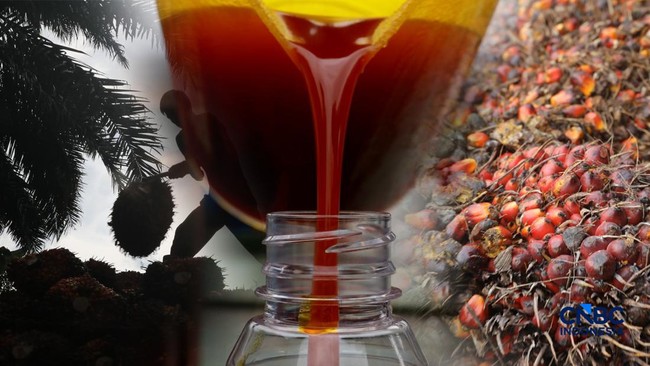
The government has secured supplies of diesel by blending palm-oil-based fatty acid methyl esters (FAME) into conventional diesel at a 50% proportion per litre, under the B50 biodiesel programme.
Bahlil said tensions involving Iran, the United States and Israel, as well as conflict in the Arab region, were having a serious impact on global logistics flows and energy security.
The situation is putting considerable pressure on crude oil supply chains. Previously, about 23% of Indonesia’s crude oil supplies passed through the Strait of Hormuz.
“Not a single person in the world can predict when today’s geopolitical situation will end. We expect tensions involving Iran, America and Israel—and now the Houthis and Saudi Arabia—to further worsen global logistics flows and energy security,” Bahlil said at a national meeting of the Indonesian Indigenous Entrepreneurs Association (HIPPI) in Jakarta on Monday (12 October 2026).
Indonesia’s total fuel consumption is currently 1.6 million barrels per day (bpd), while domestic oil lifting stands at around 600,000 bpd. The gap means the country imports about 1 million bpd of oil to meet domestic fuel demand.
Nevertheless, the government says domestic diesel supplies are now free of import dependence thanks to the substitution of plant-based energy.
Of the country’s total annual diesel requirement of 39 million kilolitres, half is supplied using palm oil, which is combined with methanol to produce FAME under the B50 programme.
“We are grateful that, for diesel, we have palm oil that we turn into FAME for B50. So we no longer import diesel; that is settled,” Bahlil said.
National petrol consumption is 40 million kilolitres a year, while domestic production is only around 18–19 million kilolitres. To reduce the remaining petrol imports, the government is preparing a mandatory E50 ethanol-blending policy, to be introduced gradually from 2027.
The ethanol blend could be produced from sugar cane, cassava or maize.
“We want to push towards E50, following the example of diesel, which went from B10 to B50. The feedstock will come from sugar cane, cassava and maize, and this can create new areas of economic growth,” he said.
B50 mandate
Indonesia has already begun using plant-based resources as fuel. For diesel, biodiesel comprising a 50% blend is being used as a component of the fuel.
President Prabowo Subianto officially launched diesel blended with 50% palm-oil-based biofuel, or B50, on 9 July 2026.
A three-month transition period followed, with full implementation of B50 Biosolar beginning on 1 October 2026. The transition allowed adjustments to be made and existing B40 stocks sold at petrol stations to be used up before the switch to B50 was completed.
The B50 mandate is a strategic government policy intended to reduce dependence on fuel imports, particularly diesel, increase the value added from national natural resources, and strengthen Indonesia’s economic resilience and energy sovereignty.
The legal basis for the B50 mandate comprises Energy and Mineral Resources Ministerial Regulation No. 4 of 2025 on the business and use of biofuels, and Ministerial Decree No. 257.K/EK.01/MEM.E/2026 on the requirement to blend 50% biodiesel with diesel fuel, under a financing framework administered by the Plantation Fund Management Agency.
The policy requires a 50% biodiesel blend in all types of diesel fuel. Biofuel producers, fuel companies and distributors must comply with the prescribed standards and quality specifications.
The Energy and Mineral Resources Ministry estimates that B50 could save Rp170 trillion in foreign exchange each year.
The policy is also expected to generate Rp23.49 trillion in additional value for the crude palm oil industry and support 2.1 million jobs. Annual FAME biodiesel demand is projected at 16.7–18 million kilolitres.
This would require 15.2–16.3 million tonnes of crude palm oil a year and is projected to cut emissions by 44.46 million tonnes annually.
Source: jawawa.id (https://jawawa.id/newsitem/global-geopolitical-tensions-persist-as-indonesia-secures-fuel-supplies-through-palm-oil-1791813100)
Originally published by CNBC Indonesia (https://www.cnbcindonesia.com/news/20261012192324-4-775515/geopolitik-dunia-masih-panas-ri-amankan-pasokan-bbm-melalui-sawit), translated from Indonesian