
Global Funding Underpins Indonesia's Geospatial Projects
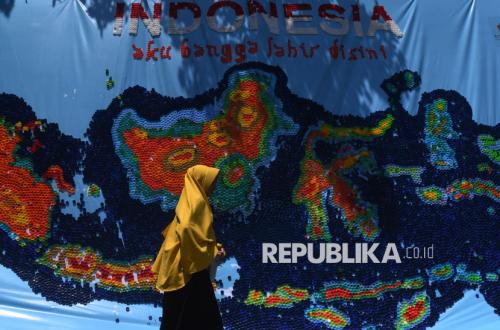
The development of Indonesia’s geospatial information system over the past two decades has been largely supported by cooperation with international institutions. This involvement is considered part of an effort to strengthen the quality of national spatial data while supporting more integrated development governance.
The need for accurate geospatial data is deemed increasingly important as it forms the basis of various development policies. The use of differing data between agencies has the potential to cause problems, ranging from overlapping spatial use to asynchrony in development planning.
Over approximately two decades, dozens of geospatial strengthening projects have been implemented with the support of international institutions. These programmes cover institutional strengthening, human resource capacity building, and the modernisation of geospatial information systems.
The World Bank and USAID are recorded as the most involved institutions, each supporting nine projects. They are followed by the Japan International Cooperation Agency (JICA) which supported seven projects, the Asian Development Bank (ADB) with six projects, and the Global Facility for Disaster Reduction and Recovery (GFDRR) and the Government of the Netherlands (RVO) with five projects each.
In addition, a number of other institutions such as UNDP, KOICA, Australia’s DFAT, the European Union, GIZ, and various international organisations and research institutes have also been involved in the development of the geospatial information system in Indonesia.
This strengthening runs in parallel with the implementation of the One Map Policy and One Data Indonesia, which form the basis for integrating spatial references, standardisation, and data interoperability between agencies.
One ongoing programme is the Integrated Land Administration and Spatial Planning Project (ILASPP) supported by the World Bank. This programme is a continuation of land governance and spatial planning reforms that have been underway for years, making its procurement process open to companies that meet the requirements.
Professor Cecep Darmawan, a public policy expert from the Indonesian University of Education (UPI), stated that such a mechanism is common practice in development projects supported by international financial institutions.
‘In my opinion, there is no problem. Many jobs do involve foreign parties, such as collaborative research and development projects. It is something that has become commonplace,’ Cecep said on Monday (13/7/2026).
According to Cecep, openness in the procurement process provides an opportunity for the government to select service providers with the experience, quality, and technical capabilities most suited to the project’s needs.
Nevertheless, he assessed that the government must still consider national interests when determining the procurement mechanism. The involvement of foreign companies needs to be adjusted to the project’s requirements, the level of technological mastery, the capacity of implementers, and applicable regulations.
‘If it truly requires external expertise and does not disrupt national interests, I think there is no issue with involving foreign parties,’ he said.
He added that not all projects need to involve global companies, but neither should all be closed to international participants.
‘What is most important is to look at the project’s needs and ensure the results provide benefits for Indonesia,’ Cecep concluded.