
Global Fertiliser Prices Soar, Yet Prabowo Reduces Subsidised Fertiliser Prices by 20%
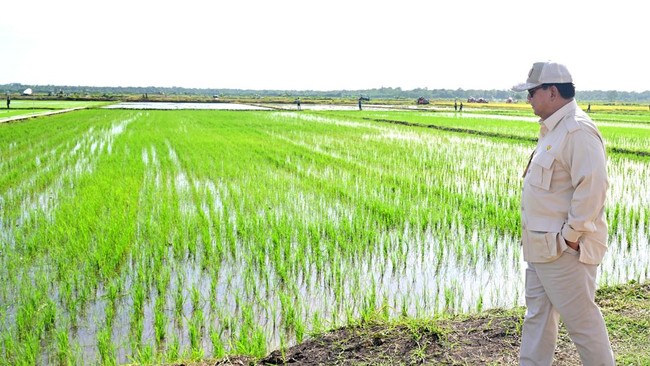
President Prabowo has taken steps to reduce the price of subsidised fertiliser by 20% to maintain the sustainability of national food production. This is a different and bold move at a time when global fertiliser prices are surging by more than 40% due to global supply disruptions.
Agriculture Minister Andi Amran Sulaiman emphasised that the policy reflects President Prabowo’s intelligence in reading the world’s situation regarding the potential global fertiliser crisis that is beginning to pressure many countries.
“President Prabowo has read from the start that the world is heading towards an unstable period. He instructed us not to wait for the crisis to come, but to meet it with policy,” said Minister Amran in his official statement on Sunday (3/5/2026).
Since February 2026, conflicts in the Middle East have closed the Strait of Hormuz, a route for one-third of global fertiliser trade, while China has halted exports of major nitrogen fertilisers. The impact has seen global urea prices soar by more than 40% in a matter of weeks, and Southeast Asian countries reliant on fertiliser imports are facing threats to food production crises.
The 20% price reduction policy for subsidised fertiliser covers all types of subsidised fertiliser used by farmers, from urea, NPK, and ZA. The government is also preparing structural measures targeting costs, distribution, and fertiliser availability. The subsidised fertiliser price reduction maintains farmers’ planting capacity for the 2026 season amid the global price surge.
On the distribution side, the government has cut 145 fertiliser regulations through a Presidential Instruction, accelerating distribution from the Ministry of Agriculture to PT Pupuk Indonesia and directly to farmers.
Fertiliser access is facilitated through KTP-based integration and expansion of kiosk networks to villages, with a target to reach all food production sub-districts before the 2026 gadu planting season, ensuring fertiliser is available and easily accessible on time.
In addition, stock resilience is maintained through supply diversification since 2025. Dependence on a single import route has been reduced, so the impact of the Strait of Hormuz closure and China’s export restrictions can be mitigated, and fertiliser supplies for the 2026 planting season remain secure.
This policy is estimated to reduce farmers’ production costs by hundreds of thousands of rupiah per hectare per planting season. Fertiliser access is also expanded for more than 16 million farmers, while reducing the potential for shortages due to uneven distribution and strengthening bargaining positions in facing fluctuations in rice prices.
President Prabowo’s support for farmers does not stop at reducing fertiliser prices. Through a Presidential Instruction, the government has also cut fertiliser distribution regulations that have previously hindered delivery, ensuring subsidised fertiliser truly reaches farmers’ hands on time, in the right quantity, and at the right price.
The government has also set a Government Purchase Price (HPP) for unmilled rice at Rp6,500 per kilogram to guarantee that farmers do not incur losses after production. This policy ensures the difference between production costs and selling prices remains profitable for farmers, even amid global price pressures.
Thus, the government is present at both ends of the production chain: suppressing costs upstream through fertiliser subsidies and deregulation, while safeguarding farmers’ income downstream through rice price guarantees. This upstream-downstream approach distinguishes President Prabowo’s agricultural policy from mere short-term responses.
Currently, most farmers in Thailand are reluctant to plant due to the fertiliser price surge, and Vietnam is facing pressure on rice exports due to disrupted supplies from China and the Gulf region.
The global fertiliser crisis also highlights the vulnerability of countries in the region. Vietnam, which supplies nearly 80% of the Philippines’ rice needs, imported more than 480,000 tonnes of fertiliser from China in the first quarter of 2026, so Beijing’s export ban could disrupt supply chains. The Philippines, which relies on China for 75% of its fertiliser needs, also lacks strong domestic buffers.
Thailand obtains about one-fifth of its fertiliser from China and 32% from the Gulf region, which is now disrupted, prompting some farmers to delay planting due to high production costs.
Amid these conditions, Indonesia is in a stronger position supported by supply diversification, strengthened domestic production, and consistent subsidy policies.
Amran also emphasised that Indonesia’s food security is very solid amid threats from El Niño and global uncertainties affecting many countries. The government’s rice reserves currently exceed 5 million tonnes, the highest record in history, providing a strong buffer to ensure national food availability in various pressure scenarios, whether from climate disruptions or global supply chain volatility.
This achievement is a direct result of consistent production policies, including the pompanisasi programme, expansion of planting areas, and strengthening of unmilled rice absorption by Bulog. With such stocks, Indonesia not only maintains domestic food price stability but also holds a stronger position compared to neighbouring countries now struggling to face production pressures due to the fertiliser crisis and weather anomalies.
“This is the real fruit of the accuracy of vision and the courage of President Prabowo in making the right decisions for the interests of national farmers,” said Amran.