
Global Ethics Forum partners with 10 institutions to formulate solutions for ethical dilemmas
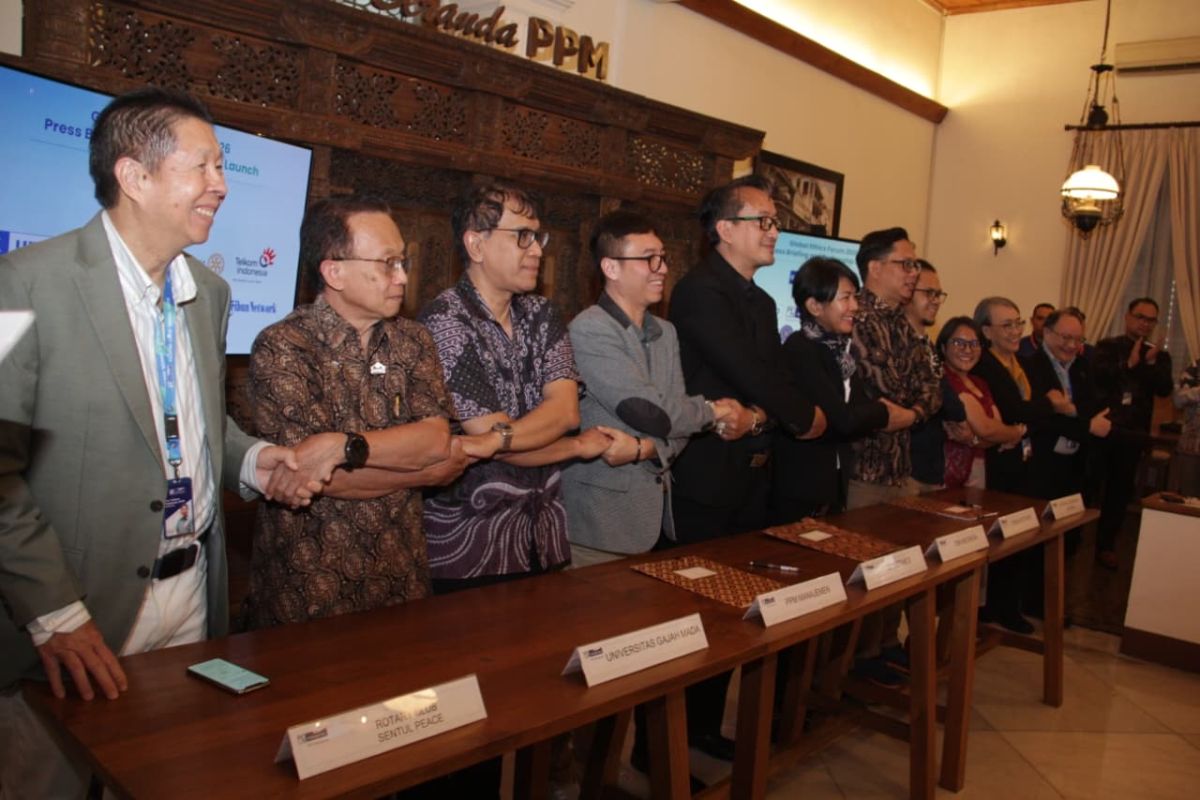
Jakarta (ANTARA) - The cross-sector global platform, Global Ethics Forum (GEF) 2026, has officially partnered with 10 Indonesian organisations, ranging from universities and media outlets to management institutions, to formulate solutions for ethical dilemmas in the fields of technology, peace, higher education, and business.
Speaking in Jakarta on Friday, Dicky Sofjan, Vice President of Globethics and Founder of YADEMA, stated that the forum arrives at a time when society is facing widening fragmentation across geopolitical, economic, social, technological, and environmental sectors.
“In the midst of these conditions, GETh 2026 intends to explore how ethics can shape a more responsible approach to governance, leadership, innovation, and development,” he said.
Organised by the Dharma Etika Madani Foundation (YADEMA) in collaboration with Globethics, GEF 2026 will take place in Sanur, Bali, from 20–22 October 2026. The event involves collaborations with PPM Manajemen, CNN Indonesia, National Geographic Indonesia, TribunNetwork, PT Telkom Indonesia (Persero) Tbk, UNESCO Office Jakarta, Rotary Sentul Peace Club Indonesia, Udayana University, Indonesian Hindu University, and Gadjah Mada University.
The partnership with these 10 institutions also provides an opportunity to present the latest research findings from PPM Manajemen regarding organisational integrity. The research highlights a gap between the ethical commitments declared by organisations and the actual working conditions experienced by employees.
In a study involving 282 respondents across 173 organisations in more than 20 sectors, it was found that while 56.3 per cent of employees believe reporting mechanisms are available in their workplaces, only about 55 to 60 per cent feel sufficiently safe to use them.
Separately, research involving a sample of 444 respondents showed that strengthening ethics cannot rely solely on individual beliefs; these values must be translated into supporting organisational systems, practices, and designs.
“An organisation cannot ask people to behave ethically without looking at the conditions of the environment in which they are asked to work. Our research shows that human values significantly influence how work is designed, and it is that work design that determines whether people can thrive within it,” said Aries Heru Prasetyo, Head of Corporate Strategy and Value Creation at PPM Manajemen.