
Global Energy Crisis Highlights the Need for National Energy Reserves
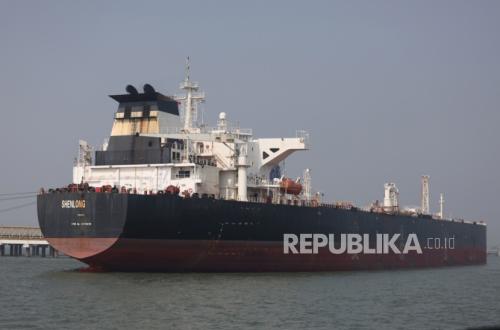
JAKARTA – The global energy crisis has shown that import diversification, subsidies and price interventions are not enough to protect countries from supply disruptions. Indonesia is seen as needing to accelerate the establishment of Strategic Energy Reserves (Cadangan Penyangga Energi/CPE) and reduce its reliance on imported fuel to strengthen long-term energy security.
Intan Salsabila Firma, a senior economist at Tenggara Strategics, said Indonesia was not the only country facing pressure on energy security. Several Asian countries, including the Philippines, Malaysia, Singapore, Japan and South Korea, have also taken steps to secure energy supplies, ranging from strengthening oil reserves and intervening in prices to providing subsidies and diversifying imports.
Intan noted that Malaysia, like Indonesia, maintains petrol and diesel subsidies through a quota-based mechanism to keep prices affordable. South Korea, meanwhile, has reinstated fuel price controls after nearly 30 years without such a policy.
Japan holds oil reserves equivalent to about 254 days of domestic demand. However, it still faces the risk of disruptions to liquefied natural gas (LNG) supplies, which account for around 30–40 per cent of national electricity generation. To reduce LNG consumption, the Japanese government has eased operating restrictions on coal-fired power plants.
The Philippines has gone further by declaring a national energy emergency. About 98 per cent of its crude oil imports come from the Middle East, leaving it highly vulnerable to supply disruptions in the region.
“For Indonesia, energy subsidies and compensation help protect people’s purchasing power, but at the same time increase pressure on the state budget,” Intan said in a statement on Thursday (12 November 2026).
By September 2026, spending on energy subsidies and compensation had risen by about 54.1 per cent year on year, from Rp244.6 trillion to Rp376.8 trillion. The increase was also influenced by a 9.1 per cent rise in the volume of subsidised fuel consumed and a 2.25 per cent rise in consumption of 3kg LPG cylinders.
Intan said this showed that maintaining domestic energy price stability required increasingly large fiscal support amid rising global oil prices. In her view, geopolitical turmoil presents Indonesia with an opportunity to reassess its strategy for safeguarding national energy security.
“Import diversification has not fully protected Indonesia from global energy volatility. High domestic consumption, alongside limited production and refining capacity, means dependence on imports remains difficult to avoid,” Intan said.
One strategic measure she proposed was to accelerate the establishment of the CPE. At present, national energy reserves rely on Pertamina’s operational stocks, which cover around 20–25 days of domestic demand. This is far below the 90-day emergency oil reserve benchmark used by member countries of the International Energy Agency (IEA).
Intan pointed to the experience of Japan, the United States and South Korea as evidence of the importance of emergency oil reserves in responding to energy crises. Such reserves can be used to mitigate supply disruptions.
“State-managed CPE would give Indonesia more time to stabilise domestic supplies, secure alternative import sources and reduce the risk of public panic that could trigger hoarding or fuel shortages,” Intan said.
Intan explained that plans to establish the CPE are set out in Presidential Regulation No. 96 of 2024. The regulation sets targets for reserves by 2035 of 9.64 million barrels of petrol, 10.17 million barrels of crude oil and 525,780 metric tonnes of LPG.
She said the government should expedite a review and revision of Presidential Regulation No. 96 of 2024 to clarify the financing mechanism. The arrangement is expected to allow private-sector participation as a supplement to funding from the state budget.
“Certainty over the funding mechanism is an important prerequisite for the sustainable establishment and management of the CPE,” Intan said.
Source: jawawa.id (https://jawawa.id/newsitem/global-energy-crisis-highlights-the-need-for-national-energy-reserves-1794527468)
Originally published by Republika (https://ekonomi.republika.co.id/berita/toeaih416/krisis-energi-global-jadi-alarm-pentingnya-cadangan-energi-nasional), translated from Indonesian