
Global Energy Agency Warns Oil Prices Set to Become Even More Volatile
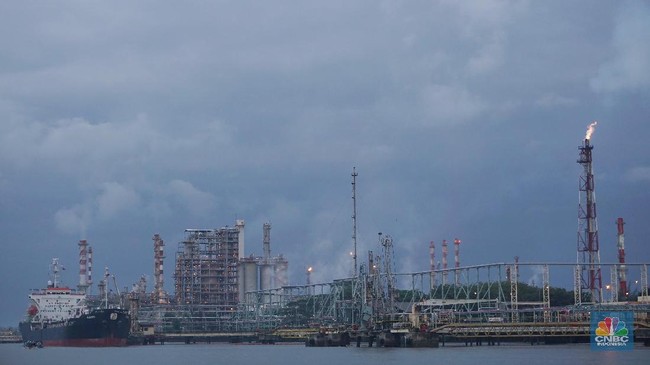
Jakarta, CNBC Indonesia — Global oil prices have strengthened again amid rising market concerns over supply disruptions caused by the war in the Middle East.
The International Energy Agency (IEA) has even warned that oil price volatility could become even wilder ahead of the summer demand peak.
On Thursday’s trading, the global benchmark Brent crude oil contract for July rose 0.34% to US$105.99 per barrel. Meanwhile, the US West Texas Intermediate (WTI) crude oil contract for June strengthened 0.43% to US$101.45 per barrel.
The price increase came after the Organisation of the Petroleum Exporting Countries (OPEC) cut its projection for global oil demand growth in 2026. In its latest monthly report, OPEC lowered the demand growth estimate to around 1.2 million barrels per day (bpd), down from the previous 1.4 million bpd.
On the other hand, OPEC’s oil production has also continued to experience a sharp decline. The group’s output fell by 1.7 million bpd in April and has dropped more than 30%, or around 9.7 million bpd, since the Iran war broke out at the end of February.
OPEC’s latest report is also expected to be the last to include data from the United Arab Emirates after the country officially leaves the cartel as of 1 May 2026.
The IEA’s report highlights the impact of the Iran war on global energy supplies. According to the agency, more than ten weeks since the Middle East war began, supply disruptions from the Strait of Hormuz have been draining global oil reserves at an unprecedented rate.
“With more than 14 million barrels per day of supply cut, the total production loss from Gulf countries has now exceeded one billion barrels,” the IEA wrote in its report.
The IEA also warned that price turbulence is expected to rise further as the summer energy demand period approaches.
ING analysts also assessed that the direction of oil prices remains heavily dependent on geopolitical developments in the Middle East. In their notes, ING stated that the duration of high fuel prices remains a major debate in the market.
“The persistence of fuel prices at high levels is still a topic of very intense discussion and is highly linked to geopolitical developments related to the closure of the Strait of Hormuz, as well as the potential damage to oil and gas infrastructure in the Middle East due to ongoing conflict,” ING analysts wrote, quoted from CNBC.com on Thursday (14/5/2026).
Market players are also monitoring the meeting between US President Donald Trump and Chinese President Xi Jinping, which is seen as potentially influencing the direction of global energy markets.
Former US Commerce Secretary Carlos Gutierrez said China has a major interest in the conflict ending soon, as it is the largest buyer of oil passing through the Strait of Hormuz.
“President Xi wants this war to end as much as President Trump does,” Gutierrez said in an interview with CNBC’s “Squawk Box Asia”.