
Global Digital Ad Dominance Threatens National Media Sustainability
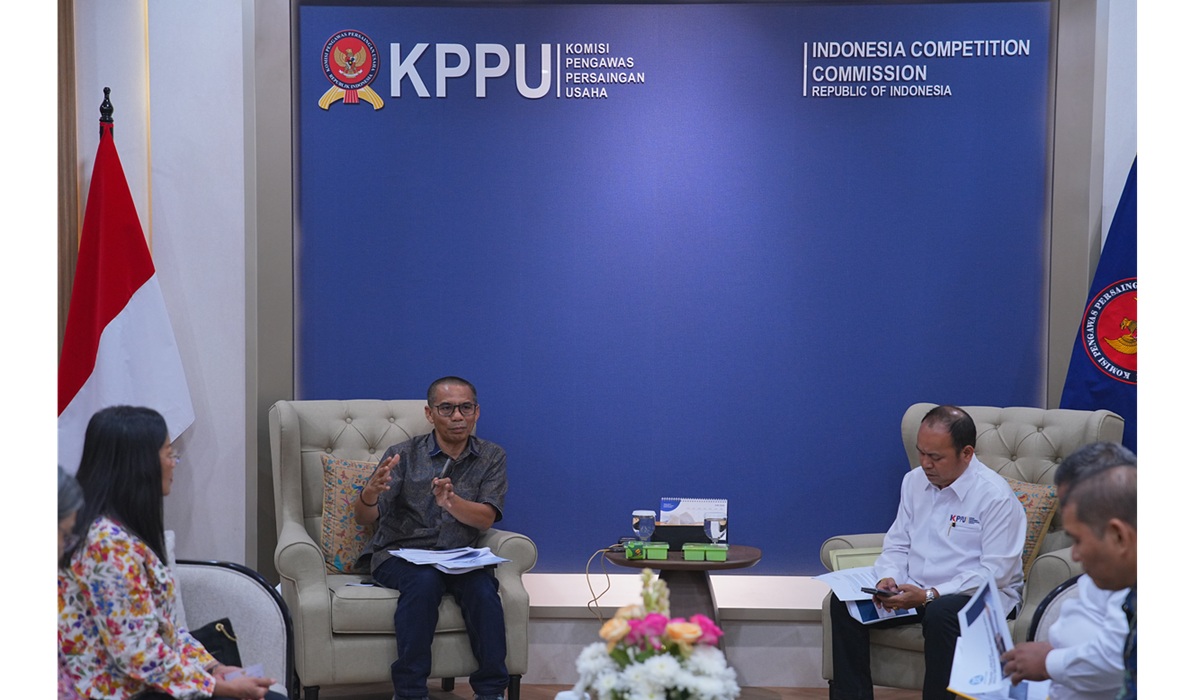
The national press industry is facing a serious threat due to an imbalance in the distribution of digital advertising revenue. Currently, the majority of advertising spending in Indonesia is siphoned off by global platforms, leaving a small portion for tens of thousands of local media companies. This situation is considered a threat not only to business sustainability but also to the independence of the national press. This crucial issue was the main agenda in a meeting between the Press Council and the Competition Supervisory Commission (KPPU) in Jakarta on Wednesday (8/7/2026). Both institutions highlighted the dominance of digital platforms that triggers market inequality, the protection of journalistic works, and the urgent need to update competition regulations. Press Council Member and Chair of the Digital and Sustainability Commission, Dahlan Dahi, asserted that his institution’s challenges have now broadened. Beyond maintaining ethics, the Press Council must ensure that press companies can survive economically amidst the changing digital landscape. “This condition is clearly unsustainable for the press industry. The current market structure has the potential to create monopolies and unfair business competition practices,” Dahlan said. He added that the issue of media sustainability now requires a competition law approach, not just copyright protection. Dahlan also highlighted the use of journalistic works as raw material for training artificial intelligence (AI) models without fair economic compensation. The emergence of generative AI worsens the situation because it presents information directly to users without redirecting traffic back to the original media sites. “Publishers are in a position where they have no bargaining power against the platforms. This system is no longer balanced,” he stressed. As a solution, the Press Council proposed forming a joint task force with KPPU to identify competition law violations in the digital sector. Additionally, a knowledge exchange was proposed with South Africa’s competition authority, which has already studied the dominance of global platforms. KPPU Chair Gopprera Panggabean welcomed the proposal. He acknowledged that Law Number 5 of 1999 concerning the Prohibition of Monopolistic Practices is no longer adequate to address the current challenges of the digital economy. KPPU, together with the House of Representatives, is currently discussing revisions to the law. Without regulatory updates, KPPU will struggle to oversee the digital sector, whose characteristics are vastly different from conditions in 1999. For the Press Council, strengthening the media business ecosystem is non-negotiable. Without economic independence, press companies will find it difficult to maintain independent newsrooms and produce quality journalism for the public.