
Global Debt Interest Rates Rising: Who is Most Vulnerable?
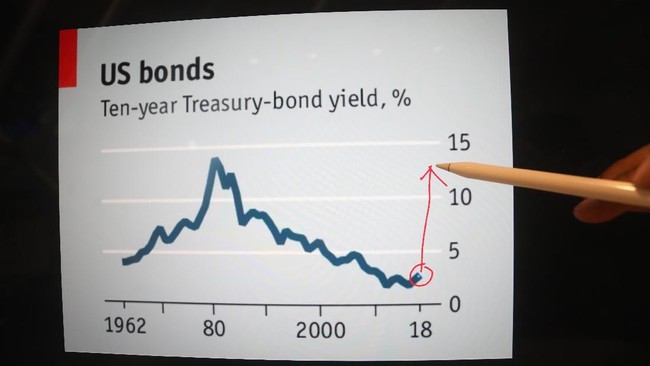
The rise in government bond yields in many countries, particularly in advanced economies, carries significant consequences for various stakeholders. The impact is felt not only by bond investors but also by governments, corporations, consumers, and equity investors.
In recent days, 10-year government bond yields in advanced nations have seen a significant simultaneous increase. For instance, Japanese government bond yields recently breached 3.001%, the highest level in approximately 30 years. US Treasury 10-year yields also faced pressure, reaching levels around 4.8%, the highest since November 2023, while UK gilt yields touched 5.23%, the highest since the 2008 financial crisis.
This recent surge was partly triggered by growing concerns over global inflation following the escalation of the US-Iran conflict in early September 2026. Such geopolitical tension has driven up global oil prices and increased price pressure risks. Under these conditions, markets assess that several central banks may maintain a ‘higher for longer’ policy, keeping interest rates high and monetary policy tight for an extended period. Robin Brooks, a senior researcher at the Brookings Institution, suggests this rise in yields is not merely a short-term fluctuation but a continuation of a medium-term trend that could last for years.
Amidst high bond yields, several parties are bearing the brunt of the impact:
- Governments
Governments are the first to bear the impact of rising bond yields. When long-term debt matures, governments must issue new bonds with much higher interest rates to refinance old debt. Nations with large fiscal deficits, high outstanding debt, and a heavy reliance on foreign investor capital are the most vulnerable to this pressure. According to Masahiko Loo, Senior Fixed Income Strategist at State Street Investment Management, France is among the most at-risk advanced economies. Among developing nations, the greatest pressure will be faced by countries experiencing both budget deficits and current account deficits. “When debt, deficits, and external financing needs converge, markets tend to become far less tolerant,” Loo noted.
Japan serves as a clear example; its government debt has exceeded 200% of GDP, and debt principal and interest payments are expected to absorb more than 25% of government expenditure in the 2026 fiscal year. While the Japanese government might attempt to curb rising yields through bond buyback programmes or by altering debt issuance tenors, such measures may not resolve the fundamental issue of high debt supply relative to investor demand.
- Corporations
Beyond governments, companies are also facing negative impacts from rising bond yields. Corporations must pay more when seeking new loans or refinancing maturing debt. The most intense pressure will be felt by companies with high total debt, weak balance sheets, and significant floating-rate loans. Small-cap companies, which tend to have more floating-rate debt than large corporations, may see their interest burdens rise more rapidly.
Loo identifies the commercial property sector, private equity-owned firms, direct lending portfolios, and low-quality software companies as the most vulnerable groups. Many of these firms previously sought funding under the assumption that capital would always be cheap and easily accessible. Furthermore, the investment boom in the Artificial Intelligence (AI) industry is increasing competition for capital. Tech companies are issuing large amounts of debt to build data centres and supporting AI infrastructure. This high volume of bond issuance means companies must compete with governments for investor funds, potentially driving up funding costs even for financially healthy firms. If borrowing costs become too expensive, projects such as factory construction, data centres, acquisitions, and expansion plans may be delayed as they are no longer economically viable.
- Consumers
Rising long-term bond yields will trickle down to mortgage, vehicle, and other household loan interest rates. Larry Holzenthaler, Senior Portfolio Manager at Catalyst Funds, stated that long-term yields are crucial as they determine both corporate funding costs and mortgage rates. However, the impact is not distributed equally. Low-income consumers will be more pressured because a larger portion of their income is used for loan repayments and essential goods. Conversely, high-income households are generally better able to manage rising instalments and may even benefit from increased savings interest and bond yields. The impact will manifest gradually, as many loans have fixed rates; the pressure will be felt when fixed periods end and consumers must refinance at higher rates.
- Equity Investors
Stock market prices may also undergo corrections due to high bond yields, meaning equity investors could be among those disadvantaged. This occurs because when government bonds offer higher yields, the relative attractiveness of stocks decreases.