
Global Cotton Production Forecast to Collapse, Impact Expected for Importers Like Indonesia
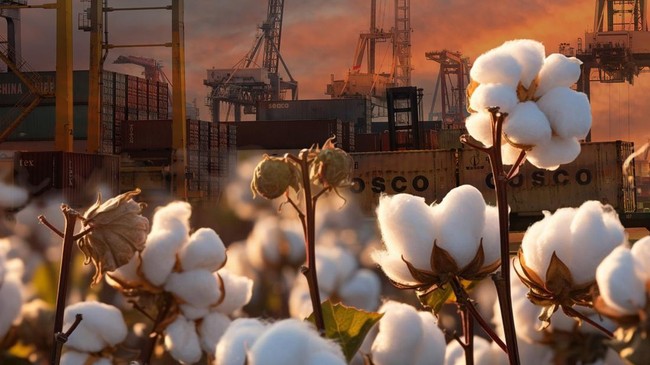
The intensifying El Niño phenomenon is beginning to test one of the essential raw materials for the fashion industry: cotton. The 2026/27 cotton season is expected to take place amidst increasingly volatile weather conditions.
A very strong El Niño has the potential to trigger a combination of extreme heat, drought, heavy rain, and flooding in various regions. The impact is expected to be felt by countries that collectively contribute approximately half of the world’s cotton production, meaning these weather changes could disrupt production in several key cotton-producing areas.
The World Meteorological Organization (WMO) predicts that this sea surface temperature warming phenomenon in the Pacific Ocean will strengthen into a very intense El Niño and persist until February 2027. Such conditions increase the risk of changes in rainfall patterns, droughts, floods, and extreme temperatures across various parts of the world.
The impact does not stop at the agricultural sector. Disruptions in cotton production can ripple through to raw material prices, the textile industry, production costs, and the global apparel supply chain.
Global cotton production is projected to plummet, potentially impacting Indonesia. Based on projections from the United States Department of Agriculture (USDA), global cotton production for the 2026/27 season is expected to decrease by 300,000 bales to 117.3 million bales. For reference, one US cotton bale is generally around 480 pounds or 218 kg. Thus, 117.3 million bales is equivalent to approximately 25.6 million tonnes.
Production declines in Pakistan, Turkey, and the United States are expected to be greater than the production increases in Brazil, Kazakhstan, and West Africa. On the other hand, global cotton consumption is expected to remain high at 122.9 million bales. Global trade is even projected to increase by 400,000 bales to 44.2 million bales. The increase in import demand is primarily expected to come from Indonesia, Pakistan, and Turkey.
Indonesia itself is projected to import 2.1 million bales of cotton in 2026/27, or 458,000 tonnes. This figure is an increase of 100,000 bales from previous projections. The USDA attributes this increase to higher consumption. In terms of production, China remains the world’s largest cotton producer with approximately 35.8 million bales (29.4% of global production), followed by India with 23.8 million bales, Brazil with 18.75 million bales, and the United States with 13.9 million bales. With global production shrinking slightly while consumption remains high, the cotton supply margin could tighten further. For Indonesia, which relies on imports to meet textile industry needs, changes in production in key countries become increasingly critical to monitor.
From the fields to clothing prices, cotton is the starting point of a long fashion industry chain. After harvesting, cotton fibres are processed into yarn and fabric before entering the garment industry. Therefore, disruptions at the plantation level can emerge long before consumers feel the impact in stores.
Lower production has the potential to tighten supply and increase price volatility. At the same time, textile producers face uncertainty regarding raw material costs. These risks could also be exacerbated by logistical disruptions. Drought in several regions could pressure trade routes while adding to shipping costs and delivery times.
CottonConnect CEO Alison Ward stated that periods of extreme heat and unpredictable rainfall could expose the weaknesses of cotton production systems that rely too heavily on external inputs. In such conditions, production costs may rise while harvests become increasingly unpredictable. For the fashion industry, which has a production chain spread across various countries, a disruption at one point can ripple through to subsequent stages, from fibre processing to garment production.
Risks could persist until 2027. The impact of weather on supply chains does not always appear immediately. Disruptions in planting and harvesting seasons require time before they are reflected in raw material supplies, commodity prices, and production costs. The WMO expects El Niño to persist until February 2027 but emphasises that its impact will not be uniform worldwide. Conditions in the Indian and Atlantic Oceans could also affect weather patterns in various regions. For the cotton and fashion industries, diversifying raw material sources, managing inventory, and adaptability are becoming increasingly vital.