
Global Conflicts Drive Up Hajj Costs, DPR: Do Not Burden Prospective Pilgrims
Rising global geopolitical tensions, particularly the conflict between Iran and the United States involving Israel, are beginning to impact the organisation of the Hajj pilgrimage for 1447 H/2026. Increases in aviation fuel prices and flight route adjustments are the main factors potentially driving up Hajj costs.
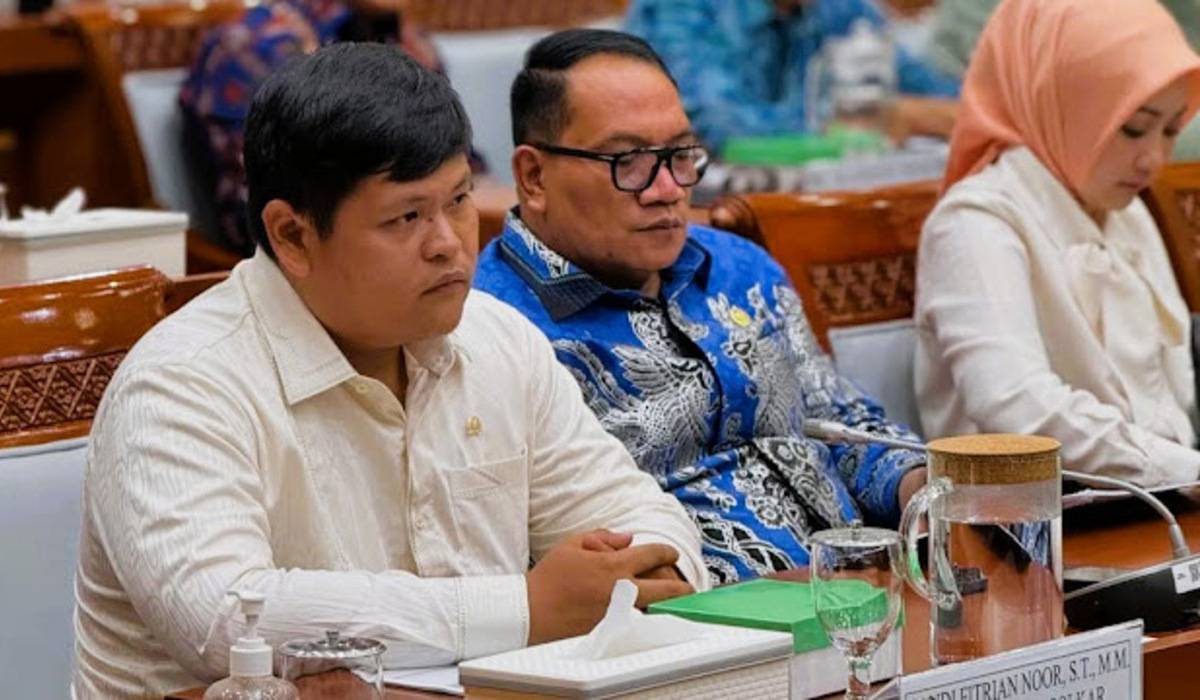
Member of DPR RI’s Commission VIII from the Golkar Party faction, Sandi Fitrian Noor, stressed that this situation must not be used as a reason to burden Hajj pilgrims.
“Global conflicts, rising aviation fuel prices, and the weakening rupiah exchange rate are real threats. But this burden must not simply be shouldered by the pilgrims. We must ensure Indonesia has a sufficiently strong ‘shield’,” he stated in an official remark on Thursday (9/4).
In a previous working meeting of Commission VIII DPR with the Ministry of Hajj and Umrah, it was mentioned that the impact of global conflicts is triggering rises in Hajj operational costs, from aviation fuel prices and insurance premiums to longer flight durations due to route diversions.
On the other hand, Deputy Minister of Hajj and Umrah Dahnil Anzar Simanjuntak conveyed that President Prabowo Subianto has approved that the cost increases not be passed on to pilgrims, but instead covered through the State Revenue and Expenditure Budget (APBN).
Sandi appreciated this step and emphasised that Hajj organisation must be viewed as a public service, not merely a business activity.
“The organisation of the Hajj pilgrimage cannot be approached solely with business logic, but must prioritise principles of public service and social justice,” he asserted.
He explained that the total Cost of Organising the Hajj Pilgrimage (BPIH) for 2026 has been set at Rp87.4 million per pilgrim. Of this amount, pilgrims only bear Rp54.19 million or about 62%, while the remaining Rp33.21 million is covered through the benefits value from Hajj fund management by the Hajj Financial Management Agency (BPKH).
“This is concrete proof that the state is present. Without subsidies from the benefits value, Hajj costs could skyrocket,” he said.
Currently, BPKH manages funds of around Rp171 trillion with net investment returns reaching Rp11.6 trillion in 2024. However, regulations limit the share investment portion to a maximum of 30%.
For this reason, Sandi proposed that the government review increasing the investment limit to 40% in large-cap Sharia stocks, while still prioritising prudence principles.
Additionally, he highlighted the importance of maintaining liquidity reserves currently at around Rp40 trillion, equivalent to twice the annual Hajj costs, to anticipate sudden cost surges, especially from the aviation fuel component which accounts for about 40% of flight operational costs.
Despite facing global pressures, Sandi reminded that the BPIH for 2026 has actually been reduced by around Rp2 million compared to the previous year thanks to cost efficiencies in accommodation in Saudi Arabia.
“This means that if we seriously pursue efficiencies and professional financial management, rises due to global wars can be mitigated. Do not let war rhetoric be exploited to unilaterally increase Hajj costs,” he concluded.
As a people’s representative from South Kalimantan, he assured that he will continue to oversee Hajj financing policies to remain pilgrim-friendly.
“The state must act as a protector. With optimisation of benefits value and strong liquidity reserves, I am optimistic that Hajj costs will remain controlled,” he concluded.