
Global companies target market opportunities ahead of 9th CIIE
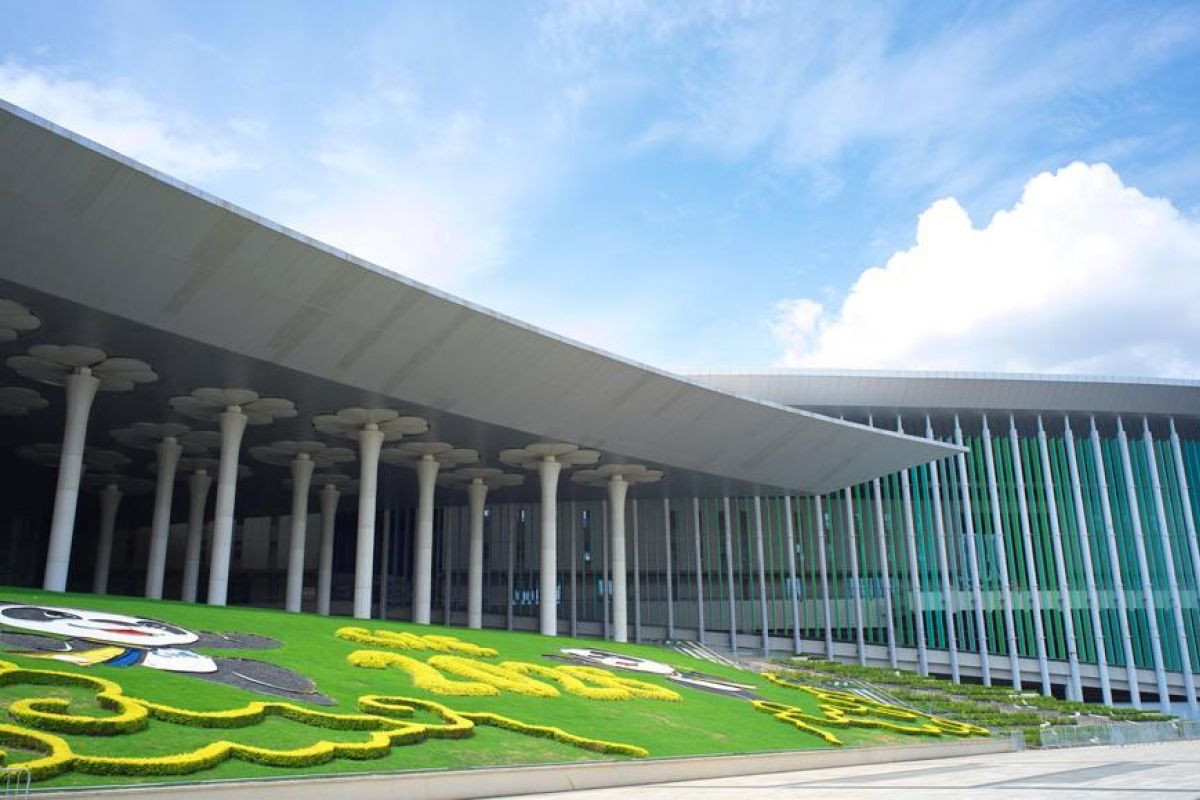
Shanghai (ANTARA) - One month ahead of the 9th China International Import Expo (CIIE), companies from around the world are preparing to gather in Shanghai, bringing a wide range of products, from advanced manufacturing equipment and medical technology to African coffee and Syrian soap.
The annual exhibition, which is the world’s first national-level expo dedicated to imports, serves as a primary platform for foreign companies seeking to access the vast consumer and industrial markets of the world’s second-largest economy.
Since its inception in 2018, the CIIE has attracted participants from over 180 countries, regions, and international organisations. To date, there have been approximately 27,000 participations from overseas exhibitors, with more than 3,400 new products, technologies, and services introduced for the first time.
CIIE 2026, scheduled to take place from 5 to 10 November, arrives as China enters its 15th Five-Year Plan period (2026-2030), once again driving high-standard openness and strengthening domestic demand.
For several companies, this year’s CIIE will mark their first participation. WFL Millturn Technologies from Austria, a machine tool manufacturer that entered the Chinese market over 20 years ago, dispatched exhibition products from the industrial city of Linz in August.
Managing Director of WFL, Stefan Hackl, stated that the company decided to participate in the CIIable due to China’s role as a global manufacturing hub, and hopes to leverage the expo to expand its market in China and the Asia-Pacific.
“I see no reason why we would not succeed in China in the coming decades,” said Hackl.
Singapore-based Perennial Holdings Private Limited is another newcomer. The company has established the first fully foreign-owned tertiary general hospital in China, located in Tianjin.
Since commencing operations, the hospital has served patients from over 40 countries and regions. The company also continues to explore investments in the healthcare sector in several other Chinese cities.
“When you invest in China, you are investing in the most competitive market in the world,” said Executive Chairman and CEO of Perennial Holdings, Pua Seck Guan.
Pua added that the openness of China’s healthcare sector could create more opportunities for foreign investors.
These newcomers arrive as China continues to expand market access for foreign enterprises. In 2025, the country recorded 70,392 newly established foreign-invested enterprises (FIEs), a record high and an increase of 19.1 per cent year-on-year.
In the first half (H1) of 2026, this figure increased by 5.3 per cent from the previous year, with realised foreign direct investment reaching 402.14 billion yuan (1 yuan = Rp2,672).
China is also striving to increase imports to drive domestic consumption and achieve more balanced trade. In August, China’s imports grew by 21.7 per cent, outpacing export growth for the sixth consecutive month.
The opportunities offered by the CIIE are not only intended for large multinational corporations. Nearly 13,000 micro, small, and medium-sized enterprises (MSMEs) from abroad have participated in the first eight editions.
Syrian entrepreneur Muhannad Shakally is preparing to participate in the CIIE for the ninth time. When bringing traditional Syrian soap to the inaugural CIIE in 2018, he was still in the stage of exploring the Chinese market.
Currently, monthly orders have reached over five tonnes, equivalent to approximately 20,000 bars of soap.
“The soap always sells out as soon as it arrives. I don’t even keep stock,” he said.
This year, he plans to introduce Syrian aromatherapy products and herbal teas, hoping to bring more products from his country to Chinese consumers.
For many years, the CIIE has provided free booths for exhibitors from the world’s least developed countries.
This year, organisers will expand the special section for Asian and African products, with various measures to help African businesses capitalise on opportunities created by China’s zero-tariff policies.
Since 1 May, China has implemented a zero-tariff policy on imports from all 53 African countries that have diplomatic relations with China, while also expanding market access through various measures, including the enhancement of “green lanes” for products such as dried chillies, coffee beans, cashews, and wild-caught seafood.
For the first time, an official delegation from Ivory Coast will participate in the CIIE business expo, showcasing several flagship products, including cocoa, coffee, cashews, and kola nuts.
“We are very pleased to participate for the first time. This will be a great opportunity to introduce Ivory Coast to the world,” said Rami Koné, an official from the country’s export agency.
Einar Tangen, a senior researcher at the Centre for International Governance Innovation, noted that small and medium-sized enterprises from the Global South, particularly in Africa, were previously outside the mainstream of global trade.
According to him, China has provided them with the opportunity to share in the benefits of China’s openness and development.