
Global Coal Demand Soars, Yet Prices Remain Subdued
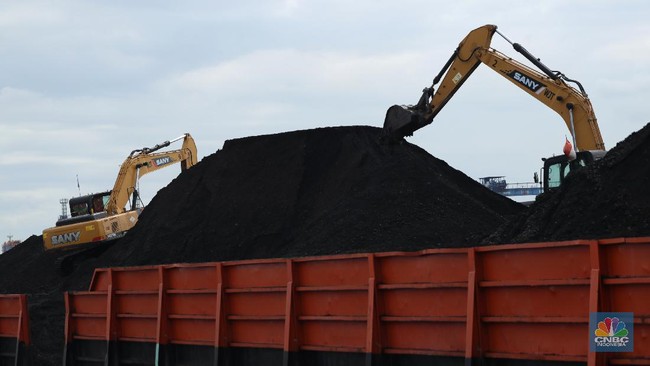
Coal prices continue to move sideways. According to Refinitiv, coal prices closed at US$ 129.25 per tonne on Thursday (2/7/2026), representing a slight decrease of 0.12%. This marks a 0.13% decline over the past two days.
Coal prices are flattening despite positive news. Global coal shipments surged by 14% year-on-year in June 202 ತಮ್ಮ. This increase was driven by a 41% year-on-year jump in coal exports to China. The nation has increased imports to compensate for weakening domestic production and to meet higher electricity demand.
“Since the beginning of the year, global coal shipments have increased by 3% year-on-year, reversing from last year’s trend when shipments fell by 4% year-on-year,” said BIMCO Shipping Analysis Manager, Filipe Gouveia, as cited from marinelink.com.
Throughout this year, China’s coal imports had actually been down 3% year-on-year. However, this trend reversed since May 2026 after domestic coal production weakened due to a mining accident in Shanxi on 28 May 2026. Following the accident, 109 mines in Shanxi were temporarily closed for safety inspections. Although some mines began resuming operations in June, production remains below pre-incident levels.
Outside of China, coal imports to South Korea, Japan, and the European Union also remained strong in June, rising by 25%, 13%, and 15% year-on-year respectively, further supporting the increase in global coal shipments. These nations are seeking alternative energy supplies amidst tight liquefied natural gas (LNG) supplies since March 2026 due to shipping disruptions in the Strait of Hormuz.
“The increase in coal volumes has had a positive impact on the dry bulk shipping market, particularly the Panamax segment, as coal accounted for approximately half of the segment’s tonne-mile demand in June. This has driven an increase in freight rates, reflected in the S&P Global Energy Platts KMAX 9 index, which surged 73% year-on-year in June,” said Gouveia.
From an exporter’s perspective, Indonesia and Russia recorded the largest increases in shipments, at 12% and 33% year-on-year respectively in June.
Looking ahead, the outlook for coal shipments remains varied. China’s coal production is expected to rise again once safety inspections are completed, which could potentially pressure the country’s import needs. Conversely, the El Niño phenomenon is expected to drive coal demand in India and Southeast Asia. El Niño typically results in a weaker monsoon season. This year, India recorded its driest June in 12 years, reducing hydroelectric power production and increasing the need for coal-fired power plants.
According to Gouveia, the situation in the Strait of Hormuz remains a major factor of uncertainty for the global coal trade outlook. “If the Strait of Hormuz reopens fully and sustainably, coal import demand in markets such as South Korea, Japan, and the EU could weaken as LNG supplies return to normal,” he said. While a ceasefire agreement between the United States and Iran has increased the number of vessels traversing the Strait of Hormuz, operational and security challenges still loom. Furthermore, the sustained normalisation of shipping flows depends on reaching a final peace agreement.
Meanwhile, in July developments, domestic coal prices in northern Chinese ports have fallen again due to abundant stocks. Demand from power plants and industry remains sluggish. Buyers prefer to meet needs through long-term contracts rather than purchasing in the spot market. Port inventories remain high, leading traders to continue lowering prices to accelerate sales. Additionally, trading activity remains minimal as many buyers anticipate further price drops.
Imported coal prices have also weakened. The decline in international prices has made imported coal offers cheaper, but it has not yet been enough to attract buyers as electricity utilities still maintain large stocks. The summer season has not yet been able to significantly boost demand. Although the peak period for electricity consumption has begun, relatively cooler weather and high rainfall in several regions have limited the increase in electricity use for air conditioning. Consequently, coal purchase requirements have not increased as expected.
The market outlook remains bearish. Market participants expect prices to remain under pressure in the short term due to a combination of abundant supply, high stocks in ports and power plants, and weak spot demand.
From Europe, it was reported that the European Council has given final approval for the reform of the Research Fund for Coal and Steel (RFCS), extending the programme until 2034. Through this scheme, the EU will allocate funding of up to 120 million euros per year, or approximately 800 million euros over the programme period.
The Deputy Minister for Research, Innovation, and Digital Policy of Cyprus, Nicodemos Damianou, stated that this support will focus on accelerating the green transition, increasing competitiveness, and promoting the sustainability of the coal and steel sectors. The updated legal framework consists of two European Council decisions regulating the management of the European Coal and Steel Community (ECSC) financial assets and guidelines for medium-to-long-term funding. Under the new rules, co-funding levels will be adjusted to match the standards of the Horizon Europe programme. Consequently, companies in the industrial sector can obtain funding from the EU for up to 70% of the project value, while small and medium-sized enterprises (SMEs), startups, and academic institutions are eligible for up to 100% funding.