
Global coal demand projected to decline slightly over the next five years
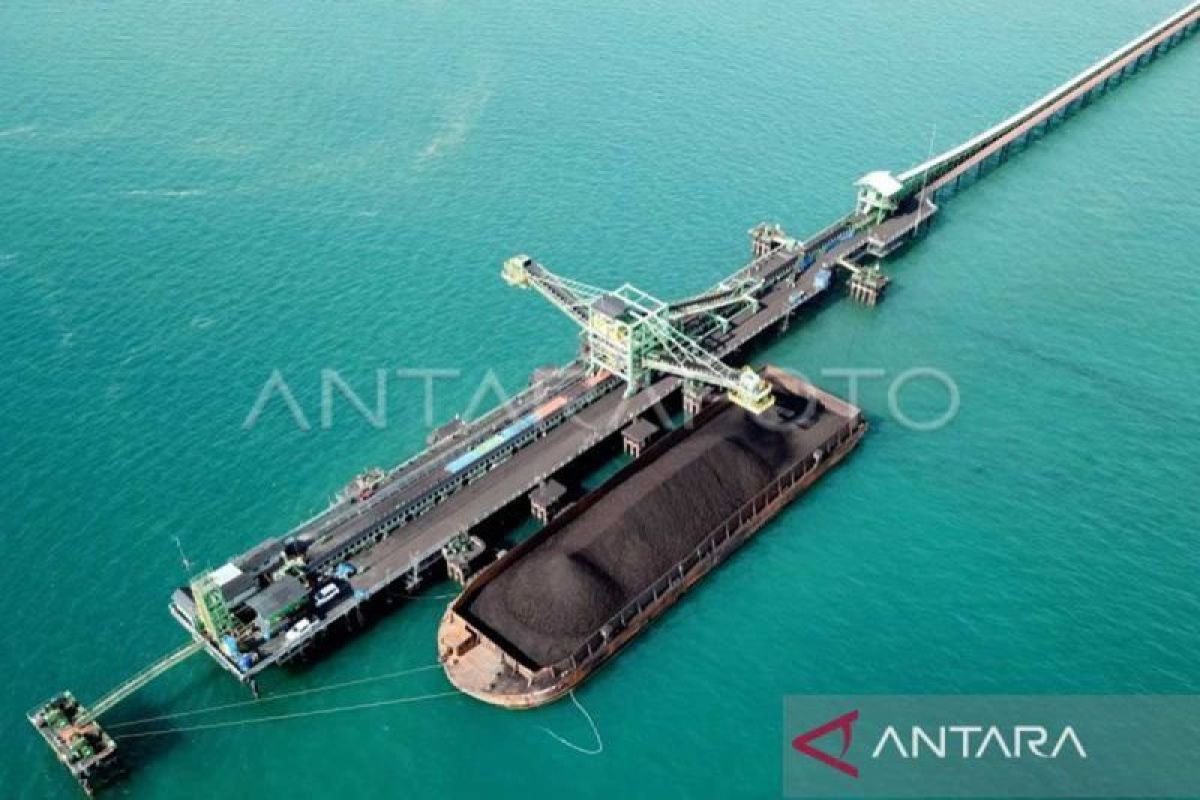
The global market over the next five years is expected to experience a slight decline as pressure from renewable energy intensifies.
he Ministry of Energy and Mineral Resources (ESDM) estimates that global coal demand will tend to decrease slightly in the next five years alongside the increasing use of renewable energy.Tri Winarno, Director General of Mineral and Coal at the Ministry of ESDM, stated that although global demand is projected to weaken, India and the Southeast Asian region still provide room for coal demand growth, including through 2t027.
“The global market over the next five years is expected to tend towards a slight decline, where the pressure of renewable energy becomes stronger, while India and Asia still provide space for growth,” Tri said in Jakarta on Thursday.
China and India are also expected to remain the primary markets for Indonesia’s coal exports.
Data from the Central Bureau of Statistics (BPS) shows that Indonesia’s coal exports in 2025 reached 390.93 million tonnes, a decrease compared to the export volume in 2024, which was 405.76 million tonnes. The value of coal exports in 2025 fell by 19.70 per cent year-on-year to 24.48 billion US dollars from the previous 30.49 billion US dollars.
Of the total export volume, coal shipments to India reached 100.24 million tonnes, China 81.79 million tonnes, the Philippines 37.70 million tonnes, South Korea 28.29 million tonnes, and Japan 27.17 million tonnes.
In terms of value, coal exports to India reached 4.97 billion US dollars, China 4.58 billion US dollars, Japan 2.86 billion US dollars, the Philippines 2.20 billion US dollars, and South Korea 1.84 billion US dollars.
National coal production in 2025 reached 817.48 million tonnes. Of this, 63.89 per cent of production was allocated for export, 30.2 per cent for domestic needs, and 5.9 per cent for stock.
Given these global demand prospects, Tri stated that the government is no longer solely pursuing production volume, but is instead balancing production with market requirements. This approach considers the Domestic Market Obligation (DMO), price conditions, logistics, and the sustainability of reserves.
The government has also set a national coal production target through the 2026 Work Plan and Budget (RKAB) at approximately 600 million tonnes, which is lower than the 2025 production realisation of 817.48 million tonnes.
Tri added that changing global market conditions will also encourage coal producers to increase efficiency and reduce production costs, while strengthening the implementation of Environmental, Social, and Governance (ESG) aspects. Furthermore, downstreaming is necessary to increase the added value of coal and extend the commodity’s value chain within the country.