
Global Chip Crisis to Persist Until 2030, Bad News for Phone and Laptop Traders
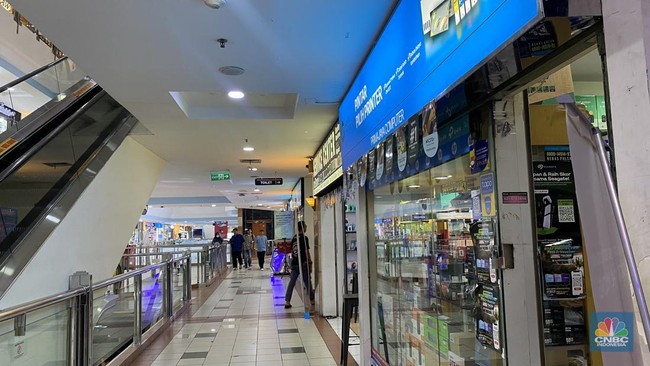
Jakarta — The global chip crisis that has driven component prices sharply higher is predicted to continue for the next five years, dealing a blow to worldwide laptop and smartphone manufacturers.
SK Group chairman Chey Tae-Won stated that global wafer chip supply shortages will persist until 2030, with demand for artificial intelligence chips growing faster than production capacity can accommodate.
SK Group is a South Korean conglomerate that owns SK Hynix, one of the world’s three largest memory chip manufacturers. SK Hynix controls 57 per cent of the high-bandwidth memory (HBM) market — a vertically stacked DRAM technology — and holds 32 per cent of the global DRAM market. SK Hynix’s capacity is matched only by its South Korean counterpart Samsung, while the third major chip producer is US-based Micron.
Chey made his remarks during Nvidia’s developer conference in San Jose, California.
“AI requires a huge amount of HBM, and manufacturing HBM requires enormous quantities of wafers,” said Chey. “Therefore, we need time to procure more wafers, at least 4-5 years. The current shortage could continue until 2030. According to our calculations, we face a 20 per cent wafer shortfall,” he added.
Wafers are thin silicon products used as the primary raw material in memory manufacturing. Manufacturers such as SK Hynix use light to position transistor arrays before cutting the wafers into tiny fragments known as chips.
However, Chey emphasised that SK Hynix will strive to keep DRAM prices stable.
“I cannot announce this now, but our CEO will present a new plan to maintain stable DRAM pricing,” he said.
He added that SK Hynix is currently focused on maximising production in South Korea, as opening production facilities in other countries, including the United States, cannot be done quickly. Chey explained that establishing a new factory requires certainty regarding electricity, water, and talent availability.