
Global Chip Crisis Hits Indonesia: Affordable Chinese Phones Suddenly Become Expensive
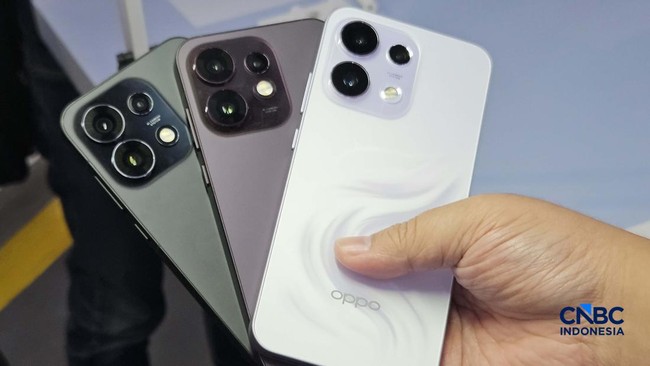
The domestic smartphone market is beginning to feel the impact of the global memory chip crisis. Oppo recently introduced its latest Reno series with a sharp price increase. The Reno series has long been known as Oppo’s mainstay in the mid-range segment. However, its price is now creeping closer to the flagship class, with the top model breaking through the tens of millions of rupiah mark. For illustration, the newly launched Oppo Reno 16 F in Indonesia is now priced starting from Rp 7,999,000 for the 8/128GB storage variant. This figure represents an increase of around Rp 2 million compared to its predecessor, the Reno 15 F, which was priced at Rp 5,999,000. An equally aggressive increase is seen in the regular Oppo Reno 16 model. This phone is now marketed starting from Rp 11,999,000. When compared to the regular Reno 15, which was introduced in early 2026 at a price of Rp 8,299,000, there is a difference of more than Rp 3 million. Responding to the price hike phenomenon that consumers have deemed ‘crazy’, Oppo Indonesia’s management has spoken out. Product Manager of Oppo Indonesia, Deni Setiawan, explained that the price surge was unavoidable due to an accumulation of external factors. One of the main triggers is the scarcity of RAM memory component supply at the global level, exacerbated by macroeconomic pressure in the form of the rupiah’s weakening against the US dollar. However, Deni stated that there is added ‘value’ provided to consumers, even though the selling price has been adjusted. ‘Just talking about this design, we invested 3-4 times higher than before to build this design,’ Deni said after the Reno 16 series launch event in Jakarta last week. Despite the price increase, Deni asserted that Oppo still provides compensation in the form of improved specifications and value for money for users. One of the innovations highlighted in the Reno 16 series is the implementation of a 3D pop-up design that provides an aesthetic visual refreshment. ‘To give the best, newest design, the most different from others, so that young people can really pop-out when they use this phone,’ Deni added. Separately, several global industry experts had previously warned that the memory chip crisis, ongoing since late 2025, would most impact phones targeting the low-end segment. Techwire Asia reported that phone manufacturers cannot get enough DRAM and NAND for low-end devices, forcing them to face difficult choices. The first option is to raise the price of cheap phones so they are no longer as affordable as before. The other option is to cut features that were previously considered standard. This memory chip crisis is suspected to be driven by the development of artificial intelligence (AI) technology. Chip manufacturers are prioritising high-bandwidth memory (HBM) chips for AI projects, thus ‘sidelining’ conventional chips for electronic devices. AI chips are prioritised because they are considered more profitable. Samsung Electronics, SK Hynix, and Micron, which control more than 90% of global memory production, are shifting capacity to serve hyperscaler companies building AI infrastructure, leaving electronics manufacturers scrambling for supply. China’s largest contract chip maker, SMIC, recently warned that the industry has entered crisis mode. Phone manufacturers are said to be unable to complete device assembly due to the scarcity of memory chip components. ‘People are afraid to order too much for the first quarter of next year because no one knows how many memory chips will actually be available. How many phones, cars, or other products can the existing memory chips support,’ said SMIC co-CEO Zhao Haijun to investors earlier this year. The global memory chip shortage is said to be most impactful in the Asia-Pacific market. This is because cheap phones dominate this region. Cheap phones generally take thin margins, leaving very little room to cope with wildly rising memory chip prices. Research firm Counterpoint has slashed its global phone shipment growth projection for 2026 to minus 2.1%. Chinese phone manufacturers such as Honor, Oppo, and Vivo received the sharpest shipment revisions. All three are forecast to record negative growth of more than 1% to less than 4%. Component costs for low-end phones in the price range below US$200 (around Rp 3.3 million) have increased by 25% since the beginning of 2025. Meanwhile, the mid-range and high-end segments have experienced increases of 15% and 10% respectively, according to Counterpoint. Memory chip prices have the potential to rise by 40% throughout Q2-2026, which could add around 8%-15% to production costs. Manufacturers may have to swallow this risk themselves or share the burden by raising selling prices to consumers. ‘In the lower price segments, a sharp price increase on phones is not sustainable,’ said Counterpoint senior analyst Yang Wang recently. ‘And if the cost pass-through mechanism is not possible, OEMs will start cutting parts of their portfolio. That is what we are actually starting to see with significantly reduced low-end SKU volumes,’ he added. The average selling price of phones is forecast to increase by 6.9% year-on-year in 2026. This percentage is up from the previous projection in September 2025, which estimated a 3.6% increase. For markets like Southeast Asia and India, where devices priced below US$200 drive sales volume, this represents a fundamental shift in affordability dynamics.
Source: jawawa.id (https://jawawa.id/newsitem/global-chip-crisis-hits-indonesia-affordable-chinese-phones-suddenly-become-expensive-1783327925)
Originally published by CNBC Indonesia (https://www.cnbcindonesia.com/tech/20260706130851-37-748365/krisis-dunia-sudah-sampai-di-ri-hp-china-murah-mendadak-jadi-mahal), translated from Indonesian