
Global Car Makers Admit Struggle to Compete with China
Global car manufacturers are facing severe challenges. American, European, and Japanese brands are losing their dominance in the global market to Chinese competitors.
Chinese automakers not only lead the electric vehicle (EV) industry but also in battery technology, design, and software.
In Indonesia, Chinese car brands sold 113,258 units out of a total of 803,687 vehicles in 2025. These were predominantly BYD, Wuling, and Chery EVs. The figure represents a doubling of sales compared to the previous year, reflecting growing acceptance of Chinese brands which have only entered the Indonesian market two or three years ago.
China exports around seven million cars annually worldwide, nearly half of which are EVs.
During Auto China 2026, the world’s largest auto exhibition, BBC visited factories in Beijing and Hefei. There, it found astonishing levels of automation and rapid software development, forcing foreign brands that once dominated global and Chinese markets to struggle to catch up.
“We have no chance against this,” said Honda’s CEO Toshihiro Mibe to Japanese media after visiting a highly automated Shanghai factory.
Ford’s CEO Jim Farley has also warned that Western carmakers are “struggling to survive” as Chinese competitors aggressively expand globally.
After decades of investing in joint ventures with local partners to assemble vehicles, foreign automakers are now forced to reshape their partnerships to survive.
“The biggest mistake made by developed nations is assuming this transition is only about electric vehicles,” said Bill Russo, a Shanghai-based automotive analyst. “It’s actually a battle over who will lead the next generation of mobility technology.”
Wheeled smartphones
China’s dominance extends beyond just car units.
According to Rhodium Group, China is now the largest exporter in over 315 product categories, up from 163 in 2016. Many of these relate directly to EV supply chains, including batteries, modular components, and manufacturing machinery.
The International Energy Agency (IEA) estimates that producing a small EV SUV in China costs at least 30% less than in developed countries, mainly due to lower battery costs and highly integrated supply chains.
This advantage stems from years of full government support. Rhodium estimates China has poured tens of billions of dollars into EV and battery manufacturing in recent years. These subsidies, heavily criticised by the EU and US for distorting markets, have enabled Chinese firms to expand massively while cutting prices.
Xpeng told BBC its current focus is on humanoid robots and flying cars alongside EVs.
Intense domestic competition in China has also accelerated innovation. Tech giants like Xiaomi, Huawei, and Alibaba are now producing EVs, bringing consumer tech standards into the automotive industry.
“They [Chinese companies] are no longer racing against the West,” Russo said. “They’re now racing against each other.”
Modern vehicles increasingly rely on software for driver assistance and entertainment features. This innovation gives tech firms a significant edge that traditional automakers struggle to match.
This shift is most evident at Xiaomi’s EV factory on the outskirts of Beijing, where a new unit rolls off the production line every 76 seconds on average. Xiaomi launched its first EV in 2024 and has already become one of China’s top-selling brands.
Their main strategy is integrating vehicles with smartphones, apps, and smart-home ecosystems into a single system.
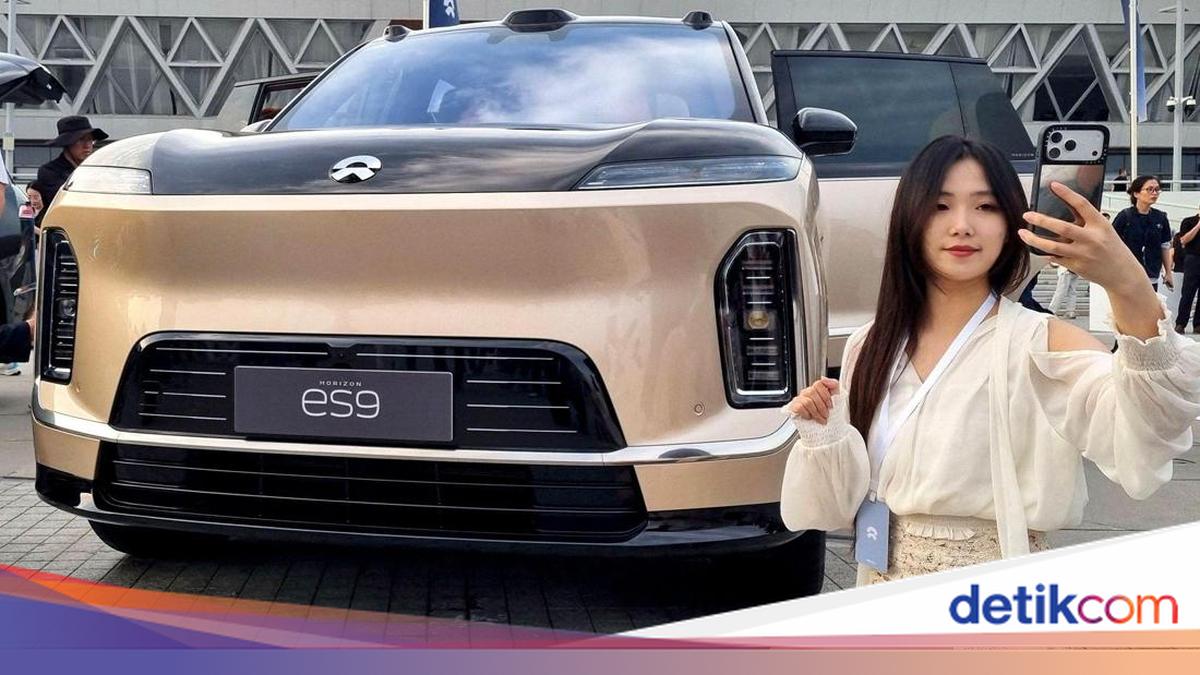
Meanwhile, at Nio’s Hefei factory, most production lines operate almost fully automatically. BYD has developed ultra-fast charging technology that adds 400km of range in just five minutes – comparable to refuelling at a petrol station.
XPeng founder and CEO He Xiaopeng told BBC the company is prioritising humanoid robots and flying cars alongside EVs. “In the next decade, all car companies will also be robotics firms,” he said.
Re-evaluation
Foreign automakers have long relied on China to supply global markets. Tesla, for example, exports Shanghai-made Model 3s to Europe, while BMW sells China-assembled Mini Electrics abroad. However, many foreign brands are collapsing in China’s domestic market. According to data from consultancy Automobility, foreign brands’ market share in China’s auto sector has plummeted from 64% in 2020.