
Global Business Summit Discusses BRI Infrastructure to Accelerate SDG Achievement
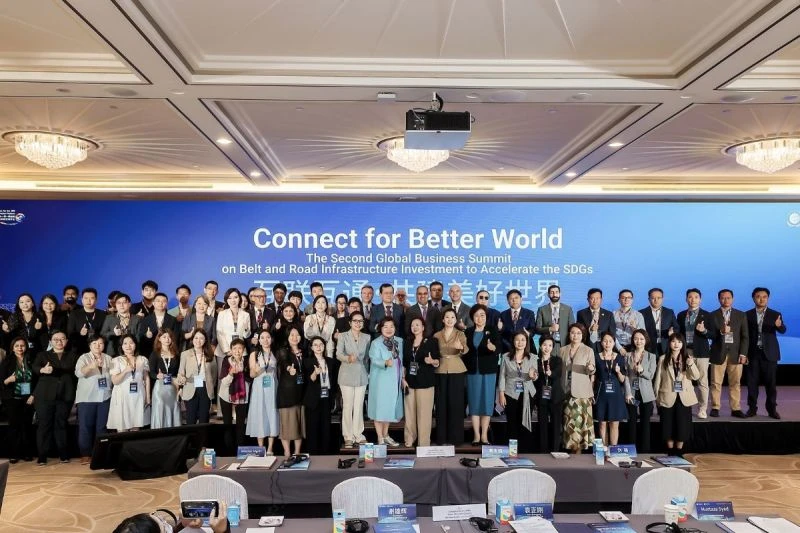
Infrastructure development is increasingly being positioned as a vital component of the sustainable development agenda. This was a primary focus of The Second Global Business Summit on Belt and Road Infrastructure Investment to Accelerate the SDGs, held in Singapore in September 2026.
Under the theme “Connect for a Better World”, the forum—organised by the Sustainable Infrastructure for the Belt and Road Initiative to Accelerate the SDGs Action Platform from the UN Global Compact alongside the UN Global Compact Network Singapore—brought together over 300 senior leaders and representatives from international organisations, global and regional companies, academics, think tanks, and civil society organisations.
The summit served as a platform to discuss how infrastructure investment can be directed not only to strengthen economic connectivity but also to support the achievement of the 2030 Agenda and the Sustainable Development Goals (SDGs).
During the forum, several sustainability-based actions and private-sector-led partnerships were launched. The discussed agenda covered sustainable infrastructure, energy transition, sustainable finance, supply chain resilience, responsible artificial intelligence (AI), and the empowerment of women and youth.
Infrastructure and Collaboration as Drivers of SDGs
A key message of the summit was the importance of cross-border and cross-sector collaboration in addressing increasingly complex development challenges.
UN Global Compact CEO and Assistant Secretary-General Sanda Ojiambo noted that resilient infrastructure is a fundamental pillar of long-term sustainable development. According to Ojiambo, the various initiatives emerging from the forum demonstrate that progress requires collaboration across borders, sectors, and value chains.
The forum resulted in 12 SDG-oriented outputs. These include green mining, electricity carbon footprint standards, biodiversity conservation, marine protection, sustainable transport, the development of women’s micro-enterprises, and inclusive global development.
Additionally, the summit launched expert groups focusing on sustainable energy and sustainable digital infrastructure. The inclusion of these agendas highlights the growing interconnectedness between physical development, digital technology, energy, and sustainability in future development strategies.
Promoting More Sustainable Business Models
The Belt and Road Initiative (BRI) agenda within the context of this forum also demonstrated how infrastructure investment is linked to sustainable development needs. Infrastructure is viewed not merely through the lens of investment scale or physical construction, but through its impact on connectivity, energy, the environment, supply chains, and society.
UN Under-Secretary-General for Economic and Social Affairs Li Junhua emphasised the importance of cooperation between governments, international organisations, financial institutions, and the private sector to maintain cross-border connectivity.
For the business world, these developments indicate the increasing importance of integrating sustainability into investment planning and business strategies. Financing, technology, infrastructure, and innovation must be directed to provide economic benefits while addressing social and environmental challenges.
With the emergence of various new initiatives from the summit, the SDG agenda increasingly positions the private sector as part of the development solution. Collaboration remains the key to translating sustainability targets into programmes and business models that can be practically implemented across various industries and regions.