
Global Banking Regulators Warn of AI Dangers, New Risks Looming!
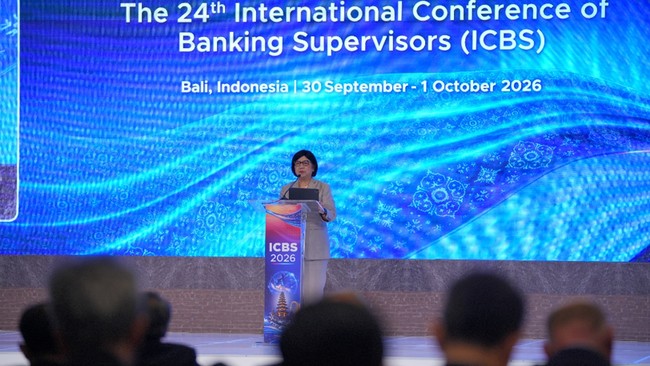
The Basel Committee on Banking Supervision (BCBS) is paying significant attention to the development of artificial intelligence (AI), which is deemed to have the potential to create new risks for the global banking system.
In a meeting held in Indonesia on 28-29 September 2026, global banking regulators and supervisors discussed the impact of AI on the financial sector, including operational risks, cyber threats, and the increasing interdependence between financial institutions. The Chair of the Basel Committee, Erik Thedéen, stated that AI development is progressing very rapidly and is beginning to transform the landscape of the global financial system.
The Committee noted that while frontier AI offers significant opportunities to enhance efficiency and innovation within the financial services industry, the technology also possesses the potential to exacerbate operational vulnerabilities, including cyberattack risks and increasingly complex interconnected risks within the global financial system. Consequently, the BCBS emphasised that the implementation of AI in crucial financial functions requires robust governance, adequate risk management, and continuous supervision.
As a follow-up, according to an official BCBS release on the BIS website, the Basel Committee has agreed to review the adequacy of the current operational risk framework, specifically the event-type loss categories, with a focus on cyber risks and AI developments. In addition to AI, global banking regulators are also accelerating studies on bank exposure to crypto-assets. The BCBS stated it has made progress in reviewing prudential standards regarding crypto-asset holdings by banks and plans to provide an official update before the end of 2026.
In the area of banking transparency, the Basel Committee approved final standards for machine-readable Pillar 3 disclosures. This policy aims to make it easier for investors, regulators, and market participants to access and compare bank risk data. Currently, most banks still submit risk disclosure reports in PDF format, which complicates the process of data processing and interbank comparison. The new standard is scheduled for publication by the end of this year.
Regarding global banking supervision, the Basel Committee also approved the results of the late 2025 assessment of banks categorised as Global Systemically Important Banks (G-SIBs). These assessment results will be submitted to the Financial Stability Board (FSB) before the official publication of the 2026 G-SIB list. The Committee also agreed on a revision of the G-SIB assessment methodology to reduce ‘window dressing’ practices, or the manipulation of financial positions ahead of reporting periods. According to the BCBS, such practices have the potential to obscure true risk profiles and disrupt the effectiveness of global banking standards. The revised rules will be published in October 2026.
Meanwhile, regarding Interest Rate Risk in the Banking Book (IRRBB), the Basel Committee plans to issue a public consultation regarding additional Pillar 2 guidance for banks and supervisory authorities. This step follows an evaluation showing remaining weaknesses in interest rate risk management within the banking sector. The public consultation regarding the new rules is scheduled for release next month.
The meeting in Bali also discussed updates to liquidity risk management principles, the strengthening of credit supervision instruments and bank governance, as well as anti-money laundering and countering the financing of terrorism (AML/CFT) supervision practices. The results of these studies and policy consultations will be published gradually until the end of the year.
The BCBS event was opened by the Governor of Bank Indonesia, Destry Damayanti. Destry emphasised that changing business models and rapid technological progress require effective, forward-looking, and adaptive supervision. “As digitalisation and new technologies continue to transform banking, we must maintain the right balance between innovation and resilience, supported by good governance and effective supervision,” said Destry, in a Bank Indonesia release on Monday (5/10/2026).
To recognise vulnerabilities early, supervisors need to understand not only the financial condition of banks but also the interconnectedness within the financial ecosystem, changes in business models, and rapid technological advancements. Therefore, Destry stressed the importance of cooperation between authorities and across borders through dialogue and knowledge exchange to strengthen supervisory capabilities in anticipating risks and responding to the changing financial landscape to mitigate risks before they disrupt the financial system.
Source: jawawa.id (https://jawawa.id/newsitem/global-banking-regulators-warn-of-ai-dangers-new-risks-looming-1791201391)
Originally published by CNBC Indonesia (https://www.cnbcindonesia.com/market/20261005181432-17-773511/regulator-perbankan-global-ingatkan-bahaya-ai-risiko-baru-mengintai), translated from Indonesian