
Global 'Backlash' Against America: Visa and Mastercard Lose Their Grip
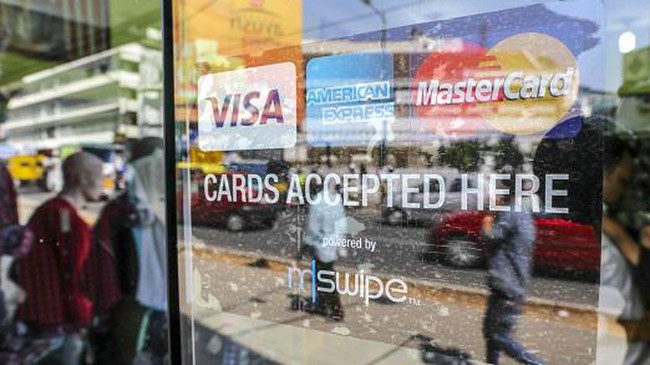
The dominance of the United States (US) financial system is facing a new challenge. This time it is not just about the dollar, but also the global payment system, which for decades has largely depended on Western networks and American companies.
Citing The Economist, this trend is becoming visible through resistance from various countries to the dominance of US payment infrastructure. The initial casualties could be two American payment giants, Visa and Mastercard.
For years, Visa and Mastercard have been a crucial part of the global payment system. They are present in many countries and dominate cross-border card payment networks. However, many governments are now beginning to reconsider.
The reason is quite simple: payment systems are no longer just a technical banking matter. Amidst rising geopolitical tensions, payment channels have become part of economic sovereignty.
The US itself is increasingly overt in using its financial power as a foreign policy tool. US Treasury Secretary Scott Bessent once described Washington’s policy direction as a form of 21st-century economic statecraft, where global access to the dollar and the US economy is no longer unconditional.
This message has made many countries uncomfortable. If access to the dollar, card networks, correspondent banks, or global transfer systems can be used as leverage, then building one’s own payment system becomes an increasingly logical choice.
One of the most interesting examples comes from Brazil. The country’s instant payment system, Pix, has become a new source of friction with the US. Jamieson Greer, the top US trade official, complained that Pix harms American companies like Visa and Mastercard. The US even proposed an additional 25 per cent tariff on Brazil in response.
However, Brazil did not flinch. Brazilian President Luiz Inacio Lula da Silva called Pix a national achievement. “Pix is a Brazilian achievement and we will not give it up.” This stance is not limited to Lula’s camp. His right-wing political rival, Flavio Bolsonaro, also does not want Brazil to abandon Pix. He merely opened room for compromise so that Pix is not linked to cross-border payment channels that compete with the US.
The Pix case illustrates a new reality in global finance. Domestic payment systems are beginning to be seen as a symbol of independence, not just a money transfer facility.
Concerns about the dominance of Western payments previously arose mostly in countries with poor relations with the US. Russia is the clearest example. After being hit by Western sanctions, Moscow switched to using its own systems, such as SPFS for interbank messaging and Mir for its card payment network.
China has also long been building alternative channels. Beijing is strengthening its Cross-Border Interbank Payment System (CIPS) as an alternative to the cross-border bank payment system long associated with Western dominance. In March, CIPS processed an average daily transaction value of 920 billion yuan, or about US$134 billion. That figure was up 20 per cent compared to the same period the previous year. In April, CIPS’s daily transaction volume even reached a record CNY 1.2 trillion. China is also expanding its payment infrastructure through the digital yuan, Alipay, and WeChat Pay. In Beijing’s view, the main issue is not just making the yuan more widely used, but ensuring China has secure international payment channels.
However, concerns about the dominance of US payments are no longer confined to Russia or China. Europe is also growing restless. Aurore Lalucq, chair of the European Parliament’s economic and monetary committee, warned that a hostile US could cut off Europe’s access to payment infrastructure. “You cannot say you were not warned.” European Central Bank President Christine Lagarde conveyed a similar message. According to her, digital payments must be under the region’s own control. “We need to have digital payments under our own control.”
From this point, Europe is accelerating several payment projects. There is SEPA, the euro payment area that now covers 41 countries. There is also Wero, a European-made digital wallet backed by banks and fintech companies. Additionally, the European Central Bank is targeting the launch of the digital euro by 2029.
India is moving forward with its United Payments Interface (UPI). This QR code-based payment system can already be used in nine other countries, with plans for further expansion. UPI carries an interesting message. The system is offered not just as payment technology, but also as a way to strengthen the economic sovereignty of other nations. “We will make you sovereign.” This statement encapsulates the new direction of the world’s payment systems. Countries are not only seeking systems that are fast and cheap, but also systems they can control themselves.
Economist Eswar Prasad from Cornell University says that diversification away from the US is now a strong desire among policymakers in many countries. The debate has long centred on the dollar, but payment systems are now seen as a more realistic path to reducing dependency.
This change is clearly bad news for Visa and Mastercard. For years, these two payment giants have enjoyed a position as key players in the global payment system. Their business is highly profitable, with operating margins for Visa and Mastercard above 50 per cent. However, the rise of domestic and regional payment systems could erode their business space. In their latest annual reports, both Visa and Mastercard cited special treatment for domestic payment systems as a business risk. This is understandable. If more countries push their citizens to use local systems, transactions passing through global card networks could decrease.