
Global Arms Race Heats Up as Europe and Asia Lead the Spending Surge
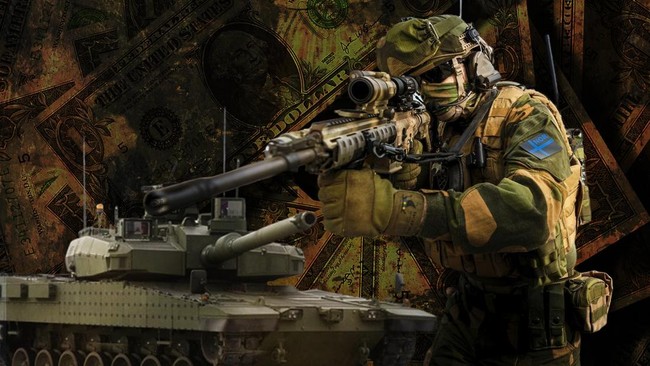
Global military spending hit a new record in 2025. Moves by numerous countries in Europe and Asia to bolster their militaries have propelled global defence expenditures to US$2.89 trillion, or approximately Rp49,708 trillion (assuming an exchange rate of Rp17,200/US$1).
Citing CNBC International, data from the Stockholm International Peace Research Institute (SIPRI) indicates that global defence spending rose for the 11th year in a row in 2025. This increase comes amid ongoing wars, uncertainties, and geopolitical upheavals in various regions worldwide.
Compared to the global economy, military spending climbed to 2.5% of gross domestic product (GDP). This marks the highest level since 2009.
Europe Drives the Rise in Military Spending
Europe emerged as the primary driver of the global increase in military spending in 2025. Defence expenditures in the region surged 14% to US$864 billion.
Europe’s military spending hike aligns with long-standing demands from US President Donald Trump, who has repeatedly urged European nations to boost their defence contributions.
Excluding Russia, Germany recorded the largest military budget in Europe. Berlin’s defence outlays rose 24% from the previous year to US$114 billion.
Germany’s military burden surpassed the NATO guideline of 2% of GDP for the first time since 1990. In 2025, Germany’s defence spending ratio reached 2.3% of GDP.
Spain also posted a major spike. Its military spending jumped 50% to US$40.2 billion. This increase pushed Spain’s defence burden above 2% of GDP for the first time since the NATO spending target was agreed in 1994.
In June 2025, NATO member states, excluding Spain, set a long-term goal to raise defence spending to 5% of GDP by 2025. However, Madrid opted not to join the 5% commitment.
US Military Spending Declines
Although global defence spending continued to rise, its growth rate slowed in 2025. Worldwide military outlays increased by just 2.9%, far below the 9.7% rise in 2024.
This slowdown was mainly due to a 7.5% drop in US military spending. The decline followed the lack of approval for new financial aid to Ukraine throughout the year.
Nevertheless, the US remains the world’s top defence spender at US$954 billion.
China holds second place. Beijing’s military spending rose 7.4% to around US$336 billion. However, several experts believe the actual figure could be higher, as China does not fully disclose its military spending details.
“The decline in US military spending in 2025 is likely temporary,” said Nan Tian, Director of SIPRI’s Military Expenditure and Arms Production Programme.
The Pentagon is reportedly requesting a defence budget of about US$1.5 trillion for fiscal year 2027. If approved, it would be the largest defence budget request in history.
Asia Joins the Arms Spending Frenzy
Military spending in Asia and Oceania also rose sharply. In 2025, defence outlays by countries in the region increased 8.1% to US$681 billion. This is the largest annual rise since 2009.
According to Diego Lopes da Silva, a senior researcher at SIPRI, US allies in Asia and Oceania such as Australia, Japan, and the Philippines are ramping up military budgets not only due to longstanding regional tensions but also rising uncertainties about US support.
Taiwan was a key highlight. Its military spending rose 14% to US$18.2 billion, or 2.1% of GDP. This marks Taiwan’s largest annual increase at least since 1988.
The hike occurred as Chinese military activities around Taiwan intensified. SIPRI noted that in 2025, China conducted two major military exercises around Taiwan, in April and December.
Local media also reported a sharp surge in Chinese military aircraft incursions around Taiwan, from 380 times in 2020 to a record 5,709 times in 2025.
Japan also boosted its military spending. The Land of the Rising Sun’s defence outlays rose 9.7% to US$62.2 billion in 2025. This equates to 1.4% of GDP, the highest ratio since 1958.
Prime Minister Sanae Takaichi pledged to raise Japan’s defence spending to 2% of GDP upon taking office. This move reflects broader changes in Tokyo’s security posture.
Japan also lifted its ban on exporting lethal weapons in April. Tokyo then signed its first warship export project with Australia. Under the project, Mitsubishi Heavy Industries will build three new frigates for the Royal Australian Navy.
Defence Stocks Soar
The boom in defence spending also lifted shares in the military sector in Asia and Europe.
In South Korea, Hanwha Aerospace shares surged 192% throughout 2025. This continued a 153% rally from 2024. Hanwha Aerospace is known as the producer of the K9 self-propelled howitzer, one of the world’s most exported artillery systems.
Other South Korean defence company shares also skyrocketed. Hyundai Rotem, the main producer of the K2 main battle tank, rose 278%. Meanwhile, LIG Defense & Aerospace, a producer of air defence systems, gained 90% over 2025.
In Japan, Prime Minister Takaichi’s stronger defence commitments propelled defence sector shares higher, even before Tokyo eased weapons export rules.
Mitsubishi Heavy Industries shares rose 72.7% throughout 2025. Kawasaki Heavy Industries gained 42.6%, while IHI Corp surged 107%.
Defence stock rallies also occurred in Europe. German firm Rheinmetall’s shares soared 154%, while ThyssenKrupp climbed 215%.
In 2025, the European Union announced plans to mobilise up to €800 billion, or about US$883 billion, by 2030 to bolster security.
Source: jawawa.id (https://jawawa.id/newsitem/global-arms-race-heats-up-as-europe-and-asia-lead-the-spending-surge-1777434750)
Originally published by CNBC Indonesia (https://www.cnbcindonesia.com/research/20260428124925-128-730545/dunia-berlomba-adu-senjata-eropa-asia-paling-jor-joran), translated from Indonesian