
Glacier Collapse That Triggered Nepal Flash Flood Recorded as Equivalent to M5.2 Earthquake
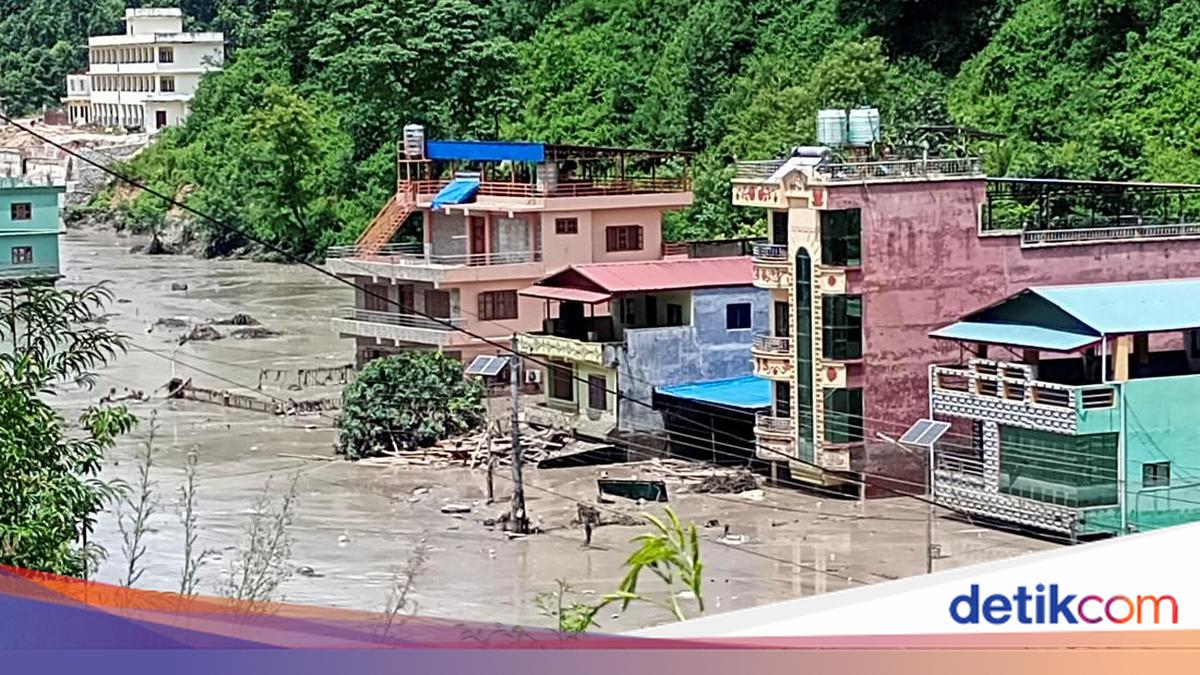
Initial investigations have concluded that a glacier collapse caused the devastating flash flood on the Nepal-Tibet border on Wednesday (26/8) local time. The impact of the glacier collapse in the remote Himalayan area was so powerful that it was recorded as equivalent to a magnitude 5.2 earthquake.
Latest data indicates that at least 472 people have died as a result of the disaster, comprising 469 fatalities in Nepal and three in Tibet. More than 1,400 others, including hundreds of foreign nationals from dozens of countries, are reported missing in Nepal. A separate report from Chinese state television, CCTV, stated that 558 people are missing in the Gyirong area of Tibet, including 260 foreign nationals.
Initial reports, as cited by Al Arabiya on Friday (28/8/2026), had suggested that an earthquake triggered a landslide that fell into the Lednde Khola river in Nepal, which then caused the devastating flash flood. However, the United States Geological Survey (USGS) has confirmed that the disaster was caused by a glacier collapse, which triggered a rapid flow of rocks, ice material, mud and debris that swept through the Himalayan mountain river system.
The event occurred when a glacier or part of a glacier broke apart and collapsed. According to the USGS, the impact of the collapsed material falling to the valley floor was so powerful that it was recorded at magnitude 5.2. The recorded magnitude is equivalent to a moderate earthquake, which explains reports of seismic activity.
Glacier expert Dr Simon Cook from the University of Dundee told the BBC that his team detected a collapse at the lower section of a glacier located 15 kilometres west of where the flash flood struck.
Glaciers are large masses of ice formed over thousands of years from compacted snow that slowly flows downhill under its own weight. Glaciers also contain large amounts of rock material and sediment. As they advance, glaciers slowly erode and shape mountain landscapes while carrying large volumes of eroded material.
The collapse of a large section of glacier in the steep highland area triggered what was essentially an avalanche of ice and rock. The large volume of ice material and rock debris entered the Lende Khola, a tributary of the Bhote Koshi river, causing a sudden surge in river flow that carried water, sediment and large boulders downstream.
Analysis by the International Centre for Integrated Mountain Development (ICIMOD), an intergovernmental scientific body, found that downstream river water levels rose by between 7 and 9 metres within 30 minutes. Several water level monitoring stations were swept away by the current.
The river valley in the area is flanked by steep mountains that prevented the water from spreading laterally, channelling the debris and water flow at very high speed, as seen in video footage of the flash flood circulating on social media.
For years, scientists have warned about the melting of ice and permafrost in the cryosphere — the frozen parts of the world — due to rising temperatures caused by the accumulation of greenhouse gases from human activity over the past 200 years. Although the exact cause of the glacier collapse in Nepal is not yet clearly known, global warming is causing glaciers and permafrost to melt at an accelerating rate.
Dr Cook explained to the BBC that “we are increasingly seeing landslides, debris flows, glacial meltwater runoff, lake outburst floods, and glacier collapses, because climate warming is ultimately destabilising these high mountain environments”.
An ICIMOD report earlier this year revealed that Himalayan glaciers in the Hindu Kush region have been losing ice mass at twice the rate since 2000. This condition has the potential to exacerbate hazard risks, such as flooding.