
GKSR Proposes Changes to Political Party Verification Mechanism, Here is Why
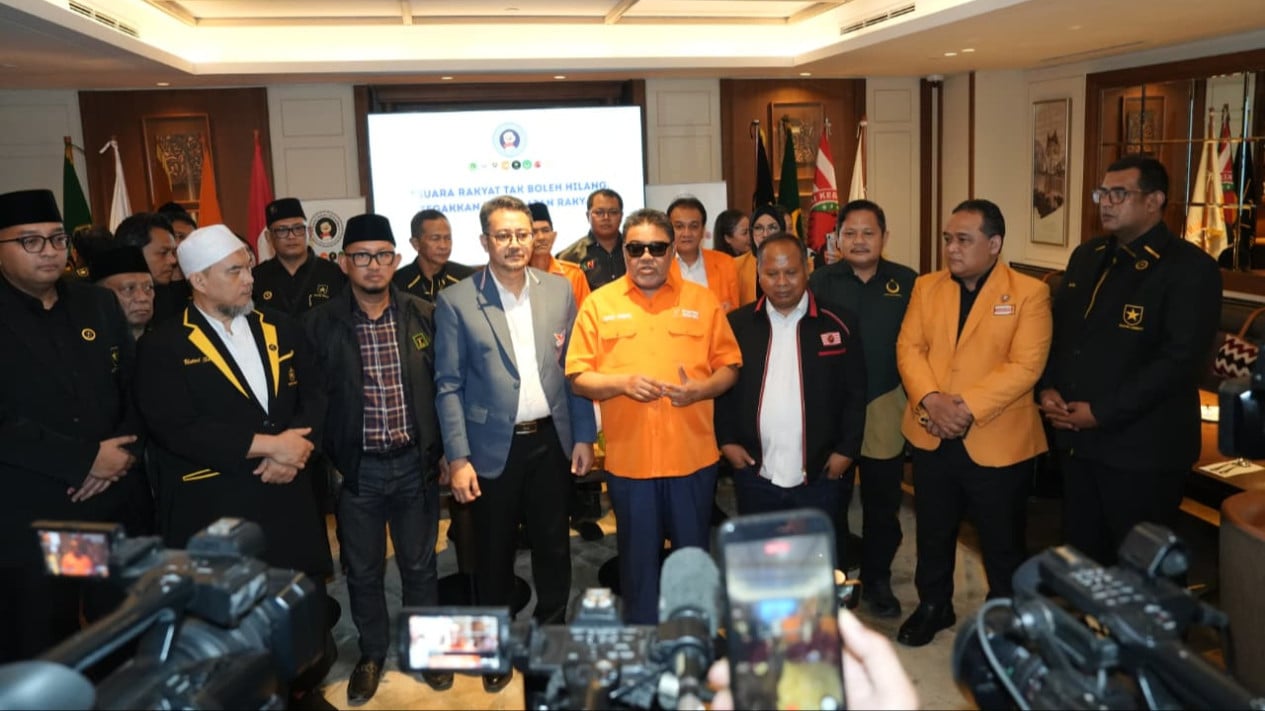
Marking its first anniversary, the Gerakan Kedaulatan Suara Rakyat (GKSR) has produced a draft proposal for changes to election regulations. The 200-page academic manuscript covers 30 electoral issues, with a 1 per cent parliamentary threshold (PT) serving as the primary focus.
The draft was compiled by eight non-parliamentary political parties comprising GKSR, namely Partai Hanura, Partai Perindo, PPP, Partai Buruh, Partai Ummat, PBB, PKN, and Partai Berkarya. Over the past year, these groups have engaged in discussions with various figures and election activists.
The General Chair of GKSR, Said Iqbal, stated that the launch of this academic paper is intended to serve as a comparative reference against the revision of the Election Law currently being discussed by the House of Representatives (DPR).
“We are launching this academic paper to act as a counterpoint to the Election Law revisions being discussed by parliamentary parties in the DPR,” Said remarked during GKSR’s first anniversary commemoration in Jakarta, as reported on Sunday, 27 September 2026.
According to him, one of the critical points in the draft is the establishment of a 1 per cent parliamentary threshold. Said noted that this proposal is based on research by election activists, including Perludem, utilising the Taagepera formula.
“The parliamentary threshold should be 1 per cent, while still considering combined factions at the national level of the DPR RI and/or stembus accords in elections conducted before or at the start of the election, rather than after,” he said.
Furthermore, Said explained that GKSR also proposes changes to the political party verification mechanism. Parties that already hold seats in the DPR would only need to register without undergoing administrative or factual verification.
For non-parliamentary parties that have undergone administrative and factual verification in previous elections, GKSR proposes that they only undergo administrative verification. Meanwhile, parties participating in an election for the first time would still be required to undergo both stages.
Said also called upon the eight political parties currently in parliament to involve non-parliamentary parties in the discussions regarding the Election Law revision. He noted that such involvement is a mandate of the Constitutional Court (MK) Decision Number 116.
“If this is not implemented, we will certainly proceed with a judicial review as soon as the law is passed,” asserted the President of the Labour Party.
Furthermore, Said warned that the discussion of election regulations should not become a space for exchanging interests between parties. He rejected any attempts to link the regulation of the parliamentary threshold to other electoral issues.