
GICC Pushes for Acceleration of Green Economy Transition in ASEAN Region
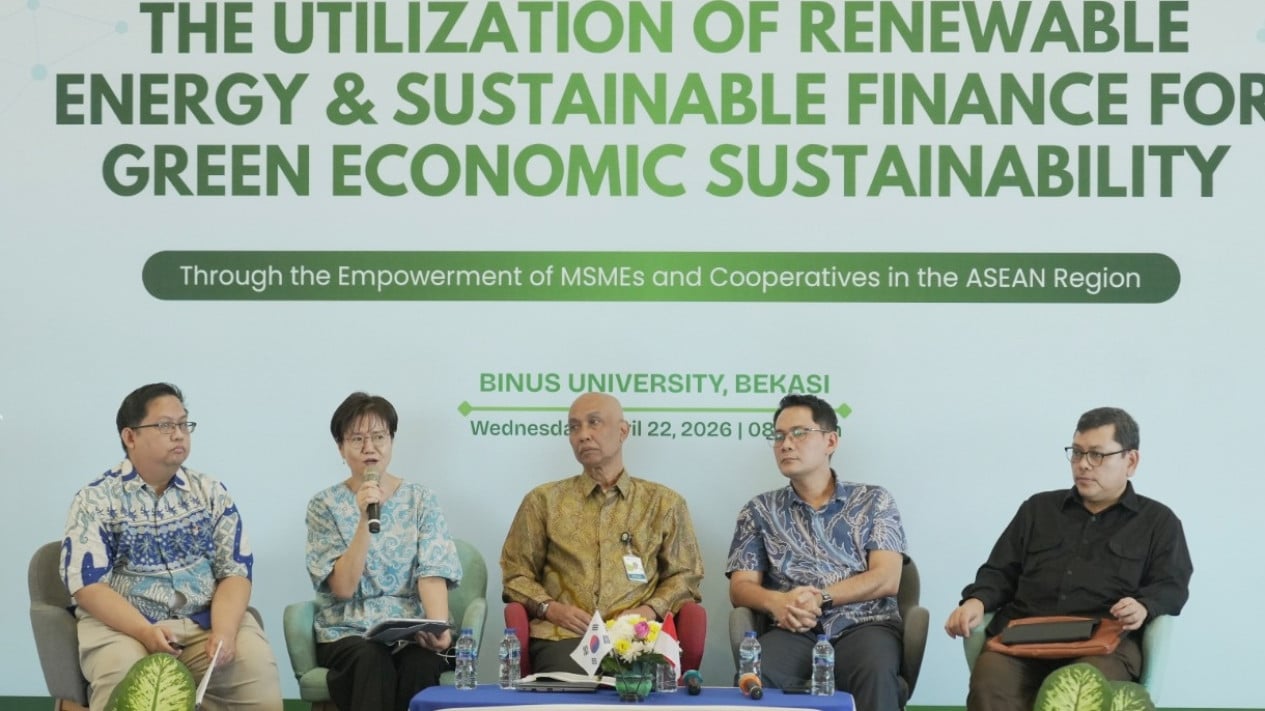
The Green Innovation Cooperation Center (GICC) is pushing for the acceleration of the green economy transition, particularly in the ASEAN region. This was conveyed by GICC through an international seminar titled “Enhancing the Sustainability of a Green Economy through the Utilization of Renewable Energy and Sustainable Finance by Strengthening MSMEs and Cooperatives in the ASEAN Region” held at Binus University Bekasi. GICC itself is an initiative established under ASEIC (ASEM SMEs Eco-Innovation Center), an organisation based in the Republic of Korea that focuses on developing eco-innovation and strengthening the capacity of SMEs in ASEM partner countries. The event was attended by several key figures, including Kim Heesoon (Director, Green Innovation Cooperation Center), Lee Young Jick (Chairman, ASEAN-ROK Financial Cooperation Centre), George Wijaya Hadipoespito (Vice President, BINUS Higher Education), Bastian (Head of Performance Management and Cooperation Bureau, Ministry of SMEs of the Republic of Indonesia), as well as representatives from the Indonesian government and Binus University, including officials from the Ministry of Cooperatives and the Ministry of SMEs, and academic leaders. GICC Director Kim Heesoon, in his opening remarks, emphasised that the transition to a sustainable economy requires synergy from various parties. “To build a sustainable green economy ecosystem, cross-sector collaboration is essential, with SMEs and cooperatives as the main pillars of the ASEAN economy,” said Kim in his statement, quoted on Saturday, 25 April 2026. In practice, SME actors often face technical obstacles. Business Decarbonisation Analyst from the University of Oxford, Andi Darell Alhakim, who attended as a speaker, stated that the green transition can be done gradually. “For many SMEs, the biggest challenge is not the lack of solutions, but knowing where to start. In reality, small and practical steps can already make a significant impact,” said Andi. In addition to business readiness, an inclusive supporting ecosystem is also essential. On this matter, the Head of the ASEAN-ROK Financial Cooperation Centre, Lee Young-jick, highlighted the importance of harmonisation across sectors. “Strengthening the linkages between technology, finance, and policy will be the key to accelerating the success of the green transition in the ASEAN region,” he stated. Through this seminar, GICC hopes to continue promoting strategic partnerships between the public and private sectors to realise a resilient and sustainable green economy ecosystem in the ASEAN region.