
Gibran Rakabuming Raka and Political Victimisation
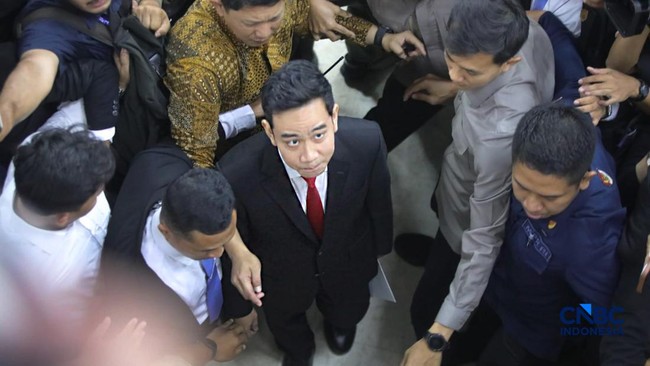
Controversy over Gibran Rakabuming Raka’s educational certificates, which initially concerned the education requirements for his candidacy as Vice-President of the Republic of Indonesia, has developed into a broader political and constitutional issue.
The issue is no longer limited to debate over the validity of educational documents; it also touches on Gibran’s legitimacy in holding the vice-presidency. The developments have even prompted a political campaign in the House of Representatives, using the Right to State an Opinion (Hak Menyatakan Pendapat, HMP) to initiate impeachment proceedings.
The situation entered a new phase amid reports that Gibran intended to resign as Vice-President. On 11 November 2026, Projo chairman Budi Arie Setiadi confirmed the reports.
The following day, Gibran formally submitted his resignation letter to the leadership of the People’s Consultative Assembly (MPR). MPR Speaker Ahmad Muzani said the same letter had also been delivered to President Prabowo Subianto.
Gibran also asked the MPR to expedite the processing of his resignation. The MPR then announced that a plenary session to fill the vacant vice-presidential post would be held on 2 December 2026.
The episode is worth examining not only from the perspectives of constitutional law and political dynamics, but also through contemporary victimology. A public official’s resignation amid mounting political pressure raises fundamental questions about the relationship between power, political pressure and a person’s position as a victim.
Was the resignation simply an individual political choice, or could it also be understood as the consequence of political pressure that may have placed someone in a situation of victimisation?
The question is increasingly relevant in light of the evolving concept of victimology, which no longer confines victims to those who suffer harm as a result of conventional criminal offences. The field has also turned its attention to various forms of harm arising from social relations, legal processes and power dynamics.
In Gibran’s case, the question is not merely whether his resignation was a personal political decision, but also the extent to which the preceding political pressure influenced the developments and his decision.
It is therefore necessary to consider whether the political dynamics remained within the bounds of ordinary democratic processes or developed into political pressure that could amount to political victimisation.
Pioneers of victimology
Several academic contributions to victimology provide a basis for understanding changing perspectives on victims. Benjamin Mendelsohn was one of the field’s pioneers, introducing the term ‘victimology’ to describe the scientific study of victims.
He argued that attention to victims should develop as a field relatively independent of criminology. At the time, criminological research focused largely on offenders, while the position and problems of victims received comparatively little attention.
One of Mendelsohn’s important contributions was his development of a victim typology: a classification of victims according to their degree of involvement or responsibility in a crime. The categories ranged from entirely blameless victims to those bearing some degree of responsibility for the criminal incident. This framework showed that the relationship between offender and victim is not always straightforward, but may involve various circumstances and factors that shape victimisation.
Hans von Hentig also made an important contribution by developing a typology of victims. He grouped victims according to certain social, psychological and biological characteristics that could make them vulnerable to victimisation. His categories included young people, women, older people, those with mental disabilities, immigrants and minority groups.
The work of Mendelsohn and von Hentig shows that victimology has sought from its beginnings to understand victims more broadly, including the factors that leave people vulnerable. Modern society, however, shows that vulnerability to victimisation is not limited to individual characteristics; it can also arise from social relations, power structures and political dynamics.
The development of victimology
According to Sahetapy, the historical development of concern for victims took considerable time. After two world wars that caused enormous loss of life, international attention to victim protection grew.
A significant milestone was the adoption of the Declaration of Basic Principles of Justice for Victims of Crime and Abuse of Power by the United Nations General Assembly under Resolution 40/34 on 29 November 1985.
The declaration marked an important shift in victimology. Concern for victims was no longer confined to victims of crime in the traditional sense, but also extended to victims of abuse of power.
The scope of victimology consequently widened: from a primary focus on the relationship between offenders and victims of crime to an examination of harm arising from acts or omissions connected with the exercise of power.
An important aspect of the concept of abuse of power is that it is not necessarily committed by someone who lacks authority. Abuse can instead occur when legitimate power is used improperly.
In other words, the authority to hold or exercise power does not legitimise every action taken in its name. Holding power does not automatically mean being in the right.
Under the UN declaration, victims of abuse of power also include people harmed by acts or omissions that may not constitute violations of national criminal law, but which breach internationally recognised human rights standards. This recognition shows that the question of victimhood cannot be limited solely by whether an act constitutes a criminal offence under national law.
The concept of a victim should therefore not always be restricted to someone suffering physical, material or psychological harm as a result of conventional crime. In modern society, victimisation can take many forms, including stigmatisation and delegitimisation, manipulation of information and public opinion, abuse of legal processes, the use of power to pressure certain parties, and the creation of public perceptions that may harm a person’s rights, dignity and standing.
This broader perspective gives victimology scope to examine different forms of vulnerability and harm in society, including within political processes. But it does not mean that every criticism, disagreement or instance of political pressure automatically constitutes victimisation. An assessment must consider the nature of the conduct, its context and consequences, and whether any rights have been violated.
Gibran through the lens of political victimisation
A publication on the University of Cambridge website discusses the concept of victimisation under Section 27 of the Equality Act 2010, a United Kingdom law governing equality and protection against discrimination.
The provision essentially protects people from being subjected to detrimental treatment because they have carried out a protected act, such as exercising their legal rights under the legislation, giving evidence or helping someone else to assert their rights.
Although this provision applies specifically within the context of equality law in the UK, it offers the perspective that victimisation is not always associated with physical violence or direct harm. It can also take the form of detrimental treatment because someone has undertaken an action protected by law.
In the controversy involving Gibran Rakabuming Raka, developments in victimology offer a different way to consider victimhood: through its political dimension. The issue of his educational certificates, which began as a question about administrative requirements for candidacy, may develop into a broader political issue, particularly when used to build a narrative that Gibran is not legitimately entitled to hold the vice-presidency.
The issue is not whether a public official may be criticised. Criticism, scrutiny and even calls for impeachment are part of democratic life and should be respected, provided they follow lawful procedures.
In a democracy, public officials cannot be made immune from criticism or political accountability. The use of constitutional mechanisms to scrutinise and hold state officials to account is also an essential part of the rule of law.
The situation is different, however, if a legal issue is used to build a sustained campaign of delegitimisation, shape damaging public opinion or encourage actions that disregard legal norms and democratic principles.
In such circumstances, it is necessary to consider whether events remain within the bounds of freedom of expression and political oversight, or have developed into disproportionate pressure on an individual.
A person in such a situation may be at risk of political victimisation. Victimisation does not always involve physical violence; it may take place through social and political pressure, stigmatisation, or the use of legal instruments in ways that may depart from the purpose of law enforcement. Political processes should therefore be assessed not only for their formal legality, but also for their aims, methods and effects on a person’s rights and standing.
In Gibran’s case, it is necessary to examine whether the controversy over his educational certificates and the impeachment campaign are simply part of democratic debate and scrutiny of a public official, or whether they have moved towards using legal instruments to delegitimise and pressure someone in pursuit of particular political interests.
The question becomes more significant given Gibran’s subsequent decision to submit his resignation as Vice-President. While that decision does not in itself prove that he is a victim of political victimisation, the circumstances preceding it remain relevant to the inquiry.
This is where it is important to distinguish between political pressure that is an ordinary consequence of democratic life and pressure that may amount to victimisation. Anyone holding public office must be prepared to face criticism, differing views and demands for accountability.
That does not mean, however, that every form of pressure is justified, particularly if it disregards the principles of justice, legal certainty and respect for human rights.
Ultimately, the Gibran case shows that victimology can no longer be understood solely in classical terms, with victims seen only as people harmed by criminal offences. The field must continue to develop in order to understand forms of victimisation emerging alongside social change, including those occurring through power relations, legal processes and political contests.
In a democracy, criticism, scrutiny and the use of constitutional mechanisms are rights that must be respected. But those rights must also be exercised proportionately and not used as a means of pressuring or harming others.
Democracy requires not only freedom to criticise and scrutinise power, but also protection for everyone’s rights and dignity, including those of people holding public office.
The issue in Gibran’s case is therefore not simply whether someone can become a victim in a political contest, but how democracy should be conducted so that it does not become a space in which victimisation can occur.
A healthy democracy is not merely one that allows criticism and demands for accountability; it must also uphold justice, proportionality and respect for human dignity.
Source: jawawa.id (https://jawawa.id/newsitem/gibran-rakabuming-raka-and-political-victimisation-1794711061)
Originally published by CNBC Indonesia (https://www.cnbcindonesia.com/opini/20261115090039-14-785322/gibran-rakabuming-raka-dan-viktimisasi-politik), translated from Indonesian