
Gibran Meets MBG Victims in Karo, USU Academic: A Good Initial Response
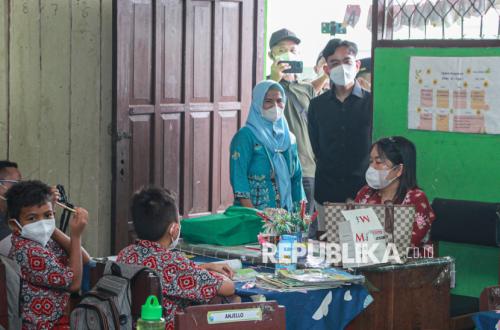
Vice President Gibran Rakabuming Raka’s visit to children affected by the suspected MBG (Free Nutritious Meal) food poisoning case in Karo has been viewed as a good initial response. However, the case is also seen as something that must become an entry point for the government to fix the programme’s implementation more broadly.
During his time in Karo, the Vice President met victims and their families, ensured the availability of healthcare services and medicines, and offered follow-up treatment, including referral options.
Follow-up care for the victims was also carried out after the visit. Gibran asked his personal doctor to help monitor the condition of the victims in Karo.
Victims requiring further examination were subsequently flown to Jakarta for continued medical treatment.
An academic from the University of North Sumatra (USU), Dr Wahyu Ario Pratomo, considered the presence important because the case concerns the safety of children as well as public trust in the MBG programme.
“Equally important, the Karo case must serve as the primary material for evaluating the implementation of MBG,” said Wahyu.
According to him, evaluation cannot be limited to a single point. The government needs to examine the entire implementation chain, from the selection of food ingredients, storage, cooking processes, kitchen hygiene, food distribution, through to the time food is received and consumed by students.
Every MBG kitchen provider must also meet clear hygiene and sanitation standards, have competent staff, conduct routine inspections of food ingredients, and implement food recording and traceability systems. Periodic supervision and unannounced inspections, according to Wahyu, also need to be strengthened, particularly for units serving large numbers of students.
“If serious violations are found, there must be a mechanism to temporarily halt operations until safety standards are met,” he said.
Beyond prevention, Wahyu urged the government to have a rapid response protocol whenever suspected poisoning emerges.
Schools, community health centres, hospitals, regional governments, and MBG operators must know what actions to take from the moment the first report comes in.
“Reporting must be swift, victims must receive immediate medical care, food samples must be examined, and families must receive transparent information,” he said.
Wahyu considered the swift response shown by the Vice President towards the victims to be important, but the final outcome will ultimately be determined by the government’s ability to prevent similar incidents.
“In the end, the success of the government’s follow-up cannot be measured solely by how quickly victims are treated, but by whether the government can ensure such incidents do not recur,” said Wahyu.