
Gibran Finally Chooses to Resign: What Happens Next?
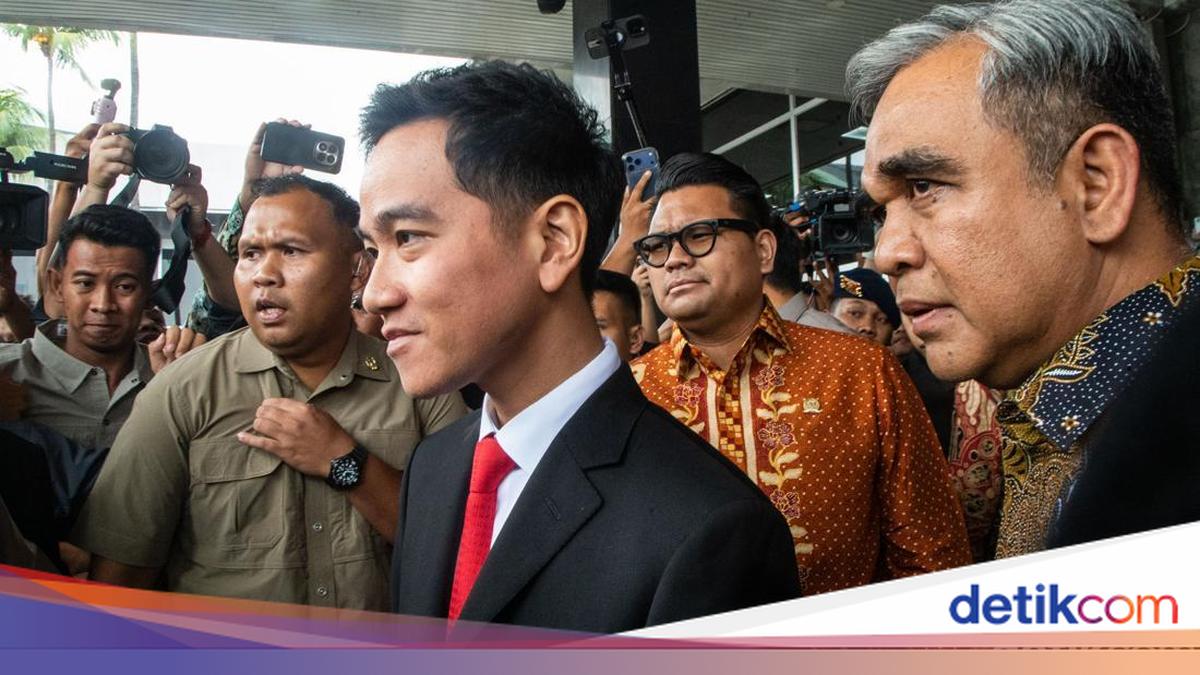
Gibran Rakabuming Raka has decided to resign as vice-president. Following his resignation, the MPR will carry out a series of procedures.
Gibran first met Prabowo at the Presidential Palace on Thursday morning (12 November 2026). He then went to the MPR building on Jalan Gatot Subroto in Central Jakarta.
Gibran subsequently handed his resignation letter to the MPR leadership. MPR Speaker Ahmad Muzani said Gibran had also asked for the letter to be processed promptly.
Muzani said the MPR would write to Prabowo, asking him to submit two candidates for the new vice-president. He said Prabowo must submit the two names to the MPR within 14 days at the latest.
“The President has 14 days from the date the MPR issues its request to submit two names as candidates for vice-president,” Muzani said after receiving Gibran at the parliamentary complex in Senayan, Jakarta.
Prabowo Accepts Gibran’s Resignation
President Prabowo Subianto said he had received Gibran Rakabuming Raka’s resignation letter from the vice-presidency. He said he had accepted it with a heavy heart.
“With a heavy heart, I accept the letter and respect and support the decision he has made,” Prabowo said at a press conference at the Presidential Palace in Central Jakarta on Thursday (12 November).
He said Gibran had shown a chivalrous attitude and taken a responsible step.
“In my view, he has shown a chivalrous and responsible attitude, as well as the conduct of a statesman,” he said.
The Process After Gibran’s Resignation
The MPR will then follow the procedure for filling the vacant vice-presidential post. The steps are as follows:
The office of vice-president becomes vacant.
Within 60 days at the latest, the MPR holds a plenary session to elect a new vice-president (Article 8(2) of the 1945 Constitution and Article 46(1) of the MD3 Law).
The President proposes two vice-presidential candidates, together with the required documents, to the MPR leadership no later than 14 days before the MPR plenary session (Article 46(2) of the MD3 Law).
At the plenary session, the MPR elects one of the two candidates proposed by the President (Article 46(3) of the MD3 Law).
Before the vote, both candidates must state their readiness to stand in the MPR plenary session (Article 46(4) of the MD3 Law).
The candidate receiving the most votes in the MPR plenary session is appointed vice-president (Article 46(5) of the MD3 Law).
If the candidates receive an equal number of votes, the election is held once more (Article 46(6) of the MD3 Law).
If the second vote is also tied, the President chooses one of the candidates (Article 46(7) of the MD3 Law).
The MPR swears in the elected vice-president (Article 47(1) of the MD3 Law).
MPR May Not Need to Hold a Session
Coordinating Minister for Legal Affairs, Human Rights, Immigration and Corrections Yusril Ihza Mahendra said the MPR did not need to hold a plenary session to approve Gibran Rakabuming’s resignation as vice-president. He said the situation was similar to that of Indonesia’s second president, Soeharto, when he announced his resignation.
“In my opinion, the MPR does not need to hold a session to decide whether or not to approve his resignation letter, because the wording is almost the same as Pak Harto’s resignation statement, which I drafted in 1998. It included the words ‘declare that I resign’,” Yusril said at the Presidential Palace complex in Jakarta on Thursday (12 November 2026).
“If someone declares that they are resigning, that does not require the consent or approval of another party, because it is their own decision and has binding legal force,” Yusril added.
Yusril said that, to speed up the process, the MPR would hold a session to declare the vice-presidential position vacant and at the same time ask the President to propose two candidates to replace Gibran.
“Further details of the procedure are set out in MPR decrees and the MD3 Law, which govern this matter,” he said.
Yusril nevertheless explained that the process for replacing Gibran differs from Soeharto’s case, in which the president left office. A new vice-president would not be elected by the public or another institution, but by the MPR itself.
“It is different: Pak Harto was president. When the president resigned, he was automatically replaced by the vice-president,” he said.
“Now it is the vice-president who is resigning, so he cannot simply be replaced by someone else; an election must be held. But it will not be a direct election by the public in an election organised by the KPU. The MPR will conduct the election, with no involvement from the KPU,” he added.
Source: jawawa.id (https://jawawa.id/newsitem/gibran-finally-chooses-to-resign-what-happens-next-1794527497)
Originally published by detikcom (https://news.detik.com/berita/d-8750783/gibran-akhirnya-pilih-resign-setelah-itu-apa), translated from Indonesian