
Gibran Education Equivalency Decree Challenge Heard at Administrative Court as Denny Indrayana Walks Out
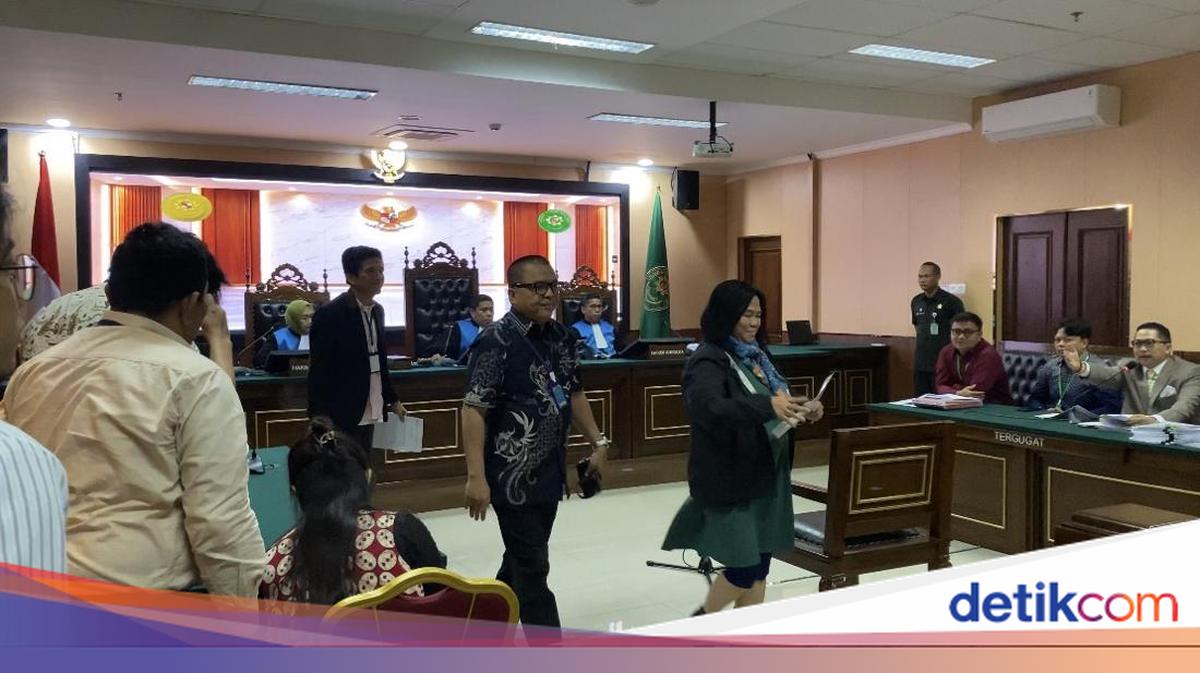
The Jakarta Administrative Court (PTUN) held a hearing on a lawsuit concerning the education-equivalency decree issued for Vice-President Gibran Rakabuming Raka by the Ministry of Education and Culture, now the Ministry of Primary and Secondary Education. The hearing was marked by a walkout by the claimant’s lawyer, Denny Indrayana.
According to the Jakarta PTUN’s case information system, the lawsuit was registered as case No. 255/G/2026/PTUN.JKT on Thursday (29 October 2026). The claimant is PT Mercy Toga Kirana, and the defendant is the Director-General of Secondary and Special Education at the Ministry of Primary and Secondary Education.
The claim seeks, among other things, to have the lawsuit granted in full and to have Decree No. 9149/D.D1/KS/2019, dated 6 August 2019, on the equivalency of qualifications declared void or invalid. It argues that the decree was substantively flawed because it was not based on primary documents, procedurally defective because it was issued by an unauthorised official and not in the required electronic format, and contrary to the general principles of good governance, including diligence, transparency, legal certainty and equal treatment.
The claimant also asks the defendant to revoke the decree permanently and remove it from the state register within 60 working days of the ruling becoming final and binding. It seeks a full written response to its request for administrative clarification, dated 11 February 2026, within 30 working days, as well as an order requiring the defendant to pay the costs of the case.
Hearings in the case have been held several times since August 2026. Thursday’s hearing was scheduled to hear the second intervening defendant’s response electronically and receive additional documentary evidence from the claimant and defendant in person.
During the hearing, Indrayana said his side had submitted a request to withdraw the lawsuit because, in its view, the defendant had failed to produce the necessary documents.
“For reasons we do not know, the defendant has still not produced that evidence. In particular, we recall that at the Constitutional Court we were told there were three items for us to understand. First, a Certificate of Attendance at UTS Insurances; second, Gibran’s academic transcript, which, according to the account, showed attendance at three semesters, differing from the initial information covering 2004–2007; and third, proof of enrolment. That is what we understood from the proceedings at the Constitutional Court,” he said.
He said the documents should be held by the Ministry of Primary and Secondary Education as the defendant, and that his side had tried to obtain them since the hearings at the Constitutional Court.
“These are highly substantive pieces of evidence for the defendant, because the object of our lawsuit is the equivalency certificate. It is important to obtain the evidence on which that certificate was based,” he said.
Indrayana said he felt he had not received justice because the documents had not been presented in court, and cited this as the reason for seeking to withdraw the lawsuit.
“Today, through the panel, we are submitting a letter withdrawing the lawsuit. What is the point if the defendant is unwilling to show the evidentiary basis for the certificate, especially when that evidence has also been submitted to another court? We are seeking to uphold the dignity of the judiciary,” he said.
The judge then asked the Ministry of Primary and Secondary Education and Gibran’s side whether they accepted the withdrawal request. Gibran’s side objected.
“The defendant said it respected these proceedings, but then, midway through, it submitted a request to withdraw. In light of what has been presented, we object to the withdrawal,” a representative of the ministry said.
“Under procedural law, because the claim has already been examined, the defendants’ consent is required. We object to the claimant’s request to withdraw the lawsuit. This shows a lack of seriousness on the claimant’s part,” said Muhammad Rullyandi, Gibran’s lawyer.
Indrayana then asked the judge for permission to leave the hearing. The judge told the ministry that the documents were important.
“We consider that all of them exist. There is no reason not to submit them, is there? If you do not submit the documents in question, what does that mean? It means there are documents, procedures or substantive matters that are not in order or have been bypassed. This is the forum in which you can preserve that trust,” the judge said.
Indrayana nevertheless left the courtroom, saying he still intended to withdraw the lawsuit.
“While continuing to respect the honourable panel and these proceedings, and to make our position on the withdrawal clear, although we understand what has just been read out, we ask permission to leave the courtroom,” Indrayana said as he walked out.
Source: jawawa.id (https://jawawa.id/newsitem/gibran-education-equivalency-decree-challenge-heard-at-administrative-court-as-denny-indrayana-walks-out-1793260424)
Originally published by detikcom (https://news.detik.com/berita/d-8729440/sidang-gugatan-sk-penyetaraan-gibran-digelar-di-ptun-denny-indrayana-walk-out), translated from Indonesian