
Gianyar Police to Implement 'English Day', Requiring Personnel to Use English on Duty
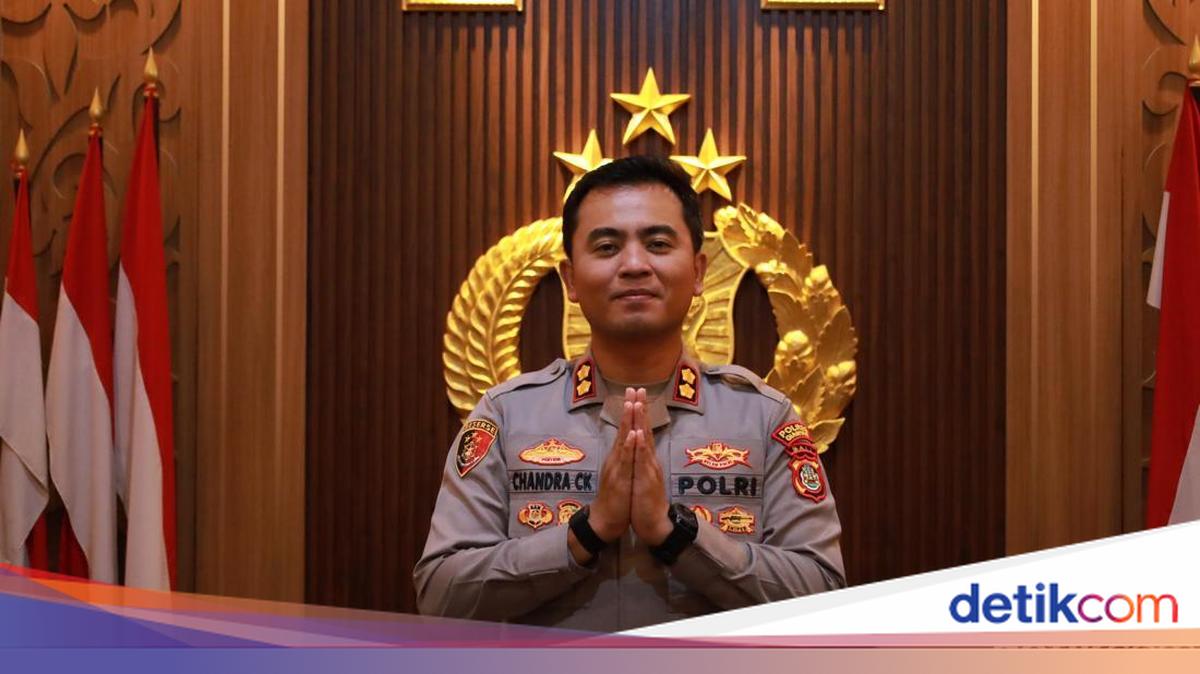
Gianyar Police Chief AKBP Chandra Kesuma has prepared an English Day programme for all personnel at the Gianyar Police Department and its sector police stations. Through the programme, officers will be required to use English when communicating during duty hours to improve their competence in serving the public, particularly foreign tourists.
“We will create a sort of English Day at the police stations. At the Gianyar Police Department as well,” Chandra said when met by detikBali at his office on Friday (26/6/2026).
Chandra explained that English Day would be implemented on one specific day every two weeks. All personnel, especially those who have undergone training and obtained English competency certificates at seven sector police stations, will be required to use English when communicating with colleagues.
“So, these officers will be schooled first. Then it will be implemented, every Tuesday and Thursday or every Tuesday and Friday. To practise their English,” Chandra said.
According to Chandra, the policy is part of efforts to improve the quality of human resources at the Gianyar Police Department. With regular practice, the officers’ vocabulary mastery will increase, thereby continuously improving their English skills.
The hope is that these skills can be utilised when personnel interact with the public, especially in tourist areas frequented by foreign visitors.
“So, vocabulary mastery will be further expanded,” he said.
To support the programme, Chandra had previously organised English education and training starting in August 2025. A total of 250 personnel at Payangan Police Station, Tegallalang Police Station, Ubud Police Station, Gianyar Police Station, and the Gianyar Police Headquarters have participated in the training.
The training participants came from various units, ranging from the Criminal Investigation Unit, the Narcotics Unit, to personnel in other units who frequently interact with the public.
They were guided by instructors from a foreign language education institution for three months at each level, from beginner, intermediate, to advanced.
“So that officers, who initially just kept quiet when there were foreign tourists, can now interact or simply greet foreign tourists,” he said.
Chandra stated that English proficiency is also an important asset in law enforcement. According to him, investigators at the Gianyar Police Department often receive reports of criminal acts involving foreign nationals, both directly and through the 110 emergency telephone service.
In handling these cases, investigators will first communicate with foreign nationals in English before being accompanied by an official translator.
“At a minimum, we can conduct an interview independently first before being accompanied by a translator so that the case construction can be handled as quickly as possible,” he added.
However, Chandra acknowledged that English proficiency does not yet fully answer the needs in the field. This is because some foreign tourists come from countries that do not use English as their primary language, such as China, Russia, and France.
So far, the Gianyar Police Department has brought in official translators from embassies in Jakarta to assist foreign nationals involved in cases. In the future, the department also plans to provide training in other foreign languages.
“Indeed, that is an obstacle. Usually, Chinese, Russian, or French tourists are not very fluent in English. We usually bring in translators from Jakarta. But that is for later. For now, we are strengthening English proficiency,” he said.
In addition to supporting the investigation process, Chandra believes English proficiency is also important to support complaint services through the 110 emergency telephone line.
Operators who have received training can receive reports from foreign tourists in English, allowing emergency situations to be handled more quickly.
“In one day, we receive 10 to 12 complaints on 110. Some complaints are from foreign nationals. Automatically, the operator must understand English so that reports can be handled immediately,” Chandra said.
According to Chandra, the 110 service is still mostly used by the Balinese public. Nevertheless, his department continues to promote the emergency number to foreign tourists while patrolling various tourist attractions.
“Besides greeting tourists at tourist spots, officers also promote 110. So, if you need police assistance, which is of an emergency nature, please call 110. We continue to echo that,” he said.