
Giant Storm Hits Japan and China, Approaches Indonesia; BMKG Issues Warning
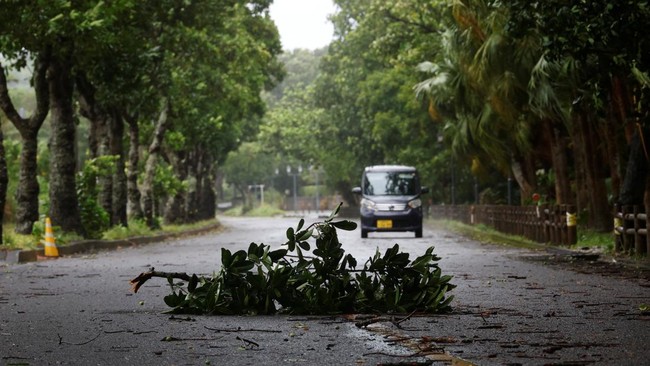
Tropical Storm Bavi is approaching the Sakishima Islands in southwestern Japan, triggering high alerts across the region. Local authorities have warned of potentially damaging winds, extremely intense rainfall, flooding, and landslides, which could make this one of the most destructive storms in recent years. According to the Japan Meteorological Agency, Bavi is expected to pass very close to the Sakishima Islands in Okinawa Prefecture, near Taiwan, on Saturday morning local time. Maximum sustained wind speeds were recorded at approximately 162 kilometres per hour. Residents on Ishigaki Island have been reinforcing their homes and businesses by covering windows with protective shields and installing windbreak nets. Public activities have also been disrupted, with several beaches, coastal parks, and ferry terminals closed as a precautionary measure. In the Philippines, a neighbour of Indonesia, heavy rains triggered by the southwest monsoon system and intensified by Tropical Storm Bavi caused landslides on the island of Mindanao. A local disaster management official reported that at least 10 people died in the incident, indicating that the storm’s effects are already being felt closer to Indonesian territory. The aviation sector has also been severely affected. Japan Airlines cancelled more than 100 flights on Friday and Saturday, impacting nearly 20,000 passengers. All Nippon Airways suspended over 160 flights through Sunday, disrupting travel for around 20,000 passengers. Additionally, nearly 900 buildings in Okinawa Prefecture experienced power outages. Local residents expressed concern. Hiroshi Nomura, a bicycle rental business owner in Ishigaki, said he was continuously reinforcing his shop ahead of the storm. ‘I heard this typhoon is going to be quite big. I am a little worried whether our preparations are sufficient,’ he said. Another resident, Eiken Ishigaki, chose to stock up on snacks and drinks, fearing power cuts and the need to stay indoors during the storm. Meanwhile, tourist Kazuo Akaishi from Ibaraki Prefecture was forced to extend his stay in Ishigaki after all ferry services to other islands were cancelled. ‘I have never experienced a direct hit like this. I have been here when a typhoon passed nearby, but never this severe,’ he said. Taiwan also felt the impact of Bavi. The government closed financial markets and suspended activities across most northern and eastern regions. Thousands were evacuated from mountainous areas on the east coast, and nearly 29,000 military personnel were placed on standby for disaster response. President Lai Ching-te noted that while the storm had slightly weakened, the threat remained significant. ‘Although the typhoon has slightly weakened and been downgraded to a medium typhoon, the storm’s radius is still very wide and can still bring strong winds and heavy rain to many areas,’ Lai said. Bavi is not expected to make direct landfall in Taiwan but could bring up to a metre of rainfall in some areas. The storm is then forecast to move towards the city of Wenzhou on China’s east coast by Saturday night or early Sunday. In Indonesia, the Meteorology, Climatology and Geophysics Agency (BMKG) is closely monitoring Bavi’s development. The agency stated that Tropical Cyclone Bavi developed from Tropical Cyclone Seed 95W, reaching cyclone intensity on 2 July 2026. The system entered the monitoring area of the Jakarta Tropical Cyclone Warning Centre on 7 July 2026 and is currently located in the Philippine Sea, northeast of the Philippines. BMKG explained that although Bavi will not directly impact Indonesia, it could trigger strong winds in North Sulawesi and North Maluku. ‘In addition, waves of 1.25 to 2.5 metres could occur in the Pacific Ocean north of Southwest Papua, West Papua, Papua, and North Maluku, as well as in the waters of the Sangihe-Talaud Islands,’ BMKG stated. The agency urged coastal communities and maritime operators in affected areas to remain vigilant against potential heavy rain, strong winds, and high waves, and to continuously monitor the latest weather updates.