
Giant Bioethanol Project in Lampung Officially Launched! Government Targets Independence from...
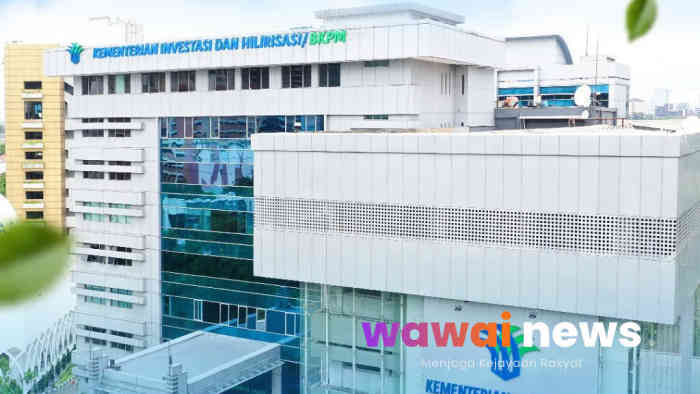
JAKARTA – The government is accelerating the national energy transition through an ambitious project: the development of large-scale bioethanol in Lampung. In a significant move, the project partners with Japanese automotive giant Toyota Tsusho, Pertamina New & Renewable Energy (PNRE), and Danantara Investment Management.
This project is more than just talk. The government targets construction to start in the third quarter of 2026, with the major goal of reducing dependence on high imported fuel imports.
“This programme has actually been running for the past year, but its development has been done silently. Now it has entered the stage of concrete coordination,” said Deputy Minister of Investment and Downstreaming, Todotua Pasaribu, on Tuesday (21/4/2026).
Lampung was chosen for good reason. The province has abundant feedstock advantages:
Sugarcane
Cassava
Sorghum
Palm biomass waste
This means Lampung is projected to become the “national bioethanol granary”, not just an ordinary production area.
The government has even provided intensive support since the end of 2025, from cross-ministry coordination, approaching Japanese partners, to direct on-site location surveys.
The project is designed in phases to avoid being mere ambition on paper:
Phase 1 (Pilot Project)
Capacity: 60 kilolitres/year
Target: Third quarter 2027
Phase 2 (Commercial)
Capacity: 60,000 kilolitres/year
Target: Fourth quarter 2028
The scale jumps dramatically. From a small pilot project, it directly moves to large industrial production.
Interestingly, the project adopts second-generation (2G) technology that allows the use of various feedstocks simultaneously.
Additionally, the development involves a Japanese research consortium like RaBIT, which focuses on energy and automotive innovation.
This approach makes bioethanol production more flexible and sustainable—not dependent on a single commodity.
Feedstock development is also being prepared seriously.
2026: Pilot planting of sorghum over 10 hectares
2027: Expansion to 6,000 hectares
The land will be supported by PTPN, making this project integrated from upstream to downstream.
Major Targets: E5, E10, Up to E20
This project also forms part of the national energy roadmap:
E5 (2026–2027) → 5% bioethanol blend
E10 (2028–2030) → 10% blend
E20 (long-term) → Ambitious target
“We are pushing this project to support readiness towards E10. The country must be prepared,” Todotua emphasised.