
Getting to Know the Milky Way Galaxy: Earth's Place in the Vastness of the Universe
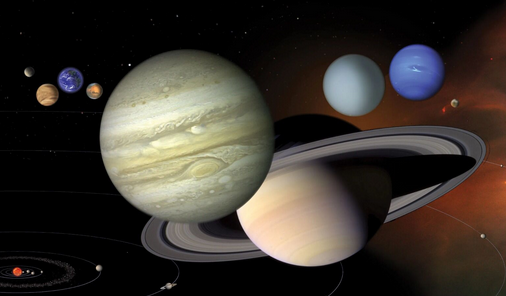
Have you ever felt so small as you gaze at the night sky? That feeling is not without reason. Scientifically, the Earth we stand on is but a microscopic point amid the grandeur of the cosmic structure known as the Milky Way Galaxy. Understanding the scale of our galaxy is not just about learning astronomy; it is about recognising how complex the system that sustains human life is.
This article reviews the structure of the Milky Way, the Sun’s specific position within it, and the existence of a supermassive black hole at the heart of the galaxy. Let us explore our large home in the universe.
The Milky Way or Milky Way is a barred spiral galaxy that houses billions of celestial objects. Based on data from the United States space agency NASA, our galaxy has dimensions that are hard to imagine.
The Sun, as the centre of our Solar System, is not the centre of the galaxy. The Sun is located about 27,000 light-years from the galactic centre. We reside in a relatively quiet outer region, specifically in the Orion Arm. This position is crucial for life; if we were too close to a densely star-populated and radiation-rich centre, life might struggle to develop.
One light-year equals 9.46 trillion kilometres. With a diameter of about 100,000 light-years, light would take about 100 millennia to traverse the Milky Way from rim to rim. This underscores that human technology is still far from capable of interstellar travel in a physical sense.
Although the Milky Way seems vast, observations from the European Space Agency (ESA) and the Hubble Space Telescope show a more surprising picture. The Milky Way is merely one of hundreds of billions to trillions of galaxies in the observable universe.
In conclusion, Earth is a very precious yet extremely small home. In the vast ocean of the cosmos, our planet remains the only known place that supports life. Knowledge of the Milky Way reminds us to protect the one pale blue dot we have in the darkness of space. (Sources: NASA Milky Way Overview, European Space Agency, Hubble Space Telescope Science Data, Space Telescope Institute)
Recent studies indicate that intense radiation from red dwarf stars may be one of the main causes. An astronomer used the James Webb Space Telescope to analyse the surface of exoplanet LHS 3844 b. They found rocky volcanic material similar to Mercury without an atmosphere. A team of Japanese astronomers found a thin atmosphere on the small object 2002 XV93 beyond Neptune’s orbit. This discovery challenges gravity theories for small celestial bodies. A blazar is among the brightest objects in the universe and is classified as an active galactic nucleus. One of the major highlights is the planet Jupiter, visible with the Great Red Spot, a colossal storm larger than Earth.