
Getting to Know Suweg, the Edible Plant That Resembles the Corpse Flower
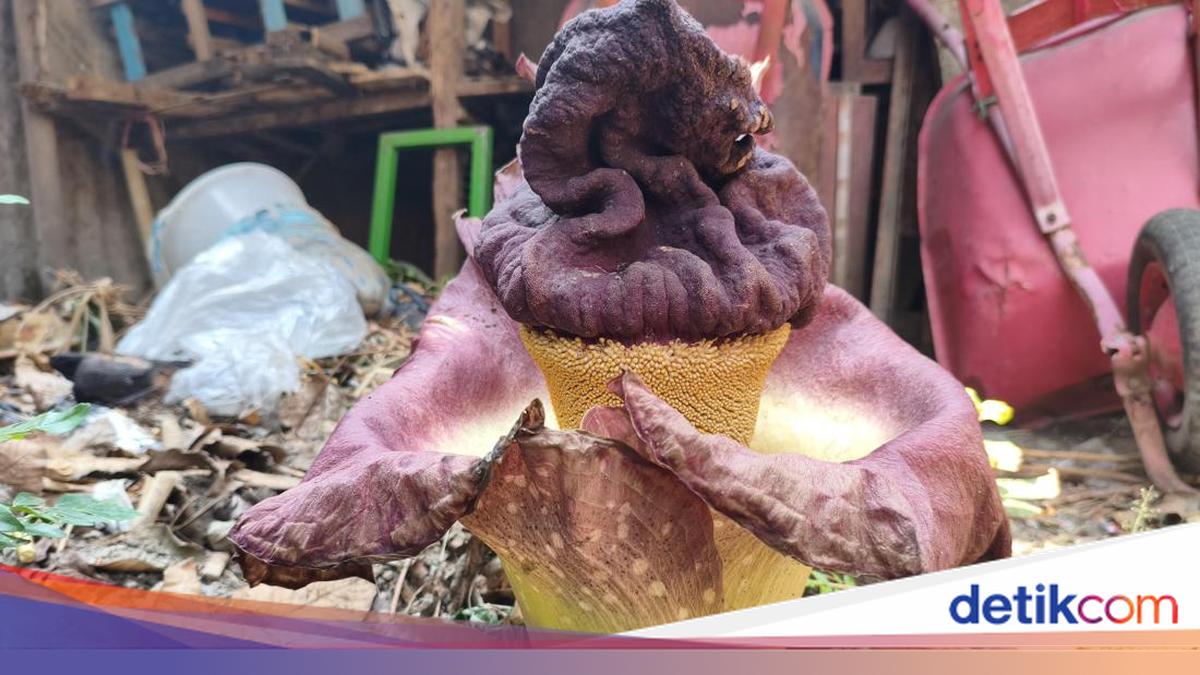
A plant resembling the corpse flower has grown in the yard of a resident’s house in Kranji, Bekasi City. Its striking appearance has made locals curious to see it. Based on monitoring at Jalan Lapangan Bola, Kranji, Bekasi City, on Saturday (18/7/2026), the plant resembling a corpse flower was seen growing in the yard of a resident’s rented house, close to other plants. At a glance, its shape indeed resembles the corpse flower. The plant has a large spathe with a flower stalk towering in the centre. However, the plant does not emit a foul odour like the corpse flower, and its size is not very tall. The plant’s owner, Warsini, said the plant is actually a Suweg tree. The seedling was brought by her husband, Juari, from his hometown in Pacitan, East Java, and then planted in the yard.
What is the Suweg Plant? Based on information from the BRMP Aneka Umbi Plant (UPT Agency for Agricultural Assembly & Modernisation, Indonesian Ministry of Agriculture), Suweg (Amorphophallus paeoniifolius) is a plant with a unique mottled stem and palmate leaves. Underground, it stores a large, rough-skinned tuber with edible yellowish-white flesh. Its most iconic feature is its flower. When the leaves wither, the Suweg tuber often produces a unique exotic flower consisting of a wide, pointed spathe of purplish maroon colour, with a prominent pale-yellow spadix in the centre. The Suweg plant belongs to the same family as the Corpse Flower (Amorphophallus). When it blooms, it emits an unpleasant odour to attract pollinating insects. Suweg is often mistaken for Rafflesia.
It is not only safe and delicious to eat; behind its exotic flower and rough tuber skin, Suweg apparently stores champion nutrition, making it worthy of being called a local superfood. It has a low glycaemic index (around 50), meaning the carbohydrates in Suweg are digested slowly by the body, so blood sugar does not spike drastically after eating. It is also rich in glucomannan fibre, which helps keep the stomach full longer, making it suitable for those watching their intake or simply wanting to maintain digestive health.
Although it is a superfood and diabetes-friendly, raw Suweg presents a challenge as it contains calcium oxalate crystals that can cause skin and mouth irritation. However, there is a solution. The key lies in washing and soaking. Slice the Suweg tuber thinly, then soak it in salt water before boiling or drying. The itching sensation will disappear completely, and the tuber will be ready to be made into a delicious meal. In the past, Suweg was usually just boiled as a companion for morning coffee or tea. Now, dried Suweg can be ground into flour. Since it is essentially gluten-free, Suweg flour is excellent and safe for processing into brownies, various cookies, or even mixed into noodle dough.