
Getting to Know Ngibi, an Ancestral Tradition Still Alive in South Halmahera
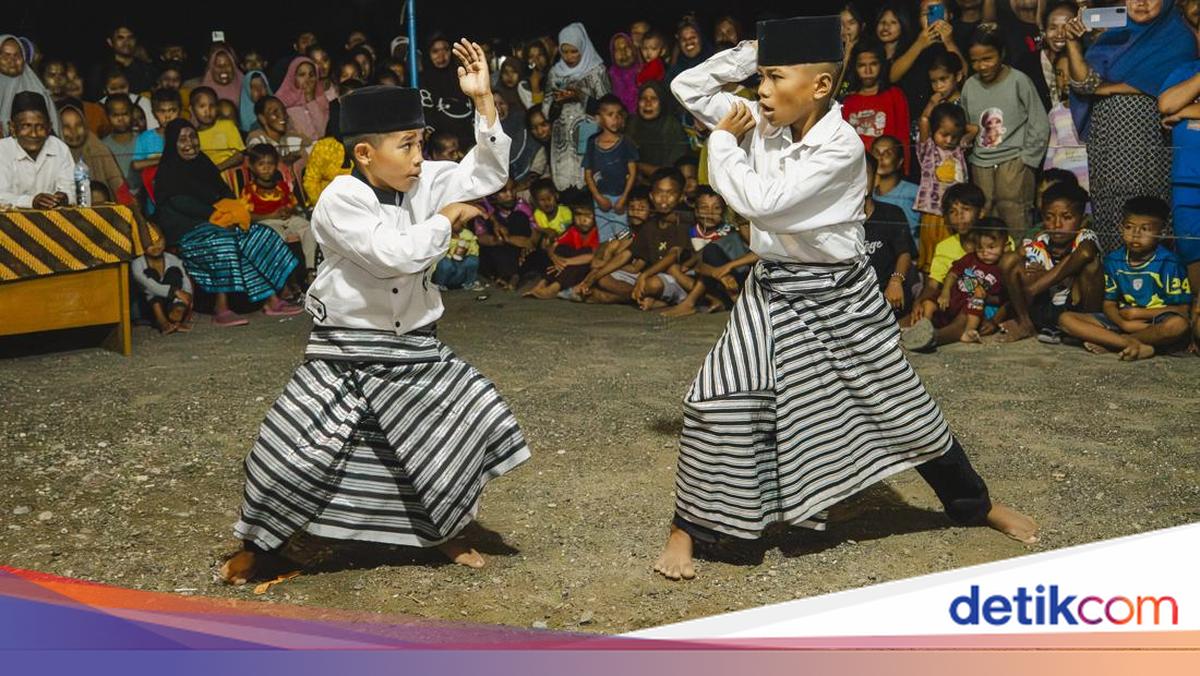
Amidst the rapid changes on Obi Island, South Halmahera, the community of Soligi Village chooses to steadfastly preserve its cultural roots. The rhythmic beat of drums blended with the resonance of gongs echoed in the courtyard of the Soligi Village Office, accompanying the Ngibi Cultural Performance witnessed by hundreds of residents. The event was made more meaningful as it took place close to the anniversary of South Halmahera Regency on 9 June. That evening, the Soligi community staged the Ngibi Cultural Performance, a hereditary tradition from Buton, Southeast Sulawesi, brought by their ancestors across the sea and now deeply rooted in South Halmahera.
Traditional leader of Soligi Village, Imam La Puasa, explained that every movement and stage in the Ngibi art form contains moral messages, life values, and traces of the Buton community’s historical journey, passed down through generations. “Ngibi is not merely entertainment. Within it lies advice, history, and an identity bequeathed by our ancestors. Therefore, this tradition must be preserved so that our descendants do not forget their origins,” he stated in a written release on Thursday (11/6/2026).
Before the dance commenced, the lively atmosphere fell silent. The village imam led a prayer, affirming that the Ngibi dance is closely intertwined with the Islamic spirituality embraced by the local community. Afterwards, a traditional elder opened the arena with the forceful movements of pencak silat, as if clearing a path for the next generation. The arena was then filled by the Cungka dance, performed by female dancers, symbolising the early cycle of human life in the womb. This message was followed by the Ngibi dance, a paired performance representing gratitude for the spirit being breathed into the body. In the graceful movements of Ngibi, male dancers are forbidden from touching female dancers, a symbol of the highest respect for women as nurturers of life. While the Ngibi dance was once an expression of gratitude after a grand harvest, it has now transformed to enliven various social events, including Iduladha celebrations.
Amidst regional growth and ongoing social change, the Soligi community demonstrates that development does not have to sever ties with cultural identity. After the philosophical reflection through dance, the arena roared back to life. Children from elementary to high school levels showcased their skills in pencak silat matches. Accompanied by the cheers of hundreds of residents, these displays of agility were not intended to harm but served as a symbol of sportsmanship and the chivalrous spirit of Soligi’s youth.
For Soligi Village Head, Madaisi La Siriali, the night’s festivities represented a struggle against cultural erosion. “This activity, supported by Harita Nickel, is a collaboration between the village government and traditional leaders. Let us recognise and preserve our identity, to guide the younger generation in maintaining their culture,” he said. The event did not stand alone; it was realised through collaboration between the community and the local industrial entity, Harita Nickel. Amidst a growing industrial area, the community shows that change need not sever ties with cultural roots. The presence of industry instead acts as a catalyst ensuring that local wisdom continues to thrive.
Reinforcing this commitment, Harita Nickel’s Community Relations Supervisor, Wigit Yan Sukmawan, conveyed that the company’s presence is based on respect for local wisdom. “For us, local culture is part of the community’s identity that must be preserved together. The Ngibi dance is not just a performance, but a heritage of values and history for the Soligi community. That is why the company wants to support this tradition so it remains alive and continues to be recognised by the younger generation,” said Wigit. Amidst the ongoing changes in South Halmahera, such cultural spaces serve as a reminder that development must also walk hand in hand with efforts to maintain community identity. For what is bequeathed to the younger generation is not only economic growth, but also the values, traditions, and cultural roots that shape the social life of coastal communities.
As the night grew late, the arena in Soligi remained far from quiet. Accompanied by the beat of gongs, children and teenagers took turns dancing and performing pencak silat before the residents. They were not merely performing in a show, but learning to recognise a cultural heritage that has long lived in South Halmahera, particularly along the coast of Obi. It is in the hands of this younger generation that the tradition is preserved, kept alive, and continues to pulse from one generation to the next.