
Getting to Know Mount Anak Krakatau: Its History and Key Facts
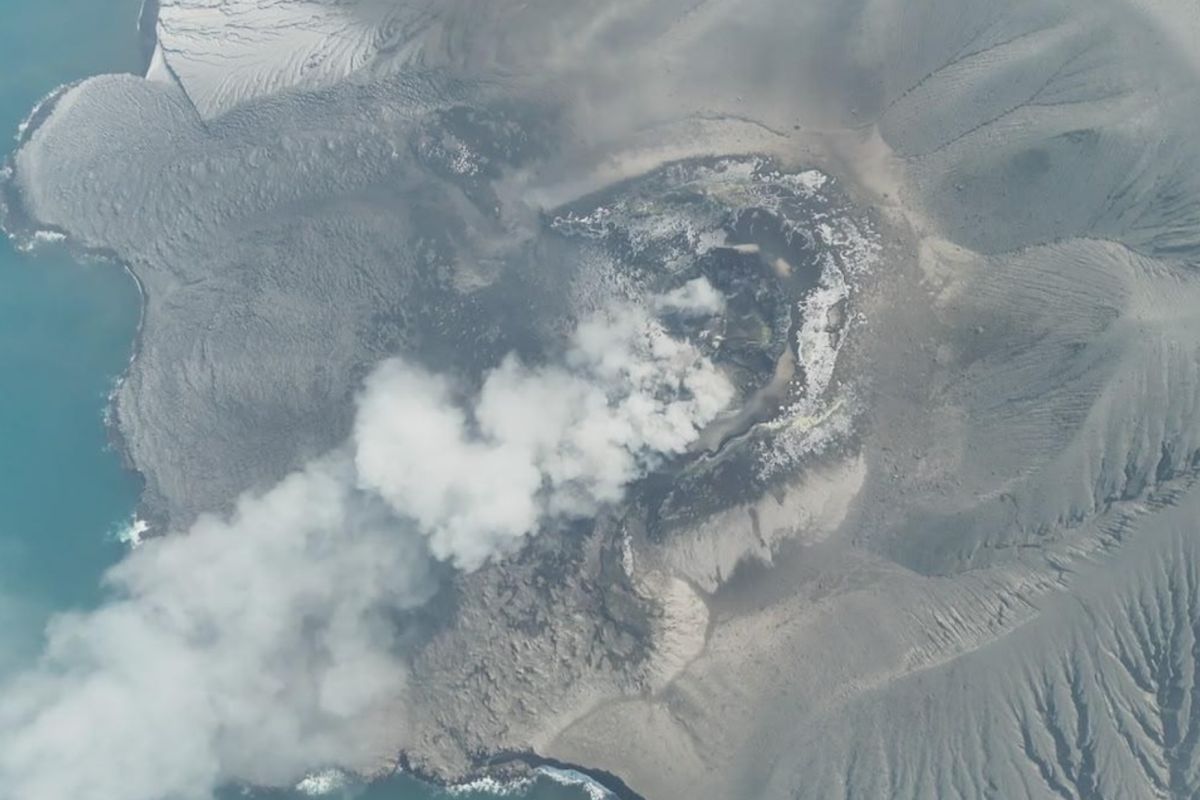
Jakarta (ANTARA) - Mount Anak Krakatau in the Sunda Strait experienced continuous eruption for around 25 hours on 4–6 September 2026. Its volcanic ash was recorded spreading to five provinces, whilst the volcano’s status remains at Level III or Siaga (Alert).
Mount Anak Krakatau is an active volcano with a long history that cannot be separated from the devastating 1883 eruption of Krakatau. Its volcanic activity has once again drawn attention after the latest eruption affected several areas in Java and Sumatra.
It began with the 1883 Krakatau eruption
The history of Mount Anak Krakatau is closely tied to the Krakatau volcanic complex, which experienced a massive eruption in 1883. That eruption destroyed most of Krakatau’s body and formed a caldera in the Sunda Strait region.
The event also triggered a major tsunami that struck the coastal areas of Banten and Lampung. The Ministry of Energy and Mineral Resources (ESDM) recorded that the death toll from the 1883 eruption and tsunami exceeded 36,000 people.
After the great eruption, volcanic activity subsequently formed a new volcano within the caldera area, known as Mount Anak Krakatau.
Eruptive activity of Anak Krakatau was first recorded in 1927, when its volcanic activity was still below sea level. The mountain then began to emerge above the surface in 1929.
Since its emergence, Anak Krakatau has continued to grow through the accumulation of material from volcanic activity. It has become one of the active volcanoes continuously monitored by the Geological Agency through the Centre for Volcanology and Geological Hazard Mitigation (PVMBG).
It once triggered a tsunami in 2018
One of the most significant events in Anak Krakatau’s history occurred on 22 December 2018.
At that time, part of the volcano’s body collapsed into the sea while an eruption was under way. The landslide triggered a displacement of water mass and produced a tsunami that struck the coastal areas of Banten and Lampung.
The event claimed more than 400 lives and served as a reminder that volcanic activity in the middle of the sea carries potential hazards different from those of volcanoes on land.
Mount Anak Krakatau’s activity increased again at the beginning of September 2026. According to the latest PVMBG statement, the continuous eruption episode was recorded from Friday, 4 September 2026 at 23.07 WIB until Sunday, 6 September 2026 at 00.04 WIB.
The eruption episode therefore lasted around 25 hours. After the continuous eruption ended, PVMBG still recorded one follow-up Strombolian eruption on 6 September at 03.57 WIB lasting approximately 30 seconds.
During that period, Anak Krakatau’s volcanic activity was monitored through seismic recordings and monitoring cameras. At night, red eruption columns were visible, whilst during the day blackish plumes were observed.
PVMBG recorded that volcanic activity energy briefly increased on 5 September, then showed a declining trend on 6 September. Although the continuous eruption episode has ended, the volcano’s activity status remains at Level III or Siaga.
Volcanic ash spreads to five provinces
Anak Krakatau’s latest eruption caused volcanic ash to spread widely. The Geological Agency said volcanic ash was recorded spreading to five provinces, namely:
Banten
West Java
DKI Jakarta
Lampung
Bengkulu
The spread was monitored through analysis by the Geological Agency, PVMBG, VAAC Darwin, and satellite observations.
The situation has also affected flight operations. A number of airports experienced operational disruptions due to the volcanic ash spread. A Reuters report said the ash reached an altitude of around 50,000 feet, forcing several flights to be suspended or adjusted for safety reasons.
Mount Anak Krakatau’s activity can produce a number of potential hazards, such as incandescent volcanic material, lava, volcanic ash and volcanic gases.
The 2018 experience also showed the potential for the volcano’s flank to collapse and trigger a tsunami. However, the potential hazards of each eruption episode must be assessed based on the volcano’s actual condition and PVMBG monitoring results.
Given the latest situation, residents, tourists, fishers and vessels are asked to comply with safety recommendations and not approach the centre of Mount Anak Krakatau’s activity.
Mount Anak Krakatau’s long history shows that this volcano is not only of geological importance, but is also closely linked to Indonesia’s disaster history.
The latest eruption in September 2026 once again demonstrates the importance of monitoring volcanic activity. Residents in areas affected by volcanic ash should also follow government instructions and use protection such as masks if air quality is compromised by the ash.
Source: jawawa.id (https://jawawa.id/newsitem/getting-to-know-mount-anak-krakatau-its-history-and-key-facts-1788796376)
Originally published by Antara (Indonesian) (https://www.antaranews.com/berita/5730448/mengenal-gunung-anak-krakatau-sejarah-dan-fakta-faktanya), translated from Indonesian