
Getting to Know Fire Blankets: Preventing Fires with Simple Steps
Recent incidents, including a widely shared video of public figure Azka Corbuzier using a fire extinguisher to assist a motorcyclist, have brought renewed attention to fire prevention. This comes amidst a surge in fire-related news in Indonesia, ranging from massive forest and land fires affecting millions to frequent domestic incidents.
National Fire Department data from the Ministry of Home Affairs indicates that 20,427 fire cases occurred across Indonesia in 2024. The data also highlights a significant challenge: the limited number of firefighting personnel, which stands at only 50,417 people nationwide.
To mitigate these risks, it is vital to prepare prevention and handling tools so that incidents can be managed quickly before they escalate. Beyond the common fire extinguisher (APAR), which requires regular maintenance and specific usage techniques, experts suggest having fire blankets available in homes, particularly in kitchens, and even for electric vehicles.
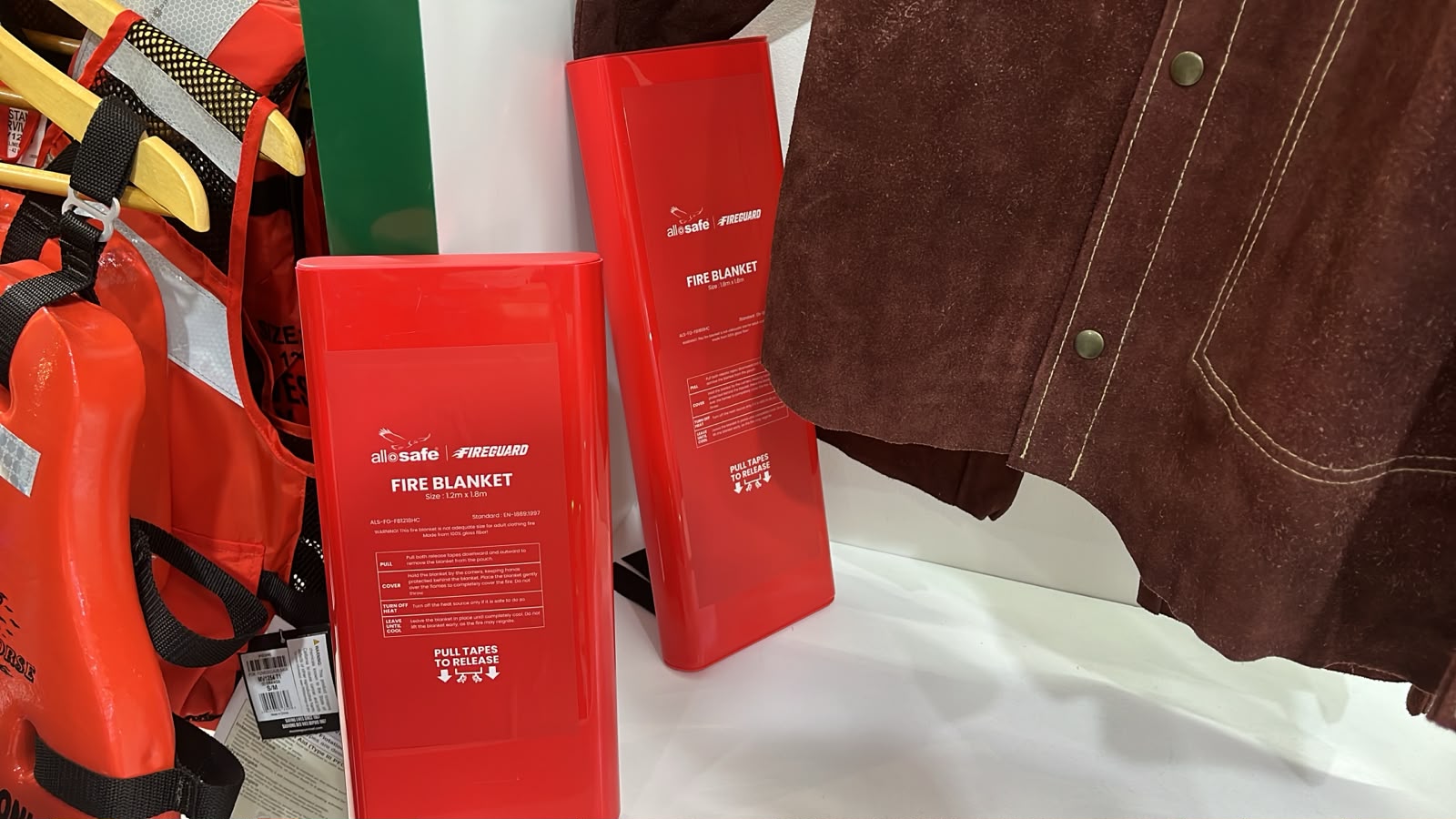
A fire blanket is a tool designed for early-stage fire suppression, suitable for sources such as household stoves or vehicles, depending on its size. Made from fire-resistant glass fibres, it works by covering the fire source to cut off the oxygen supply, thereby extinguishing the flames.
“Because fire requires oxygen to burn, covering it with this cloth removes the oxygen and puts out the fire,” said Fransiscus B. Hermanto, Sales & Marketing Director of PT Wahana Safety Indonesia, during the GIFA Indonesia exhibition in Jakarta. He noted that while fire blankets and fire extinguishers serve different functions, they can be used complementarily.
Fire blankets are particularly practical for handling small fires, such as those on one or two-burner stoves. The user simply covers the flame and waits for it to die out. The company is also in the process of providing products specifically for electric vehicles, which would require larger blankets, at least 6 x 8 metres, to cover the vehicle effectively.
Currently, the company provides household and industrial sizes, such as 1.2 x 1.8 metres and 1.8 x 1.8 metres, with prices starting from Rp150,000. Unlike fire extinguishers, which use various agents like dry powder, CO2, or foam, a fire blanket can be used for various types of incidents depending on its specification.
However, Fransiscus warned that usage must be appropriate for the type of fire. For electrical fires, for instance, the power source must be disconnected first to stop potential sparking. He also emphasised the need for increased vigilance in industrial sectors, noting that data from BPJS Ketenagakerjaan recorded 319,224 work accident claims in 2025, with 9,834 resulting in fatalities.
This high number of accidents underscores the ongoing challenges of Occupational Health and Safety (K3), particularly in high-risk sectors such as mining, oil and gas, construction, manufacturing, and energy. As a solution, PT Wahana Safety Indonesia provides comprehensive safety solutions ranging from head and respiratory protection to gas detection and fire safety.
Regarding fire blankets, Fransiscus noted that they leave no residue and are easy to use. Unlike some methods, they do not need to be dipped in water first. If the blanket remains in good condition after use, it can be repackaged and reused.