
Getting to Know Cerebras Systems, the Nvidia Challenger Ready to Shake the World
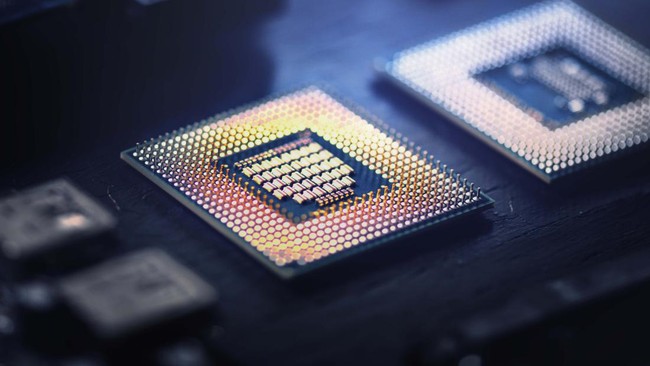
Nvidia’s dominance in the artificial intelligence (AI) chip market is facing a serious challenge. One of the challengers currently in the spotlight is Cerebras Systems, a US-based semiconductor company that successfully captured investor attention after listing on the US stock exchange last week.
Andrew Feldman, CEO and founder of Cerebras Systems, stated that his company adopts a different approach compared to other AI chip players. “We build the largest chips in the semiconductor industry,” said Feldman, as quoted by CNBC International on Monday (7/6/2026). He added, “Large chips process more information in less time and provide faster results.”
Market confidence in Cerebras was evident during its debut on Wall Street. On its first day of trading, the company’s market capitalisation approached US$100 billion, making it one of the largest technology initial public offerings (IPOs) in history.
Unlike Nvidia, which relies on Graphics Processing Units (GPUs), Cerebras develops specialised chips known as the Wafer Scale Engine (WSE). Its latest generation, the WSE-3, falls under the category of Application-Specific Integrated Circuit (ASIC), which are chips designed specifically to perform particular tasks with high efficiency. The company claims the WSE-3 is 57 times larger than the largest GPUs currently available and is equipped with 50 times more transistors. The chip is said to be almost as large as a dinner plate.
In recent years, Nvidia has been the dominant player in the AI industry because its GPUs can handle the parallel computing required to train large-scale AI models. However, technological developments are now shifting towards the era of “agentic AI,” where inference capabilities—the decision-making process by AI—are becoming increasingly important. This shift in trends provides an opportunity for ASICs like those from Cerebras to compete more aggressively. Consequently, competition in the AI chip sector is intensifying with the entry of tech giants such as Google, Amazon, Meta, and Microsoft, which are also developing their own specialised AI chips.
Beyond selling hardware, Cerebras is also building an AI cloud services business through its own data centres. This strategy places the company in direct competition with major players such as Microsoft, Google, Oracle, and CoreWeave in the race for the AI computing market.
Demand for Cerebras’ services is reportedly surging. Cerebras Chief Financial Officer (CFO) Bob Komin revealed that the company’s service capacity is currently sold out until 2027. “For our fast inference products, demand is so high that our biggest challenge is actually meeting supply. We are increasing manufacturing capacity and data centres as much as possible, yet our products remain sold out until 2027,” said Komin.
Cerebras’ business prospects have strengthened further after the company announced an AI cloud services partnership worth US$20 billion with OpenAI through 2028. Additionally, Amazon Web Services (AWS) has been utilising Cerebras chip technology in its data centres since last March.
Cerebras is not the only newcomer attempting to disrupt Nvidia’s dominance. Several other companies, such as Groq, SambaNova Systems, and D-Matrix, are also capitalising on the increasing global demand for AI chips. While Nvidia remains the current market leader, the emergence of Cerebras indicates that competition in the AI chip industry is entering a new phase. With its massive chip technology and focus on AI inference needs, Cerebras has the potential to become one of the most serious threats to Nvidia’s dominance in the coming years.