
Get Ready! Seven Product Categories Must Be Halal-Certified by 18 October 2026, Penalties Apply
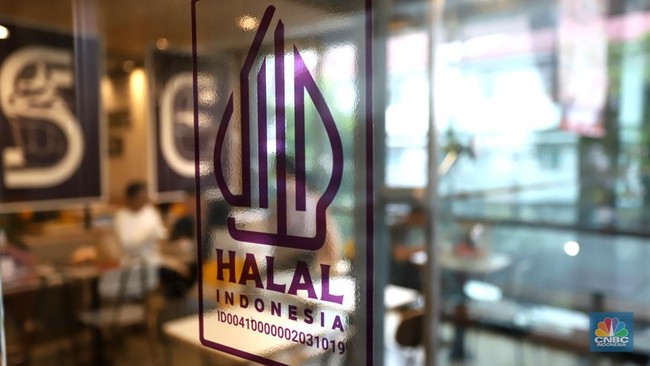
The implementation of mandatory halal certification will take effect from 18 October 2026, in accordance with the mandate of Law Number 33 of 2014 concerning Halal Product Assurance (UU JPH). To date, there have been no signals of any delays regarding the implementation of this mandatory halal certification.
During a coordination meeting for the implementation of mandatory halal at the Coordinating Ministry for Human Development and Cultural Affairs office on Wednesday (23/9/2026), the Head of the Halal Product Assurance Organizing Agency (BPJPH), Ahmad Haikal Hasan, stated that mandatory halal is not intended to prohibit or restrict product trade. Instead, he added, it serves as an instrument to protect and provide convenience for the public, while simultaneously creating economic added value and increasing product competitiveness.
Haikal acknowledged that the public has their own choices when using products. However, he added that the state has an obligation to ensure that citizens who require halal products receive protection and certainty.
He also emphasised that mandatory halal certification will not disrupt the smooth flow of international trade. In fact, according to Haikal, business actors and partner countries are prepared to welcome the implementation of halal product assurance in Indonesia.
“Halal will not disrupt international trade. I guarantee it will not disrupt the international trading process,” said Haikal, as quoted from the official BPJPH website on Monday (28/9/2026).
“Halal is not a prohibition, not a restriction, and not a ‘sweeping’ operation. Halal is our friend, protecting the entire nation and all of Indonesia by providing comfort,” Haikal asserted.
On another occasion, the Executive Secretary of BPJPH, Muhammad Aqil Irham, stated that companies must understand consumer preferences and market needs. If they ignore this factor, he said, producers will face consequences. Therefore, he noted, halal certification should not only be viewed in the context of regulatory compliance but also as part of a business effort to respond to consumer needs.
“Research like this is much needed because consumer considerations must be addressed by business actors; if not considered, when the halal mandate takes effect, market sanctions may prove far more severe than regulatory sanctions,” he said, quoting the official BPPLH website.
So, which products are required to have halal certification starting 18 October 2026?
According to Haikal, the October 2026 mandatory halal implementation is a continuation of the phased halal certification requirement for medium and large enterprises that began in October 2024.
The October 2026 mandate will not only require food and beverage products to be halal-certified. The scope of the mandatory halal policy is being expanded to include micro and small enterprises, as well as both imported and local products.
Referring to Government Regulation Number 42/2024 regarding the Implementation of Halal Product Assurance, the products required to be halal-certified starting 18 October 2026 are:
Food and beverage products
Slaughtered products and slaughtering services
Cosmetics
Chemical products and genetically modified products
Natural medicine, quasi-drugs, and health supplements
Raw materials, food additives, and processing aids for food and beverage products
Consumer goods, including apparel and accessories, household health supplies, household equipment, prayer equipment, stationery, office supplies, and Class A medical devices.
Are there any sanctions imposed? Yes, there are administrative sanctions in accordance with applicable provisions, ranging from written warnings, administrative fines, revocation of halal certificates, to the withdrawal of products from circulation.
Furthermore, what about non-halal products?
BPJPH Regulation Number 3 of 2026 regarding the Form and Procedures for Including Non-Halal Information has regulated the format and procedures for labelling non-halal products. According to Article 3, this provision applies to products derived from prohibited ingredients, which are exempted from the obligation of halal certification but are required to be labelled as non-halal.
Among these, non-halal labels may include the text “CONTAINS PORK” accompanied by a pork image, or the text “NON-HALAL.”
This labelling must be placed on the product packaging, specific parts of the product, and/or specific locations on the product that are easily visible, readable, and not easily erased, removed, or damaged.
Source: jawawa.id (https://jawawa.id/newsitem/get-ready-seven-product-categories-must-be-halal-certified-by-18-october-2026-penalties-apply-1790592849)
Originally published by CNBC Indonesia (https://www.cnbcindonesia.com/news/20260928152039-4-771499/siap-siap-7-produk-ini-wajib-halal-mulai-18-oktober-2026-ada-sanksi), translated from Indonesian