
Get Ready: OJK to Issue New Rules to Support Sustainable Finance
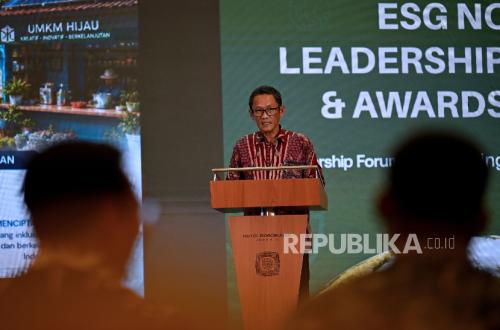
JAKARTA — Indonesia’s Financial Services Authority (OJK) is strengthening the management of climate-related financial risks in the banking sector by issuing the second edition of its Climate Risk Management and Scenario Analysis (CRMS) guidelines. The move is part of OJK’s efforts to build a sustainable finance ecosystem in Indonesia.
OJK Sustainable Finance Director Joko Siswanto said the transition to a sustainable economy would require substantial financing. However, lending must be accompanied by an understanding of the risks and opportunities associated with the economic activities being financed.
“Financing alone is certainly not enough. We also need to know which economic activities are appropriate to finance, understand their risks and opportunities, measure their impact and, no less importantly, ensure that the financing is inclusive,” Joko said at the ESG NOW Leadership Forum 2026 in Jakarta on Monday (19 October 2026).
According to Joko, Indonesia faces several challenges in its transition to a sustainable economy. These include the significant financing needed for the green transition, limited access to finance for some economic actors, and rising climate risks.
Climate risks include both physical and transition risks. Managing them is therefore an important consideration in building a financial sector that is more resilient to climate change.
Joko explained that developing a sustainable finance ecosystem could not be achieved through a single policy. OJK is also developing the Indonesia Sustainable Finance Taxonomy (TKBI), a guide to identifying economic activities that support sustainability.
In addition, OJK will issue a new regulation on the implementation of sustainable finance in the financial services sector, replacing OJK Regulation No. 51 of 2017. The new rules are intended to strengthen transparency and accountability through sustainability disclosure standards aligned with evolving international standards.
Joko stressed that these policies needed to work in tandem so that sustainable financing could grow and deliver tangible benefits to the economy.
He said the transition to a sustainable economy also needed to include micro, small and medium-sized enterprises (MSMEs), not just large companies. This would allow the benefits of sustainable financing to reach a wider range of economic actors.