
Get Ready! Land Ownership in Indonesia to be Regulated with Maximum and Minimum Limits
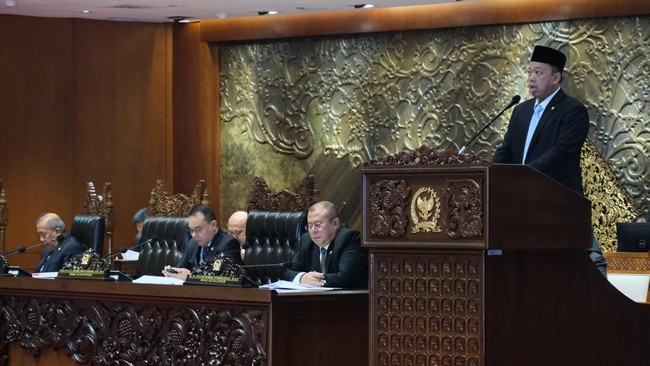
The Indonesian government is set to regulate the maximum and minimum limits of land ownership in Indonesia, as well as managing the transfer of status for state-owned assets at both central and regional levels. This follows the agreement on the Agrarian Reform Regulation Bill (RUU Pengaturan Reforma Agraria) to be enacted as Law.
The House of Representatives (DPR RI) and the Government reached this agreement during the 6th Plenary Session of the 2026-2027 Session held at the DPR RI Building in Jakarta on Tuesday (22/09/2026).
While reading the President’s final opinion on the Bill, the Minister of Agraria and Spatial Planning/Head of the National Land Agency (ATR/BPN), Nusron Wahid, stated that these regulations are expected to strengthen the legal foundation for the implementation of Agrarian Reform nationwide. The move aims to accelerate the resolution of various agrarian issues and encourage the equitable distribution of land ownership and agrarian resources for the greatest prosperity of the people.
He added that the Agrarian Reform Regulation Bill is a significant milestone in Indonesia’s agrarian reform implementation. This regulation is part of a constitutional mandate, specifically Article 33, paragraph (3) of the 1945 Constitution, which asserts that the earth, water, and the natural wealth contained within them are controlled by the state and utilised for the greatest prosperity of the people.
The Bill is also considered vital for upholding the mandate of MPR Decree Number IX/MPR/2001 regarding Agrarian Reform and Natural Resource Management, while strengthening the social function of land as regulated in Law Number 5 of 1960 concerning the Basic Agrarian Regulations (UUPA). Land and other agrarian resources are the lifeblood of the community.
Therefore, the control, ownership, use, and utilisation of land and other agrarian resources are expected to be carried out justly and sustainably.
“The government hopes that, with a stronger legal foundation, smallholder farmers, tenant farmers, agricultural labourers, traditional fishermen, indigenous communities, as well as vulnerable and low-income groups, can increasingly feel the presence of the state through the implementation of a just Agrarian Reform,” said Nusron, as quoted from an official statement by the Ministry of ATR/BPN on Tuesday (22/9/2026).
Following the enactment of the Agrarian Reform Law, several Government Regulations (PP) will be issued as implementing derivatives of the Law. This includes regulations governing the minimum and maximum limits of land ownership.
“We are also committed to completing the laws and regulations that are mandated or delegated by the Agrarian Reform Bill, including government regulations,” said Nusron.
The following aspects will be regulated in these Government Regulations:
Planning, implementation, monitoring, and evaluation of agrarian reform implementation.
Procedures for determining priority locations for agrarian reform.
Procedures for the transfer of status of state-owned assets, regional-owned assets, or SOEs and BUMDs.
Resolution of agrarian conflicts.
Procedures for registration, management, use, utilisation, and inheritance regarding joint ownership of rights.
Arrangement, control, and limitation of land.
Determination of minimum and maximum limits for land control and ownership.
Community participation.
Agrarian Reform Law to Prevent Concentrated Land Ownership
For information, the decision-making process involved several stages of discussion, starting from working meetings with relevant ministries/agencies, the discussion of 596 Items of Problem Inventory (DIM), followed by the formation of Working Committees and Formulation and Synchronisation Teams, and finally, Level I discussions to reach an agreement before being brought to the Plenary Session for final ratification. The report regarding the discussion of the Bill was presented by the Vice Chairman of the Legislative Body of the DPR RI and also the Chairman of the Agrarian Reform Bill Working Committee, Ahmad Iman Sukri.
During this Plenary Session, the Minister of ATR/Head of BPN was present accompanied by Senior and Junior High-Level Officials of the Ministry of ATR/BPN. Also present were the Vice Chairman and Members of the DPR RI, relevant ministers/heads of agencies, and representatives from civil society organisations, including the Urban Poor Consortium, Agrarian Reform Consortium, Indonesian Farmers Union, and the Sundanese Farmers Union.
“Thank you for all the roles and cooperation provided during the discussion of the Bill,” said the Meeting Leader, Vice Chairman of the DPR RI, Sufmi Dascal Ahmad.
Meanwhile, a member of the Agrarian Reform Bill Working Committee of the DPR RI Legislative Body, Muhammad Khozin, stated that agrarian reform must touch upon the structure of land control and ownership, while simultaneously improving its governance.
“Agrarian reform is not enough to just distribute and fix overlapping land claims. We must also break the chain of the land mafia and prevent land from becoming concentrated again,” he said, as quoted from the official DPR RI website.
He added that the Agrarian Reform Law focuses on the redistribution of land to landless communities, the rehabilitation of land rights, and ensuring that recipients of land redistribution receive economic support, development access, and tangible benefits, including the protection of customary lands from unilateral control by local governments.
Furthermore, Khozin stated that the Agrarian Reform Law regulates that objects of agrarian reform cannot be transferred to other parties in a way that leads to the re-concentration of land control, ownership, use, and utilisation. The regulation also includes the upper limits of land control for business entities and their associated bodies.