
Get Ready, Indonesia to Introduce New B50 Biofuel Next Month!
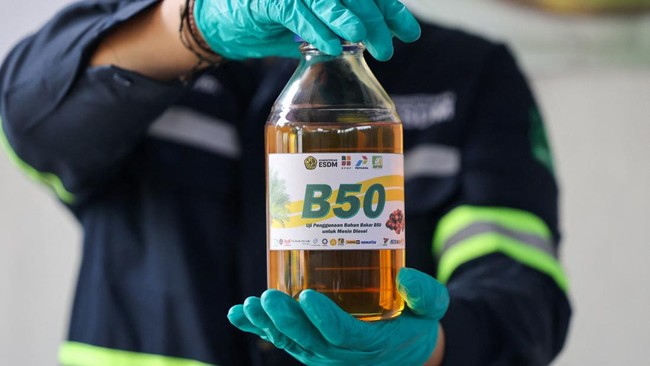
The Ministry of Energy and Mineral Resources (ESDM) has confirmed that the 50% biodiesel policy, known as B50, will begin nationwide implementation starting next month. This step follows a series of successful tests across various sectors demonstrating positive results.
The Director General of New, Renewable Energy, and Energy Conservation (EBTKE) at the Ministry of ESDM, Eniya Listiani Dewi, stated that the testing series proved B50’s performance is reliable enough for widespread use. Following these tests, the government is prepared to implement the plant-based fuel blend starting 1 July 2026.
“Previously, we were operating at 40%, and this coming July, we will increase it to 50% so that we can reach a situation where we no longer need to import diesel,” she explained during The 50th IPA Convention & Exhibition (Convex) in Tangerang.
Currently, the government is completing the final stages of road testing, which includes the automotive sector, heavy mining equipment, and maritime transport. Results so far prove that B50 usage maintains engine stability without causing disruptions to vehicle components.
Successful engine tests in low-temperature environments, such as the Bromo region, serve as a critical technical indicator for B50’s readiness. The Ministry concluded that since high-speed engine operations have been successful, implementing the fuel in low-speed engines, such as generators and trains, will be more straightforward.
Alongside B50, the government also plans to launch a 5% ethanol-blended petrol mandate (E5) in specific locations. This energy blending policy is expected to gradually reduce petrol imports as local ethanol production capacity increases. The Minister of Energy has directed that the raw materials used must be sourced locally.
According to Ministry of ESDM data, the B50 programme, targeted for July 2026, is projected to save the state’s foreign exchange reserves by up to Rp 157.28 trillion. Beyond the economic benefits, the policy is expected to create over 2.2 million national jobs.
From an environmental perspective, B50 usage is targeted to reduce greenhouse gas emissions by 46.72 million tons of CO2 in 2026. Technically, the B50 specifications have been enhanced to maintain engine performance, including reducing water content to a maximum of 300 ppm and monoglycerides to a maximum of 0.47% by mass. Oxidation stability has also been strengthened to a minimum of 900 minutes to ensure fuel quality remains optimal during storage and distribution.