
Get Ready: Indonesia to Introduce 3kg CNG as LPG Alternative – What Will the Price Be?
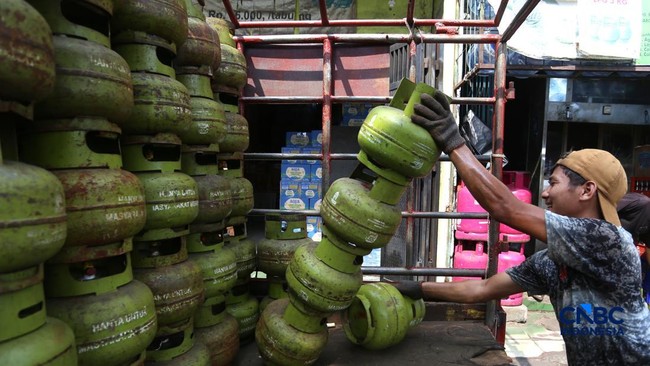
Jakarta, CNBC Indonesia - The Minister of Energy and Mineral Resources (ESDM), Bahlil Lahadalia, has revealed that the government is studying the development of 3-kilogram Compressed Natural Gas (CNG) as an alternative to subsidised Liquefied Petroleum Gas (LPG).
According to Bahlil, this step is aimed at reducing Indonesia’s dependence on LPG imports, which continue to burden the country’s foreign exchange reserves.
“This CNG is for 3 kilograms; we are still conducting exercises and trials on the cylinders. CNG is expected to serve as one alternative to substitute our large imports,” Bahlil said after the inauguration event at the Ministry of ESDM, quoted on Thursday (7/5/2026).
Bahlil explained that to meet domestic consumption needs, Indonesia currently imports around 8.6 million tonnes of LPG per year. This situation requires the government to spend a significant amount of foreign exchange annually.
“Imagine, we import 8.6 million tonnes per year for consumption. At the same time, our foreign exchange is spent just on buying LPG, around Rp130 to Rp140 trillion every year. Especially if world oil prices are as they are now, it will definitely be even larger. And our subsidies are Rp80 to Rp87 trillion,” he stated.
30% Cheaper Price
Bahlil believes that the use of CNG has already been implemented for 12-kilogram to 20-kilogram cylinders used by hotels and restaurants. The use of CNG in that sector is considered quite efficient.
However, the government is now developing technology for 3-kilogram CNG cylinders to make them more suitable for household use.
“But for CNG, the 12 kg and 20 kg ones are already in use for hotels and restaurants. And it’s good, and more efficient. But we can’t ask the public to use the heavy ones, 20 kg. Now, this is what we’re working on,” Bahlil said.
The gas that will serve as the alternative is even considered to be cheaper than LPG use. According to the study results, Bahlil said that CNG use could be 30% cheaper.
“CNG has already been studied. The price is much cheaper, around 30% cheaper,” Bahlil explained after being met at the State Palace on Tuesday (5/5/2026).
Why is it cheaper? Bahlil explained that the raw material for CNG gas is abundant in Indonesia, supported by domestic industry. “So we don’t import, the transportation costs alone can cover it,” Bahlil stated.
In addition, CNG gas, according to Bahlil, is available in almost all regions with gas sources. Thus, this can be more efficient.